History MYACPA

2014-2024

2024
21 October 2024
Anniversary

ACPA leaders celebrate the 100th anniversary on 21 October 2024 with a celebratory dinner in Washington, DC.

6-9 March 2024
Convention
ACPA24 Annual Convention

ACPA hosts the annual convention in Chicago, Illinois, the same city where the founders of the National Association of Appointment Secretaries met 100 years prior in 1924.
February 2024
Professional Development
The Institute for Aspiring SSAOs is renamed to the Paul Shang Institute for Aspiring Executive Officers
to honor Paul Shang's legacy of advocacy for professional development, personal learning, and contributions to ACPA, higher education, and scholarship.
January 2024
Awards
The Voices of Inclusion Award was renamed to the Nancy J. Evans Voices of Inclusion Award in honor of Dr. Nancy J. Evans, who served as ACPA's 62nd President from 2001–2002
January 2024
Awards
The ACPA Presidential Citation Award was renamed to the Anne S. Pruitt-Logan Presidential Citation in honor of Dr. Anne S. Pruitt, who served as ACPA's 37th President and first African American female President from 1976–1977.
1 June 2023
International Office
International Office Relocation

ACPA relocated the International Office from Suite 300 (third floor) to Suite 450 (fourth floor) of the National Center for Higher Education at One Dupont Circle in Northwest Washington, District of Columbia. 

28 March 2023
Leadership Council

At the 2023 Annual Business Meeting in New Orleans, ACPA members approved a new governance model for the Association that began implementation in March 2024 (Phase 1) to be fully in place as of February 2025. Most significantly, the governance structure changed from the Governing Board (in place from 2007-2024) to a new Leadership Council.

13 January 2023
Publications

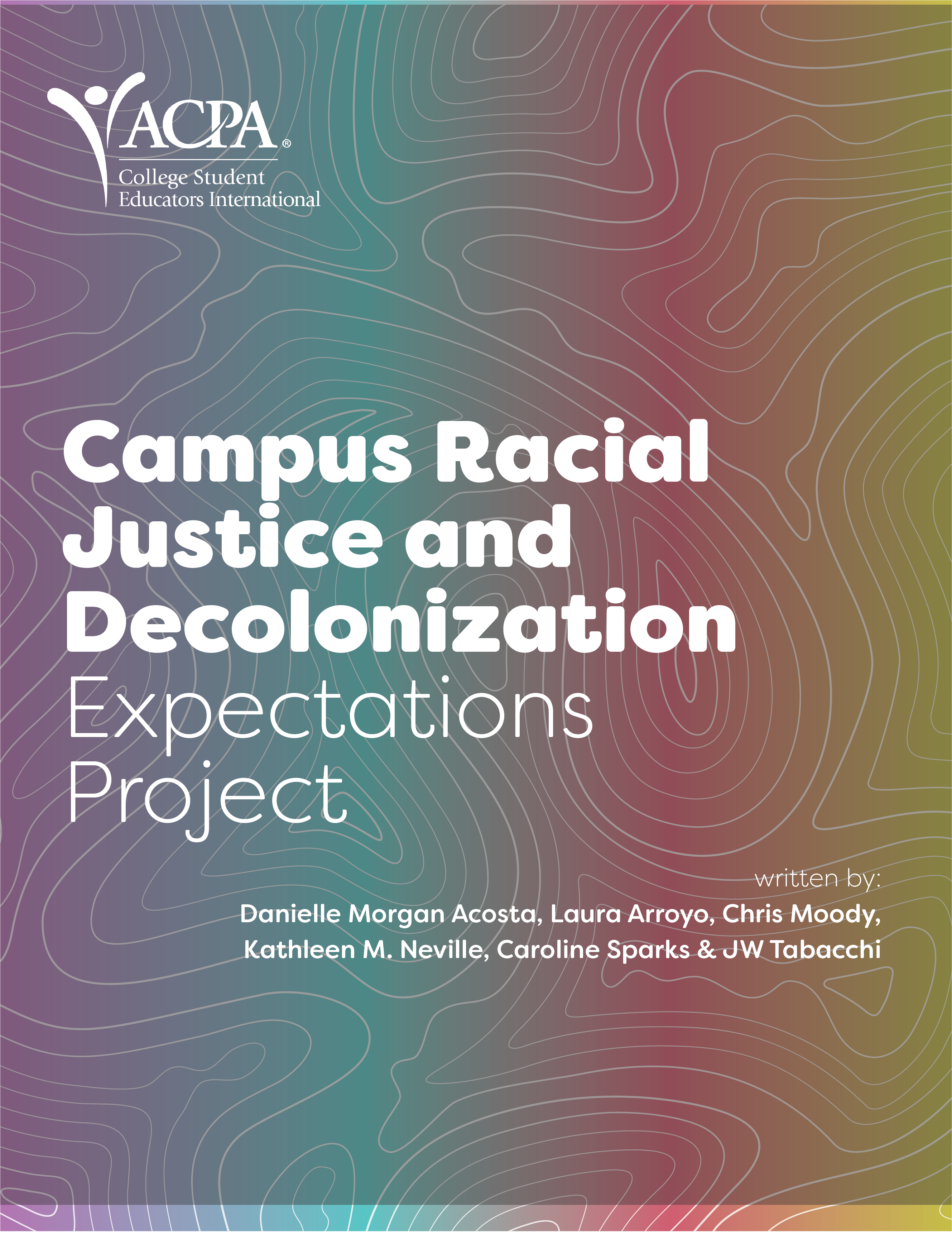
ACPA released “Campus Racial Justice and Decolonization Expectations Project Report,” a resource designed to assist in offering members guidance and consideration of new possibilities around how to engage in anti-racist and decolonizing work.
2022
30 November 2022
Publications

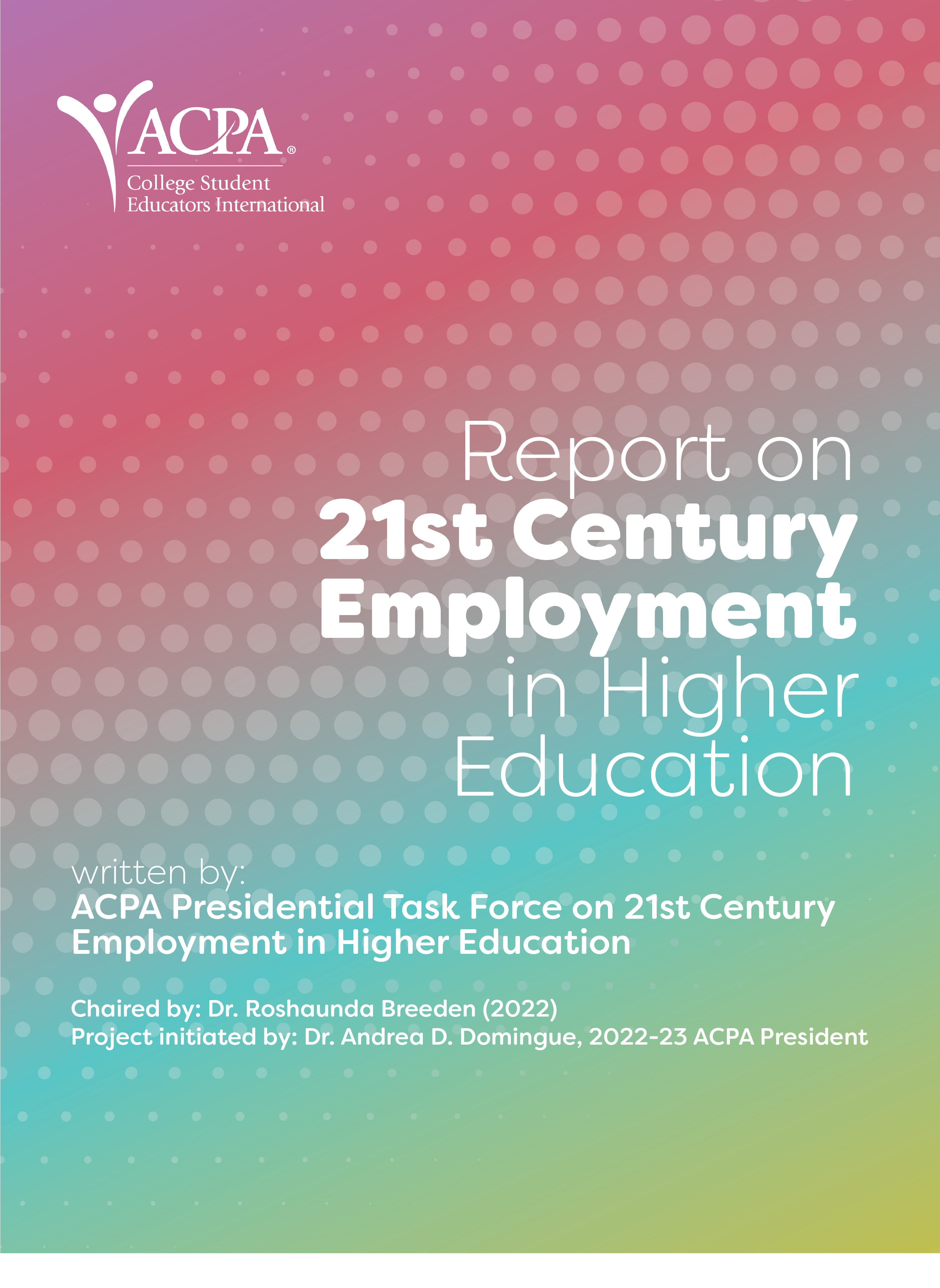
ACPA released “Report on 21st Century Employment in Higher Education,” a call to action meant to serve as a guiding framework for a sustainable future for the profession. It was developed to support HESA practitioners at all levels as we aspire to improve the work-life of those who enter this profession as a career. Specifically, it is meant to change how we are expected to work structurally. This document is a call to action to build sustainable careers in higher education by dismantling systems of supremacy culture in our work. 
March 2022
Partnerships

ACPA announced a new partnership with the National Institute for Native Leadership in Higher Education confirming a commitment to decolonization efforts within the association and higher education.

2021
1-17 March 2021
Convention
First Fully Virtual Convention

ACPA holds it's first fully virtual Convention in response to the COVID-19 pandemic.
2021
Leadership Council
Universal Design Task Force Report

Universal Design Task Force issued a report guiding the association in becoming a more inclusive and accessible organization.

2021
Awards
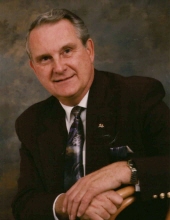
Harold Cheatham Innovative Practice Award renaming
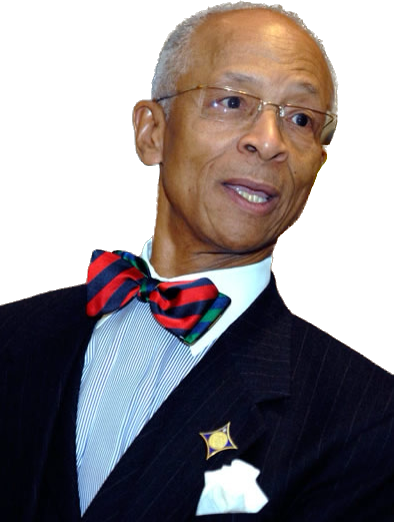
Harold Cheatham headshot

The Innovative Practice Award is renamed to the Harold Cheatham Innovative Practice Award after ACPA's 56th and first Black male to serve as president.
2020
2020
International Office
International Office becomes a remote organization

The ACPA International Office becomes a fully remote workplace during the COVID-19 pandemic but continues to maintain a physical office presence in Washington, DC in the National Center for Higher Education at One Dupont Circle.

2020
International Office
ACPA is named one of the top associations changing the world by the American Society of Association Executives (ASAE)
2020
Entity Groups
New ACPA Chapters

Alabama College Personnel Association is established and the Minnesota College Personnel Association is rechartered.

2019
27 June 2019
Professional Development
Leading with Racial and Social Justice Lens Institute held for the first time

ACPA launches the first Leading with Racial and Social Justice Lens: SSAO's As Stabilizers In This Time Of Culture Change for Senior-Level Administrators which took place from 27-30 June 2019. Faculty included Dr. Jake Diaz, Dr. Robin H. Holmes-Sullivan, Dr. Patty Perillo, Dr. Kent Porterfield, and Rev. Dr. Jamie Washington.

18 October 2019
Leadership Council
Boldly Transforming Higher Education

Membership approves new mission statement naming equity and inclusion; Governing Board adopts new strategic plan and tagline as the Association that Boldly Transforms Higher Education.
January 2019
Publications

ACPA released “A Bold Vision Forward: A Framework for the Strategic Imperative for Racial Justice and Decolonization,” an initial document reimagining higher education by centering love, racial justice, and decolonization into our work.

2018
March 2018
Entity Groups

The Indigenous Student Affairs Network (ISAN) formed as part of the Native, Aboriginal, or Indigenous Coalition (NAIC)

2017
November 2017
International Office
Professional Development
Program Design School created

In partnership with Erin Fisher from the Leadership and Training Studio, Program Design School was created to offer attendees program writing assistance in an engaging, virtual format.

2016
21 November 2016
Leadership Council
Strategic imperative for Racial Justice and Decolonization

ACPA Governing Board approves Strategic Imperative for Racial Justice and Decolonization as a centralizing priority for the Association. 

6-9 March 2016
Convention
First International Convention
ACPA 2016 Montreal

ACPA hosts first annual Convention outside of the United States in Montreal, Quebec, Canada in collaboration with the Canadian Association of College and University Student Services.
2015
2015
Entity Groups
New Entities Formed

Commission for Campus Safety and Emergency Preparedness and Mid-Level Community of Practice formed

2014
2014
Publications
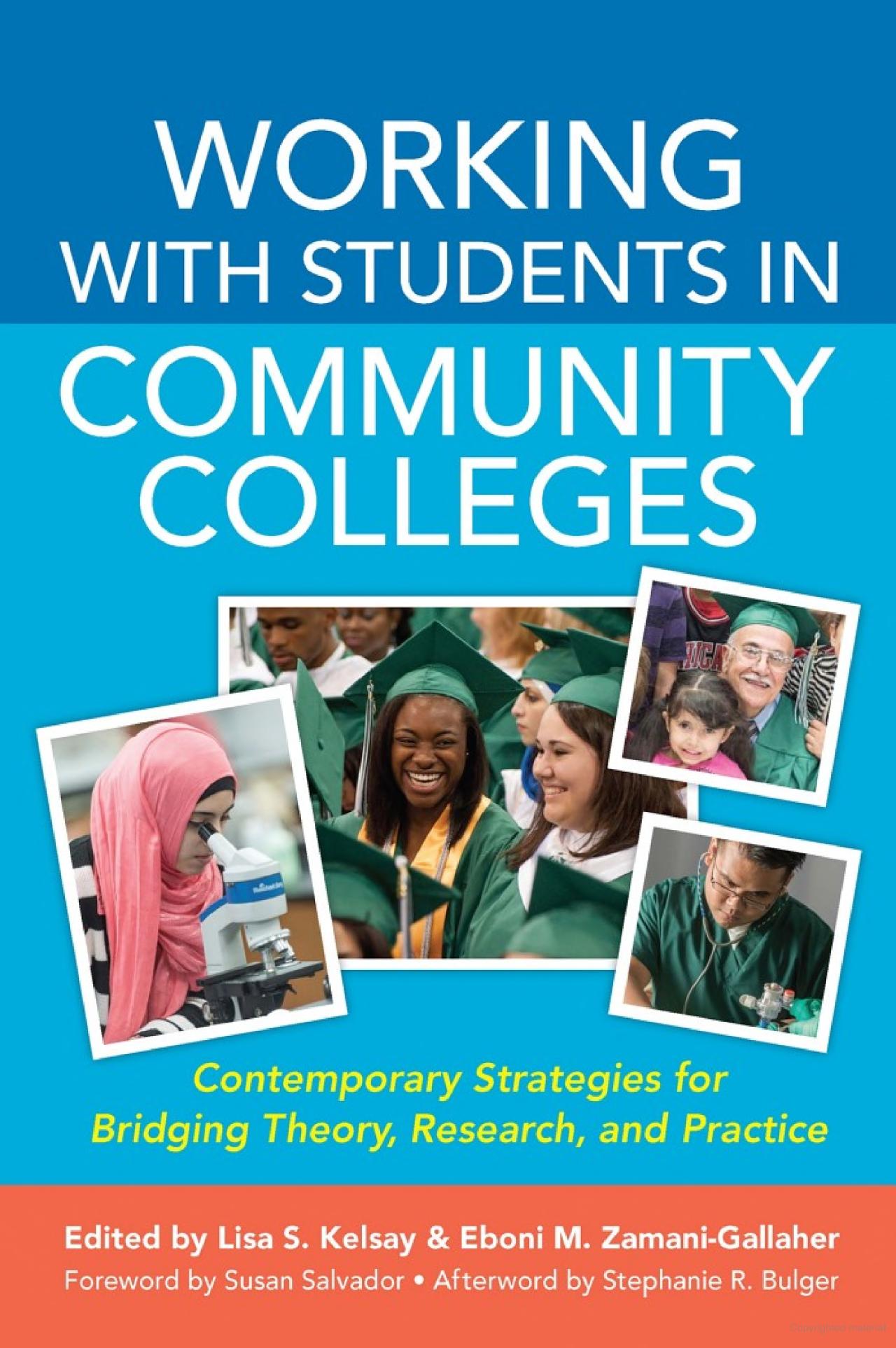
Working With Students in Community Colleges: Contemporary Strategies for Bridging Theory, Research, and Practice

ACPA released “Working With Students in Community Colleges: Contemporary Strategies for Bridging Theory, Research, and Practice.” This book examines strategies for meeting the needs of the ever-increasing diversity of community college students. The authors of this book focus on community college campuses, supports for community college students, and specialized populations among community college learners. (Edited by Lisa S. Kelsay and Eboni M. Zamani-Gallaher)
2014
Publications
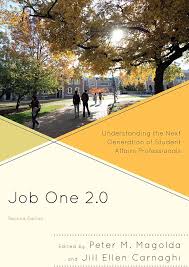
Job One 2.0 Understanding the Next Generation of Student Affairs Professionals

 ACPA published “Job One 2.0 Understanding the Next Generation of Student Affairs Professionals,” a second edition of Job One (2004) and continues to focus on the narratives of new professionals as they transition from graduate school to their careers. (Edited by Peter M. Magolda and Jill E. Carnaghi)

2014
Entity Groups
Washington CPA forms

The Washington state chapter of ACPA forms as a State Chapter

2014
International Office
Cindi Love hired as Executive Director

Hired Cynthia H. Love, Ed.D as the Executive Director and the International Office in Washington, D.C. down-sized to a smaller physical footprint at the National Center for Higher Education.
2003-2013

2013
2013
Publications
New Publications Released

ACPA published several texts, including:

The Art of Effective Facilitation: Reflections from Social Justice Educators” - This book unpacks the concept of social justice for higher education professionals and provides theory, practical examples, and recommendations for those who aspire to be social justice educators. (Edited by Lisa M. Landreman)

Accreditation and the Role of the Student Affairs Educator” - With increased emphasis on student affairs’ contribution to student learning, increasing numbers of student affairs educators are being called upon to participate in the regional accreditation process. With accreditation processes taking place once a decade and recent revisions in the standards for regional accrediting bodies focusing on student learning, student affairs educators are often not equipped with the knowledge and skills to maximize the opportunity that accreditation presents divisions of student affairs. Without these skills and knowledge, this opportunity is lost and student affairs educators merely “endure and get through” the process.

The Assessment in Practice: A Companion Guide to the ASK Standards” - Colleges today are asked to provide greater proof that they are providing quality educational experiences to their students. There has been a growing need for student affairs to provide documentation that their areas also impact learning and student experience. However, many student affairs professionals are overwhelmed by the idea of assessment and are looking for examples of best practices in this area. Several years ago the American College Personnel Association’s Commission Directorate for Assessment and Evaluation developed the Assessment Skills and Knowledge Standards for practitioners. This document provides examples of these standards in practice.

2013
Partnerships
Most Promising Places to Work in Student Affairs

Most Promising Places to Work in Student Affairs recognition created in partnership with Diverse: Issues magazine

17 September 2013
Sub Label
Institute for Aspiring Senior Student Affairs Officers created

Institute for Aspiring Senior Student Affairs Officers created to provide an intimate environment for participants to explore the typical roles and responsibilities of Senior Student Affairs Officers, to examine the ways that aspects of personal identity can impact one’s path to an SSAO position, to consider whether one’s vocational path should include such a role, and to be mentored by a faculty of experienced SSAOs.

2013
Entity Groups
Florida CPA forms

The Florida College Personnel Association forms as a State Chapter of ACPA

2012
2012
Publications

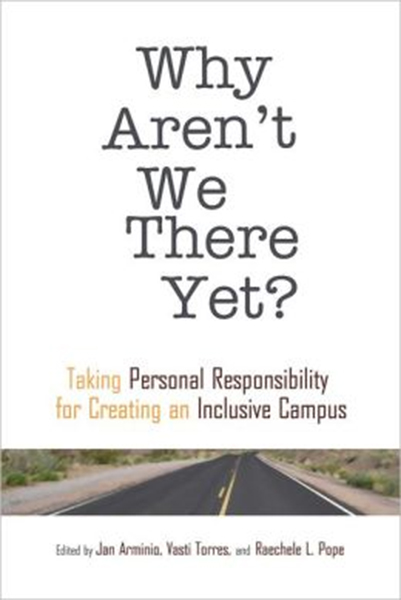
ACPA released “Why Aren't We There Yet? Taking Personal Responsibility for Creating an Inclusive Campus,” a book addressing the ongoing conversations about diversity, multiculturalism, and inclusion on campus and ways professionals can think more deeply about these issues and help individuals and institutions realize their goals of creating truly welcoming and affirming environments. (Edited by Jan Arminio, Vasti Torres, and Raechele L. Pope)
5 June 2012
Professional Development
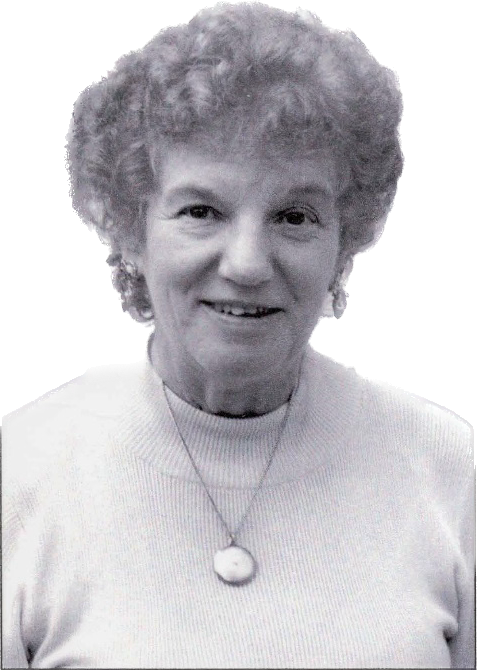
Phyllis L. Mable Emerging Leaders Institute created
Phyllis Mable headshot

Phyllis L. Mable Emerging Leaders Institute created, formerly known as the New Professionals Institute. The first Institute was held at The George Washington University in Washington, DC from 3-5 June 2012. Faculty included Jill Carnaghi, Peter Magolda, Kristan Cilente Skendall and Vernon A. Wall.
2011
2011
Publications

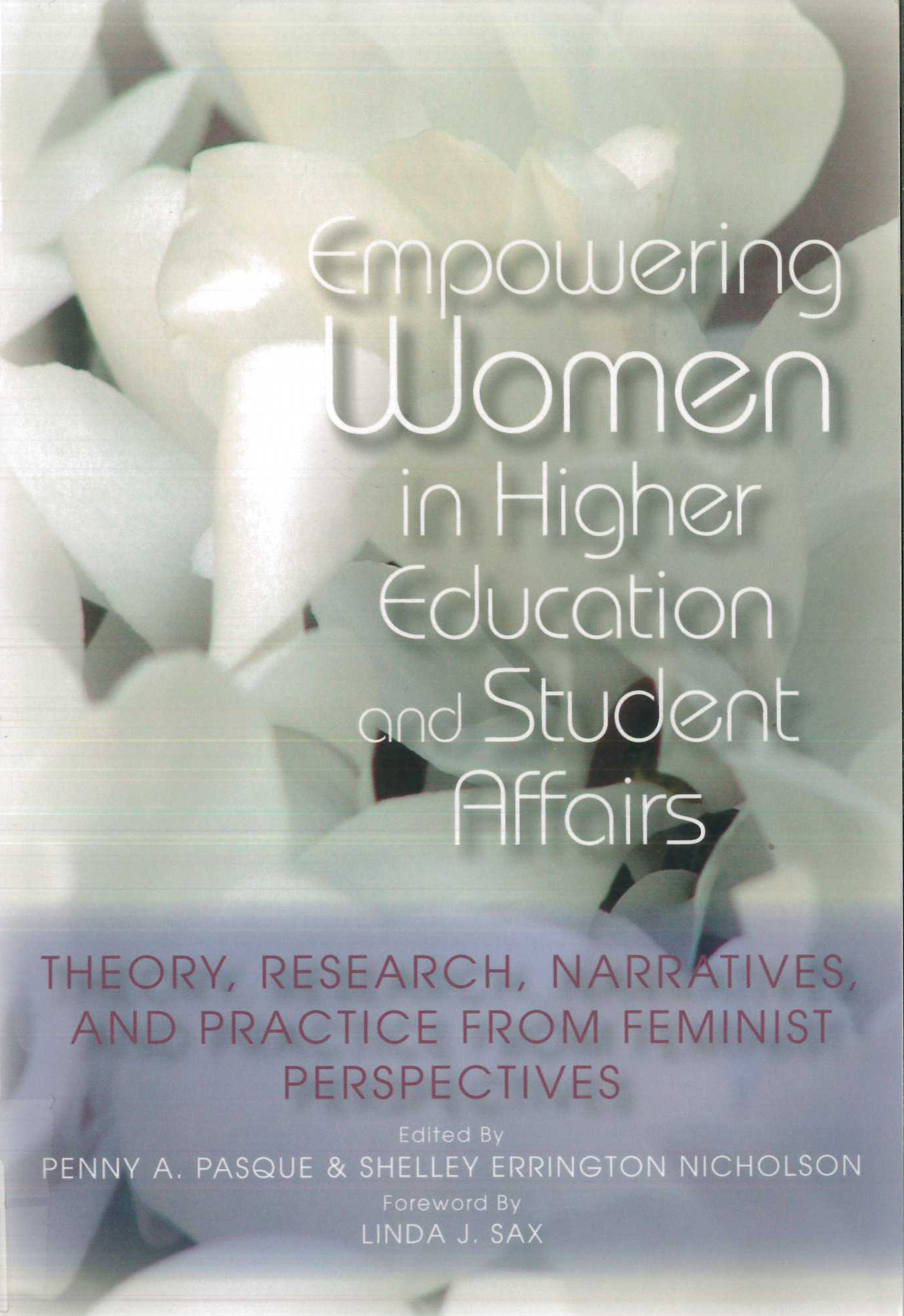
ACPA released “Empowering Women in Higher Education and Student Affairs: Theory, Research, Narratives, and Practice from Feminist Perspectives.” This book examines the experiences of women in higher education from application to college through graduate school as well as the barriers and social inequities women encounter in the professional practice of higher education, paying particular attention to how race, other demographics, and institutional types impact such disparities. (Edited by Penny A. Pasque and Shelley Errington Nicholson)
2011
Publications
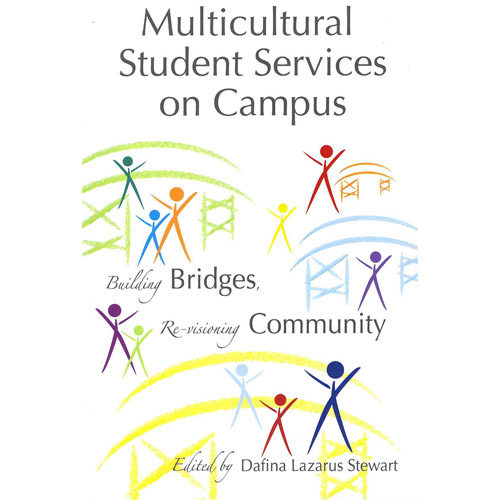
Multicultural Student Services on Campus: Building Bridges, Re-visioning Community

ACPA published “Multicultural Student Services on Campus: Building Bridges, Re-visioning Community.” This comprehensive text covers the history, services, mission, structure, strategies, challenges, and opportunities for multicultural student services on college and university campuses. (Edited by Dafina Lazarus Stewart)
27 April 2011
Leadership Council
Vote for Consolidation

ACPA and NASPA conducted a historic vote for possible consolidation.  On April 27, it was announced that 42% of eligible ACPA voters participated in the vote and 81% of those voted in favor of a new association.  Similarly, 42% of eligible NASPA voters participated, while only 62% of those voted in favor of a new association, short of the 2/3rds majority legally necessary to dissolve a non-profit in the District of Columbia.

2010
2010
Publications
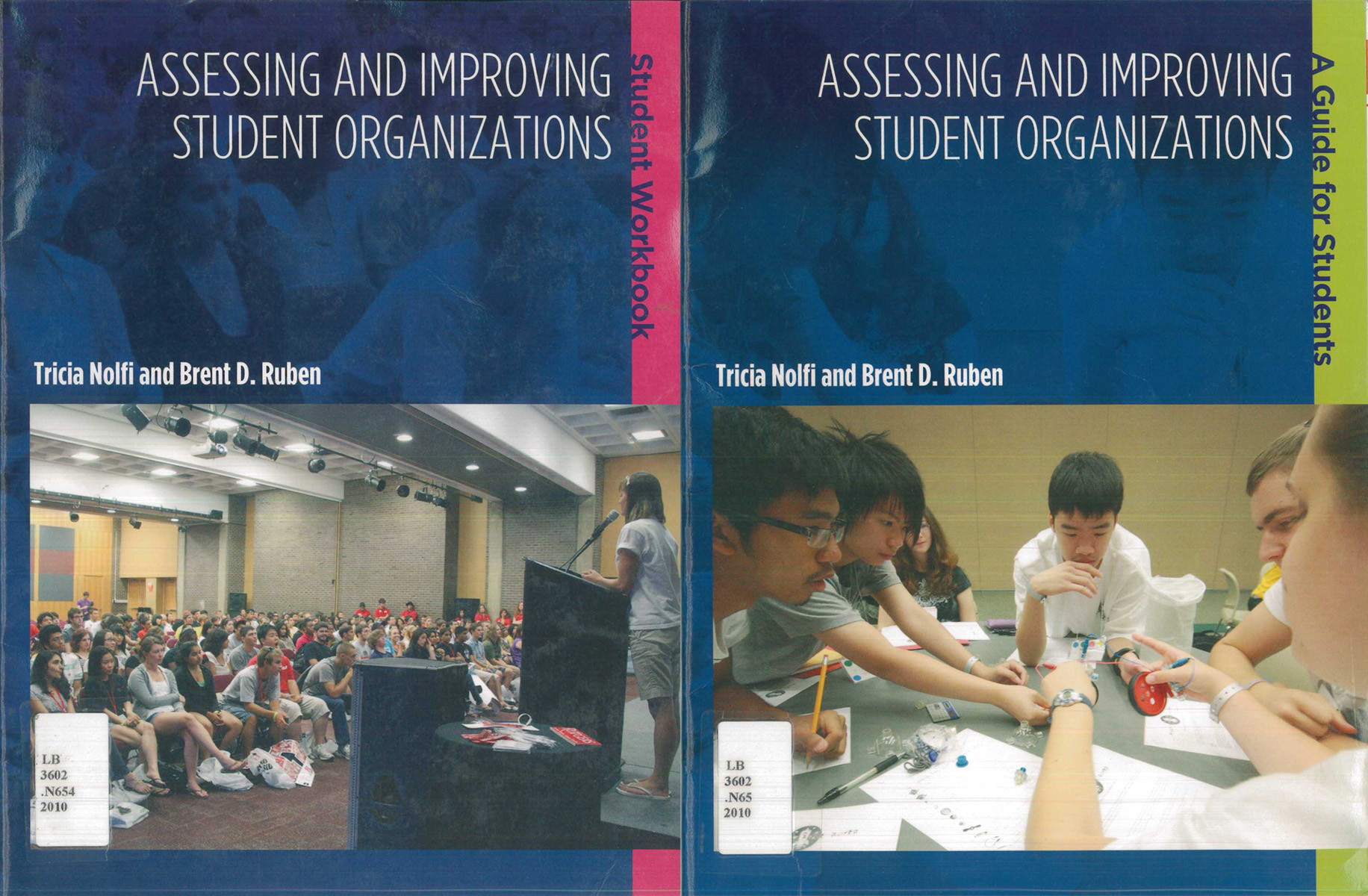
Assessing and Improving Student Organizations: The Student Guide and Student Workbook

Assessing and Improving Student Organizations: The Student Guide and Student Workbook.” This guide and accompanying workbook is written for leaders of student-led college organizations as they assess, plan, and improve their organizations in response to reviews by governing bodies and national chapters. (By Tricia Nolfi and Brent D. Ruben)
2010
2010
Publications

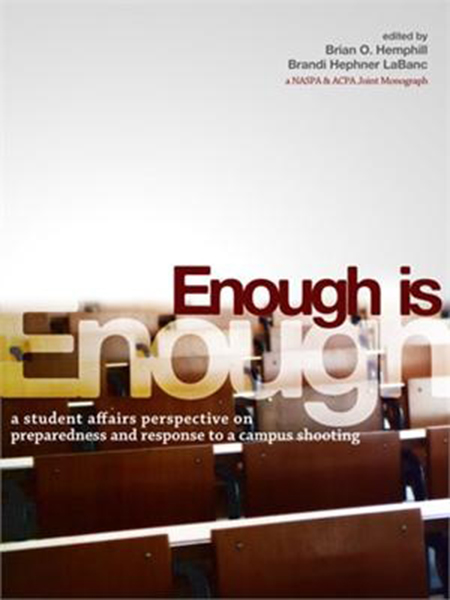
Enough Is Enough: A Student Affairs Perspective on Preparedness and Response to a Campus Shooting.” Through first-hand accounts, this book covers violence, suicide prevention, and mental health promotion and offers a comprehensive plan to create a campus-wide system for collecting information about students at-risk for self-harm or violence toward others. (Edited by Brian O. Hemphill and Brandi Hephner LaBanc)
2010
2010
Publications

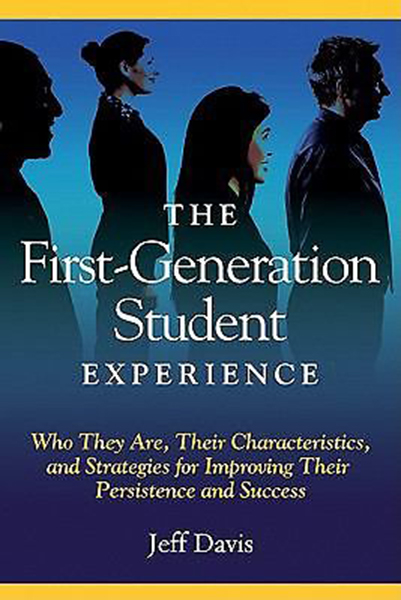
The First-Generation Student Experience: Implications for Campus Practice, and Strategies for Improving Persistence and Success.” This book profiles first-generation students and offers a set of best practices for how higher education institutions can improve the success of their first-generation student population. (By Jeff Davis)

2010
Publications

ACPA and NASPA released the “Professional Competency Areas for Student Affairs Practitioners.” This set of Professional Competency Areas is intended to define the broad professional knowledge, skills, and for some competencies, attitudes expected of student affairs professionals working in the U.S., regardless of their area of specialization or positional role within the field. All student affairs professionals should be able to demonstrate their ability to meet the basic list of outcomes under each competency area regardless of how they entered the profession. Thus, this document is intended to inform the design of professional development opportunities for student affairs professionals by providing outcomes that can be incorporated into the design of specific curriculum and training opportunities.

2010
Professional Development
Leadership Educators Institute Forms

Leadership Educators Institute is created in partnership with NASPA and NCLP to offer leadership educators comprehensive professional development.

2010
New Entity Groups Form

DC CPA, Commission for Spirituality, Faith, Religion, and Meaning, and the Commission for Recreation and Athletics formed (merged later with Wellness)

2009
2009
Publications

ACPA released “Maybe I Should... Case Studies on Ethics for Student Affairs Professionals.” This text, complete with case studies, is designed to help graduate students to midlevel student affairs professionals consider and incorporate professional ethics in their practice. (Edited by Florence A. Hamrick and Mimi Benjamin)
2009
Publications
Making Good on the Promise

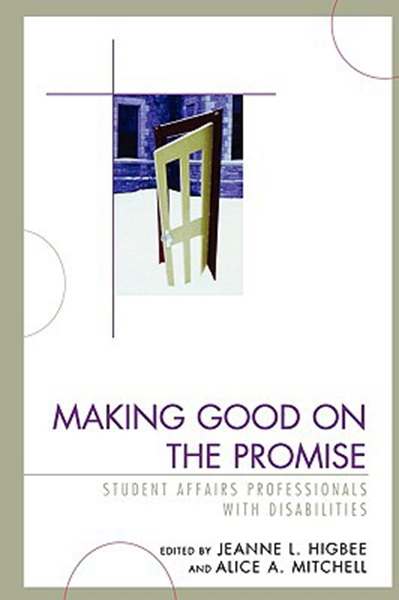
ACPA published “Making Good on the Promise,” a book providing a sociocultural perspective on disability and the wider disability movement that can assist higher education professionals understand their roles and behaviors as allies and access resources that all can use in the education of self and others. (By Jeanne L. Higbee and Alice A. Mitchell)
November/December 2009
Publications
50th Anniversary Edition of the Journal of College Student Development

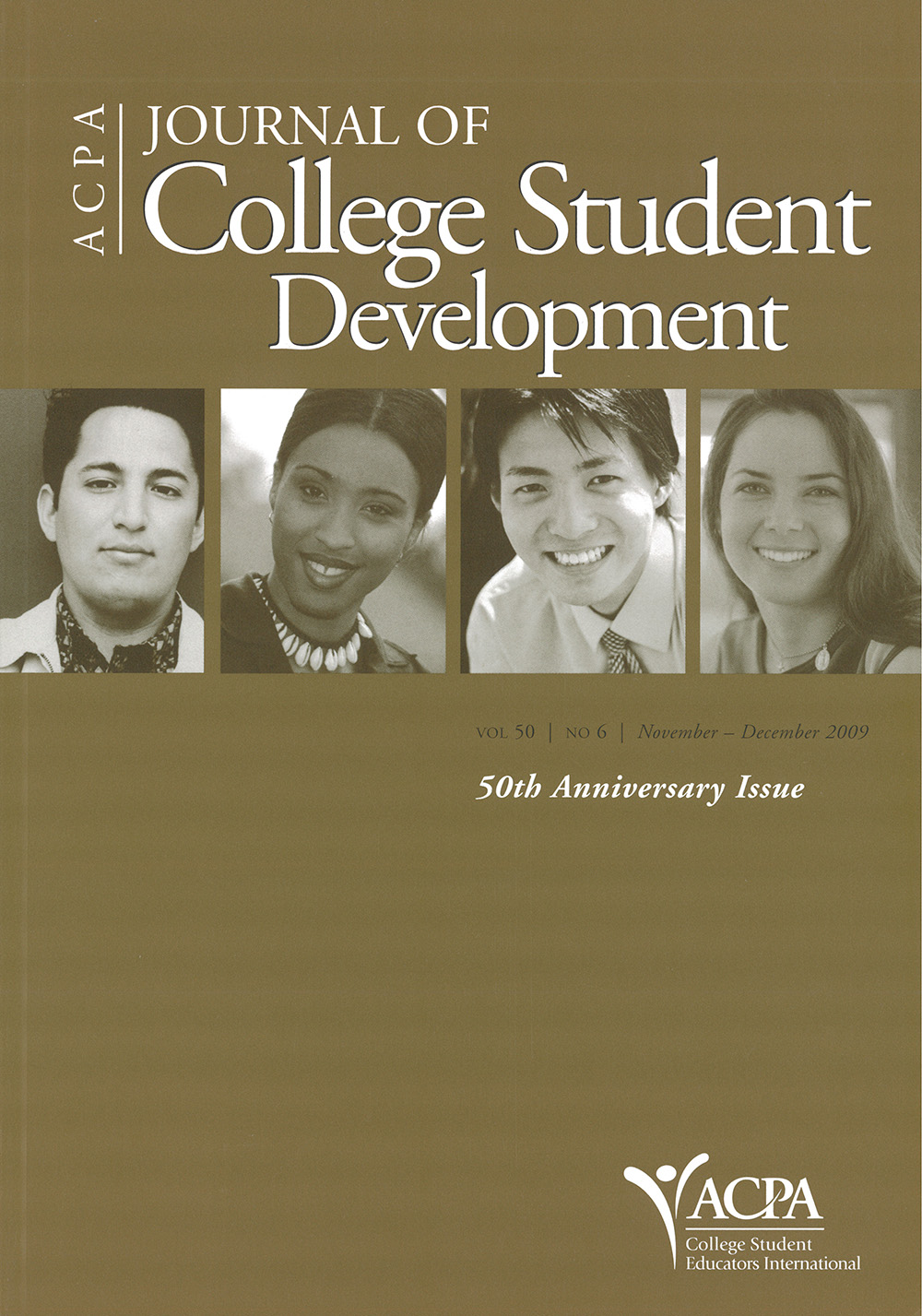
50th Anniversary Edition of the Journal of College Student Development published in the November/December issue. The six articles of this special issue focused on factors related to the development of the whole person. The authors provided a historical overview, summary of current research and scholarship, and recommendations for future research and scholarship. They addressed key domains of research and scholarship representing a wide range of practice within the field of student affairs.

2008
2008
Entity Groups
Arizona CPA forms

The Arizona College Personnel Association forms as a State Chapter of ACPA.

2008
Leadership Council
Task Force on the Future of Student Affairs

ACPA and NASPA formed the Task Force on the Future of Student Affairs, a group furthering the prospect of a possible ACPA/NASPA consolidation

2008
Entity Groups
Trinidad and Tobago Chapter forms

Trinidad and Tobago formed an ACPA Chapter under the Caribbean Tertiary Level Personnel Association

2007
2007
Leadership Council

Vasti Torres elected as first Latinx ACPA President and serves from 2007-2008.

2007
Publications

ACPA released the “ASK Standards Booklet.” Use ASK intentionally as a basis to further develop your assessment knowledge and that of your staff. Endorsed by national accrediting bodies, associations, and assessment experts, the ACPA ASK Standards articulate the areas of assessment skills and knowledge (ASK) needed by student affairs professionals in all functional areas as well as by others. Use ASK to plan staff training or your own further development through ACPA eLearning courses, Webinars, State/International division conferences, and the annual ACPA assessment conference. ASK is your "what do I need to know?" professional development road map! ASK is a member service from the ACPA Commission for Assessment and Evaluation.
2007
Publications

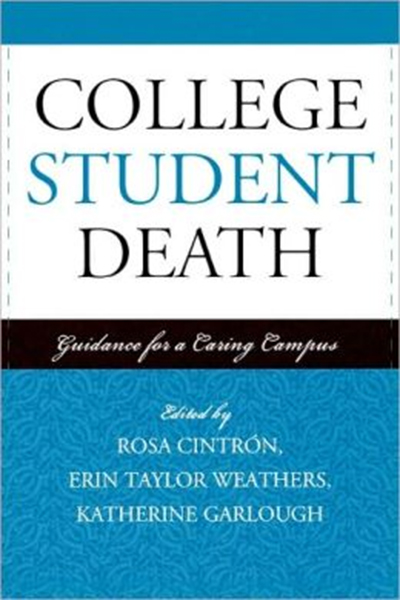
ACPA published “College Student Death: Guidance for a Caring Campus,” a book to help campus professionals—administration and faculty--in understanding the complexities of effective response to college students' death, from designing policies and protocols before a crisis occurs to appropriate courses of action in the immediacy of a student death. (Edited by Rosa Cintrón, Erin Taylor Weathers, and Katherine Garlough)
2007
Professional Development
Residential Curriculum Institute Created

The Residential Curriculum Institute (now known as the Institute on the Curricular Approach) is created to challenge participants to rethink the practices and grounding philosophies of a residential program.

1 July 2007
Leadership Council
New Governance Structure Implemented

The ACPA Governance Board was implemented to carry out strategic plan initiatives and to recommit, re-energize and reflect on the contemporary needs of students.

2006
2006
Publications
Where You Work Matters Released

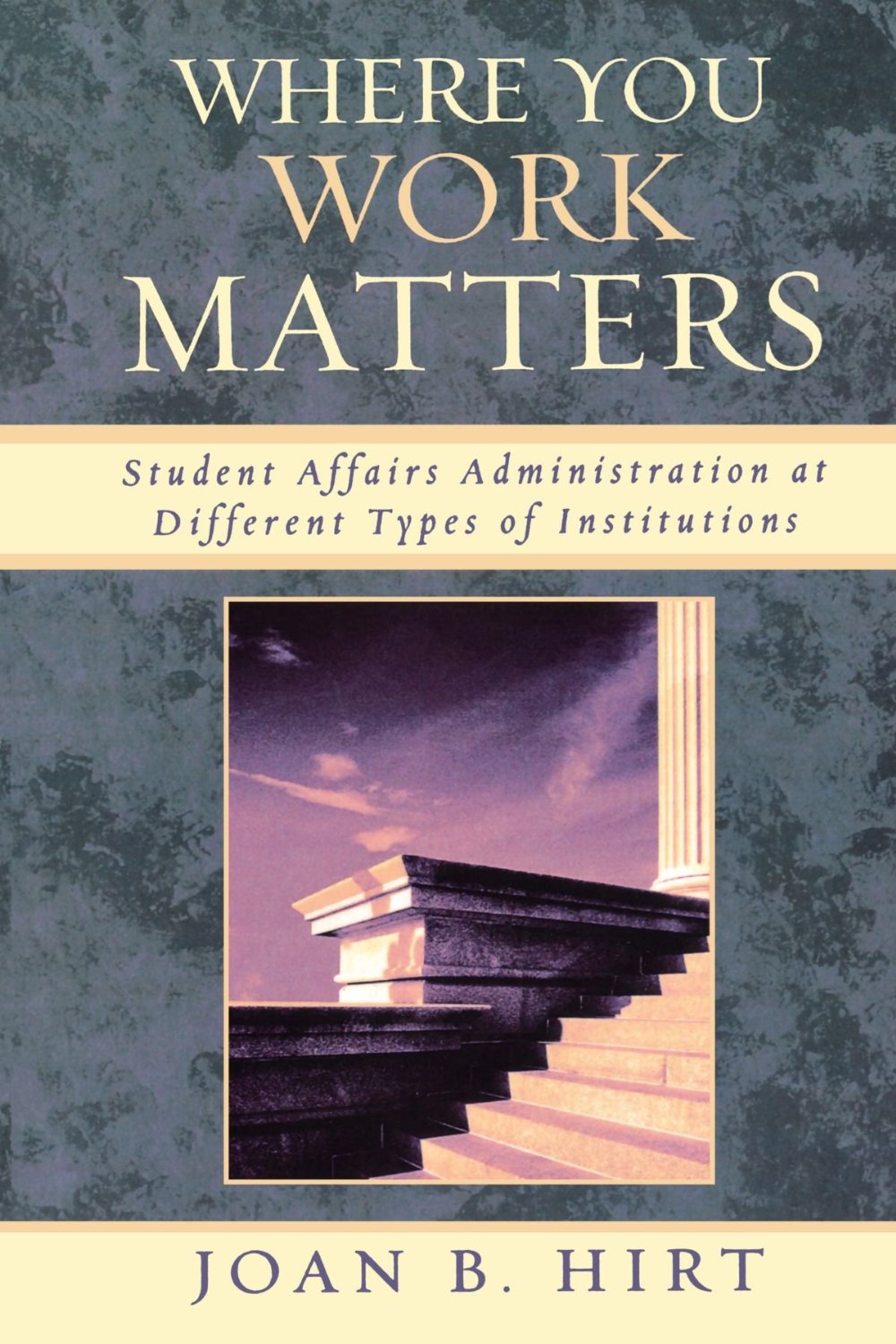
ACPA released “Where You Work Matters,” a book offering a fresh understanding of the complexity of the student affairs profession by examining the impacts of varying institutional types and organizational cultures on one’s professional practice. (By Joan B. Hirt)
2006
Publications
Learning Reconsidered 2: Implementing a Campus-Wide Focus on the Student Experience Released

Published by ACPA, ACUHO-I, ACUI, NACADA, NACA, NASPA, and NIRSA, “Learning Reconsidered 2: Implementing a Campus-Wide Focus on the Student Experience” released as a blueprint for action. It shows how to create the dialogue, tools, and materials necessary to put into practice the recommendations in Learning Reconsidered. This companion book brings together new authors, discipline-specific examples, and models for applying the theories in the original publication to move beyond traditional ideas of separate learning inside and outside the classroom.
2005
2005
Entity Groups
New Entity Groups Formed

Commission for Graduate and Professional Student Affairs (CGPSA) and Commission for Social Justice Education (CSJE)  formed as new ACPA Entity Groups.

2004
2004
Publications
Learning Reconsidered: A Campus-Wide Focus on the Student Experience

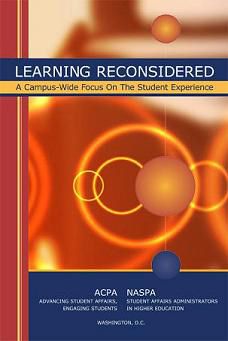
ACPA published “Learning Reconsidered: A Campus-Wide Focus on the Student Experience,” an argument for the integrated use of all of higher education's resources in the education and preparation of the whole student. This is a co-published publication between ACPA and NASPA.
2004
Publications
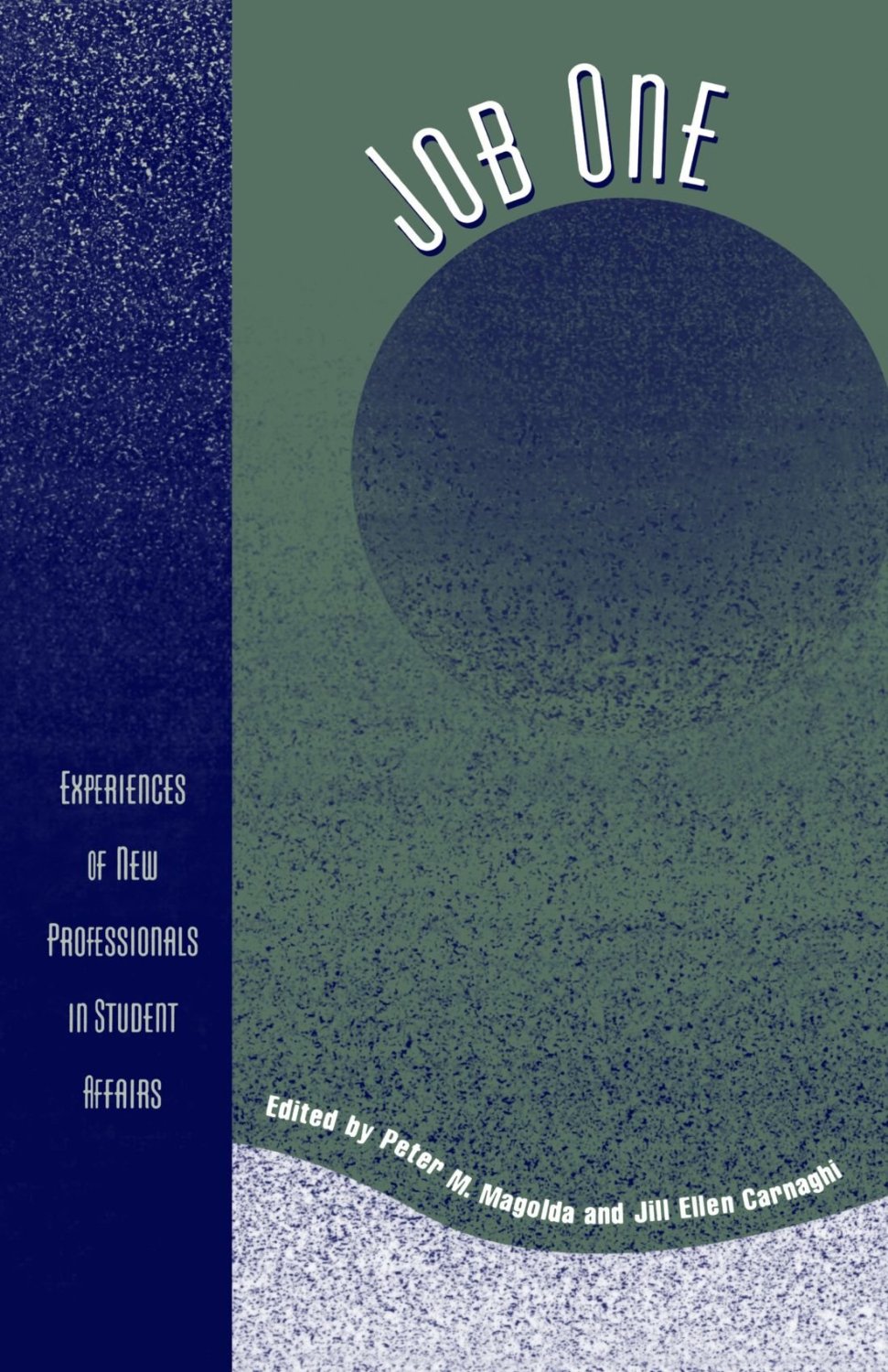
Job One: Experiences of New Professionals in Student Affairs.

ACPA released “Job One: Experiences of New Professionals in Student Affairs.” Using narratives written by new professionals about their transition from graduate preparation to professional work, this book illuminates the experience searching for one’s first position, assimilating to campus norms, formulating a professional identity, meeting expectations, dealing with conflicts, and remaining true to one’s values. (Edited by Peter M. Magolda and Jill E. Carnaghi)

15-17 June 2004
Professional Development
Student Affairs Assessment Institute created

The Student Affairs Assessment Institute was created and held it's inaugural Institute in Washington, DC. It was established as a three-day workshop designed to help campus teams develop, implement, and enhance student affairs assessment programs. Faculty included Leila V. Moore, Robert D. Reason, Susan Salvador, John H. Schuh, Patrick T. Terenzini, Lee Upcraft, and J. Fredericks Volkwein.

2003
2003
Leadership Council
College Student Educators International Tagline Adopted

ACPA added a tagline to better reflect its purpose and membership to: ACPA-College Student Educators International.

2003
International Office
Greg Roberts hired as ACPA Executive Director

Greg Roberts joins the ACPA International Office Team as Executive Director.
2003
Entity Groups
New Entity Groups Form

Illinois CPA and the Multiracial Network (now known as the Multiracial and Transracial Adoptee Network) formed.

2002-2003
Leadership Council
Blue Ribbon Task Force Implemented

The ACPA/NASPA Blue Ribbon Task Force to begin discussions about the proposal of a consolidation between the two associations

2003
Publications

ACPA and NASPA produced Principles of Good Practice for Student Affairs to collaborate with others in higher education to advance student learning.

1992-2002

2002
2002
Publications

ACPA Developments goes electronic with Volume 28, No. 4, under the editorship of Heidi Levine.
2001
2001
Publications
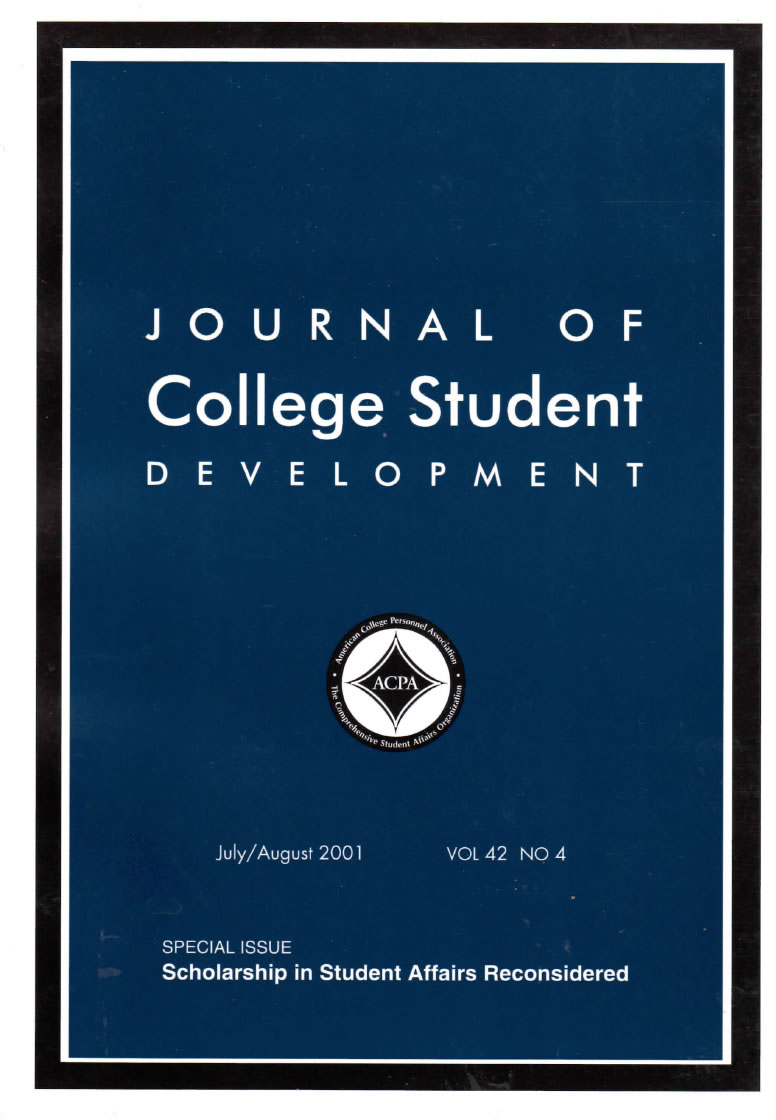
Scholarship in Student Affairs Reconsidered: Special Issue of the Journal of College Student Development

In the July/August edition of the Journal of College Student Development, ACPA released “Scholarship in Student Affairs Reconsidered: Special Issue of the Journal of College Student Development.” After Ernest Boyer raised the issue of what constitutes scholarship and how it is used in his 1990 book, Scholarship Reconsidered: Priorities of the Professorate, five Senior Scholars of ACPA were asked to write papers for the 2001 convention and other senior scholars were invited to respond to these papers. The conference papers provoked debate about what constitutes scholarship in student affairs and JCSD devoted a special issue to the papers and reactions.
2001
Publications
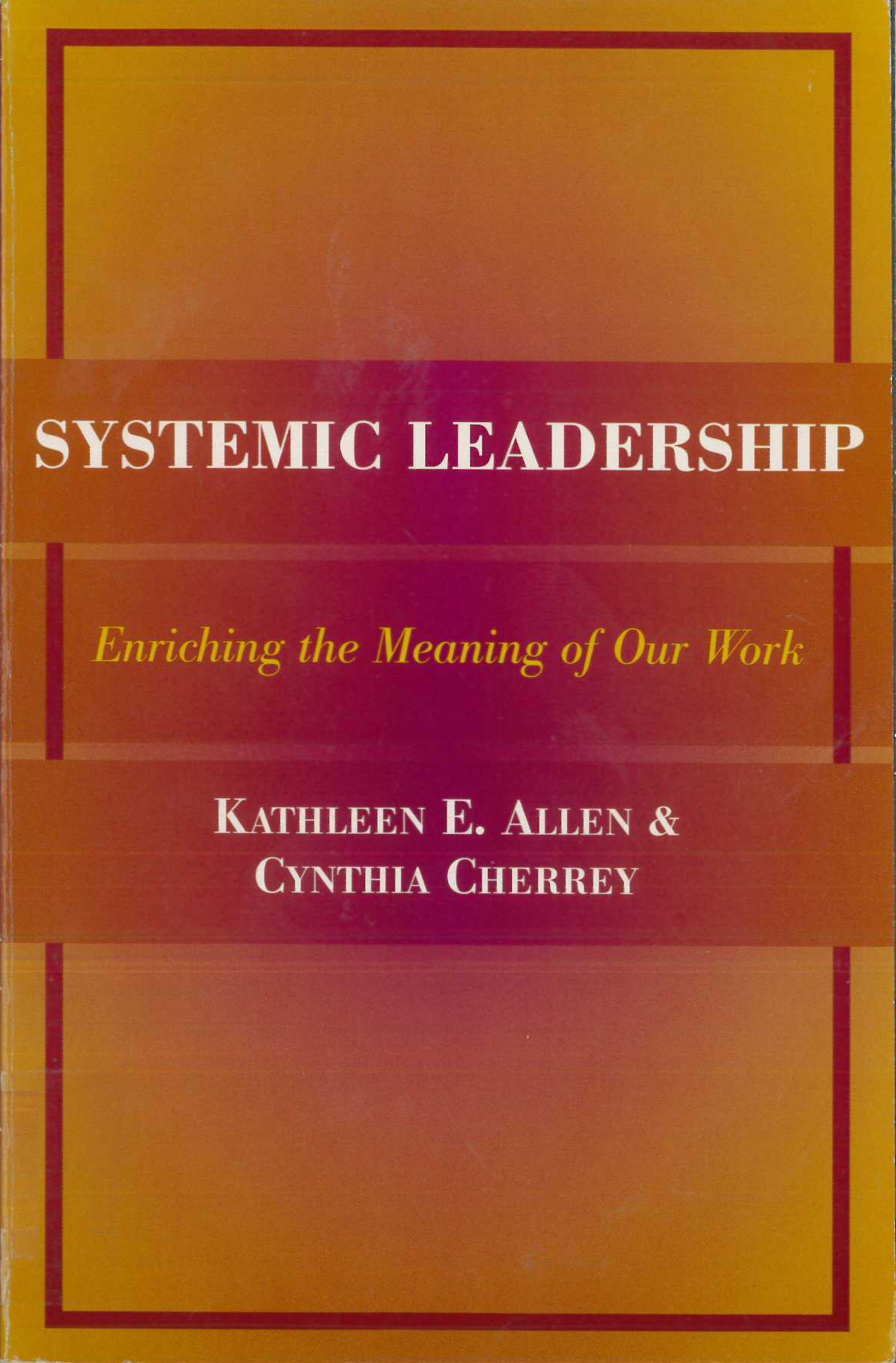
Systemic Leadership Published

ACPA co-published “Systemic Leadership” with NACA, a text offering four strategies for organizational leadership (lead, learn, relate, and influence) to foster leadership and change in higher education organizations. (By Kathleen E. Allen and Cynthia Cherrey)

2001
Entity Groups
Colorado CPA forms

Colorado forms a State Chapter of ACPA

2000
Entity Groups

The Task Force on Disability becomes the Standing Commission on Disability (now the Coalition on Disability) which was established to support inclusivity and to advance disability education within the field.

2000
Publications
Several Publications released

Enhancing Student Learning: Setting the Campus Context,” focusing on partnerships between academic affairs and student affairs to promote student learning by working in harmony to create a more seamless campus landscape. (Edited by Frances K. Stage, Lemuel W. Watson, and Melvin Terrell)

Giving Voice to Critical Campus Issues: Qualitative Research in Student Affairs,” which presented case studies and original qualitative research that address the complex issues of classism, student suicide, alcohol-related death, acquaintance rape, multiracial identity, and the self-development of young adults with alcoholic parents. (By Kathleen Manning)

Toward Acceptance: Sexual Orientation Issues on Campus” - Building on the 1990 text Beyond Tolerance, this book presents current research and continues examining the complex issues facing the gay, lesbian, and bisexual community on campus by furthering higher educational professionals’ understanding of transgender individuals, the diversity within the LGBT community, and ways to ally with LGBT students and professionals. (Edited by Vernon A. Wall and Nancy J. Evans)

Higher Education Trends For The Next Century: A Research Agenda For Student Success,” a book presenting a collection of eight position papers on a research agenda in higher education, covering topics such as access, affordability, learning and teaching, technology, collaboration and partnerships, accountability, and government and governance. (Edited by Cynthia S. Johnson and Harold E. Cheatham)

2000
Professional Development
Donna M. Bourassa Mid-Level Management Institute created

The ACPA Mid-Level Management Institute was created (became the Donna M. Bourassa Mid-Level Management Institute in 2005) with the purpose of promoting a more advanced understanding of the principles of student affairs and providing effective management tools to excel.

1999
March 1999
ACPA Foundation

ACPA Diamond Honoree recognition created by the ACPA Foundation, inaugurating the first class of Diamond Honorees at the 1999 Convention in Atlanta, Georgia.

1999
Involvement

The ACPA Emerging Scholars Program was implemented by the ACPA Senior Scholars with the purpose of supporting, encouraging, and honoring early-career individuals who are emerging as contributors to student affairs and higher education scholarship and who are pursuing research initiatives congruent with the mission, interests, and strategic goals of ACPA.

1998
1998
Publications
Several Publications released

“To Mark of the Beginning: A Social History of College Student Affairs,” which examined the historical and cultural climate surrounding the emergence of college student personnel work and asserts that it remains a unique American invention. (By Richard B. Caple)

State of the Art of Preparation and Practice in Student Affairs: Another Look,” a revised and updated version of the 1988 text by Young and Moore. Acknowledging important changes in higher education and student affairs, this book re-examines the status of student affairs preparation and practice by some of the field's leading thinkers. (By Nancy E. Evans and Christine E. Phelps Tobin)

Powerful Partnerships A Shared Responsibility for Learning - Despite American higher education's success at providing collegiate education for an unprecedented number of people, the vision of equipping all our students with learning deep enough to meet the challenges of the post-industrial age provides us with a powerful incentive to do our work better. People collaborate when the job they face is too big, is too urgent, or requires too much knowledge for one person or group to do alone. Marshalling what we know about learning and applying it to the education of our students is just such a job. This report makes the case that only when everyone on campus -- particularly academic affairs and student affairs staff--shares the responsibility for student learning will we be able to make significant progress in improving it.

1998
Professional Development
NextGen Institute created

NextGen Institute was created and chaired by Vicki Cawley from the University of Missouri-Columbia.

1998
Entity Groups
Transgender added to Standing Committee for LGBT Awareness

Transgender added to the Standing Committee for LGBT Awareness, which was later renamed to the Coalition for Sexuality & Gender Identities in 2017.

1998
Entity Groups
First Cabaret

The Standing Committee for LGBT Awareness hosts the first Cabaret Drag Show at the 1998 ACPA Annual Convention.

1998
Publications
Principles of Good Practice for Student Affairs

ACPA and NASPA produced Principles of Good Practice for Student Affairs to collaborate with others in higher education to advance student learning.

1997
1997
Entity Groups
Caribbean Tertiary Level Personnel Association forms

CTLPA forms as a International Division of ACPA.

1996
1996
Leadership

Incoming 1996-1997 ACPA President Paul Oliaro was the first to have a student introduce him before delivering the Presidential Address at the Annual Convention in Baltimore, Maryland.
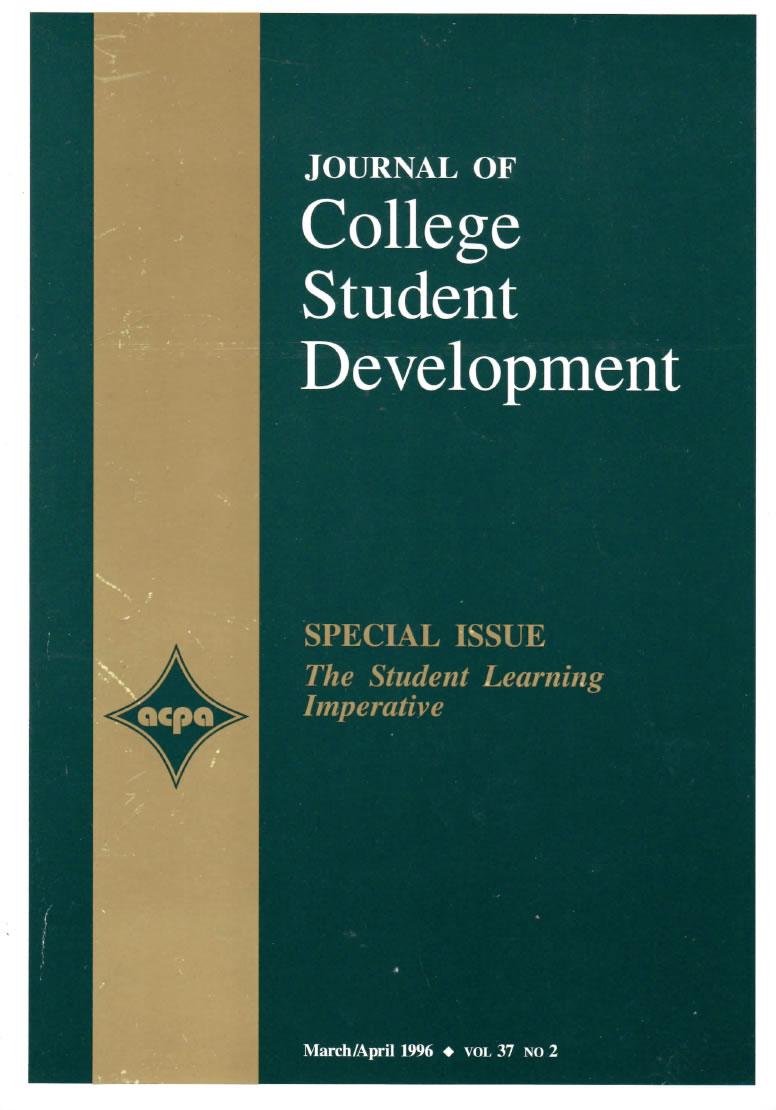
March 1996
Publications
JCSD Special Issue

The March/April issue of The Journal of College Student Development was published focusing on the implications of the Student Learning Imperative for the practice of Student Affairs. The authors were asked to answer: What do our colleges and universities need from student affairs educators?
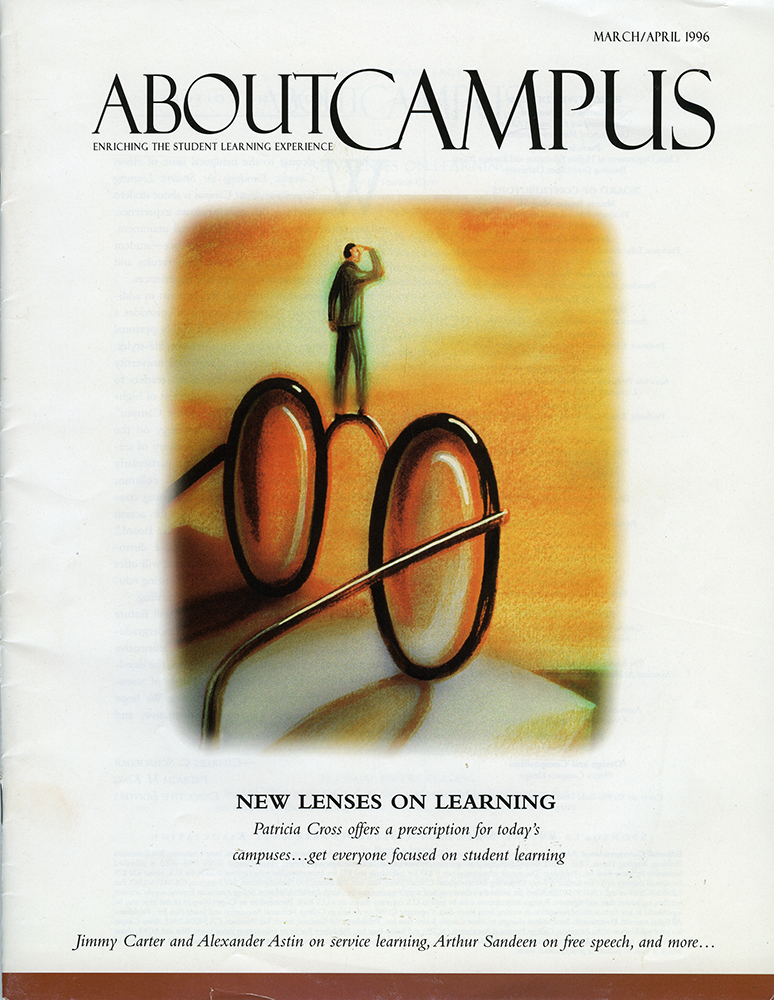
1996
Publications
Inaugural issue of About Campus
About Campus cover

Inaugural issue of About Campus released, conceived as a magazine-format publication that would examine emerging trends, critical and "controversial" issues, and interviews with higher education and student affairs leaders. About Campus is recognized as one of the most widely read and circulated publications addressing issues related to campus life and student learning. 1986-1987 and 1993-1994 ACPA President Charles Schroeder and Pat King served as the inaugural co-editors.
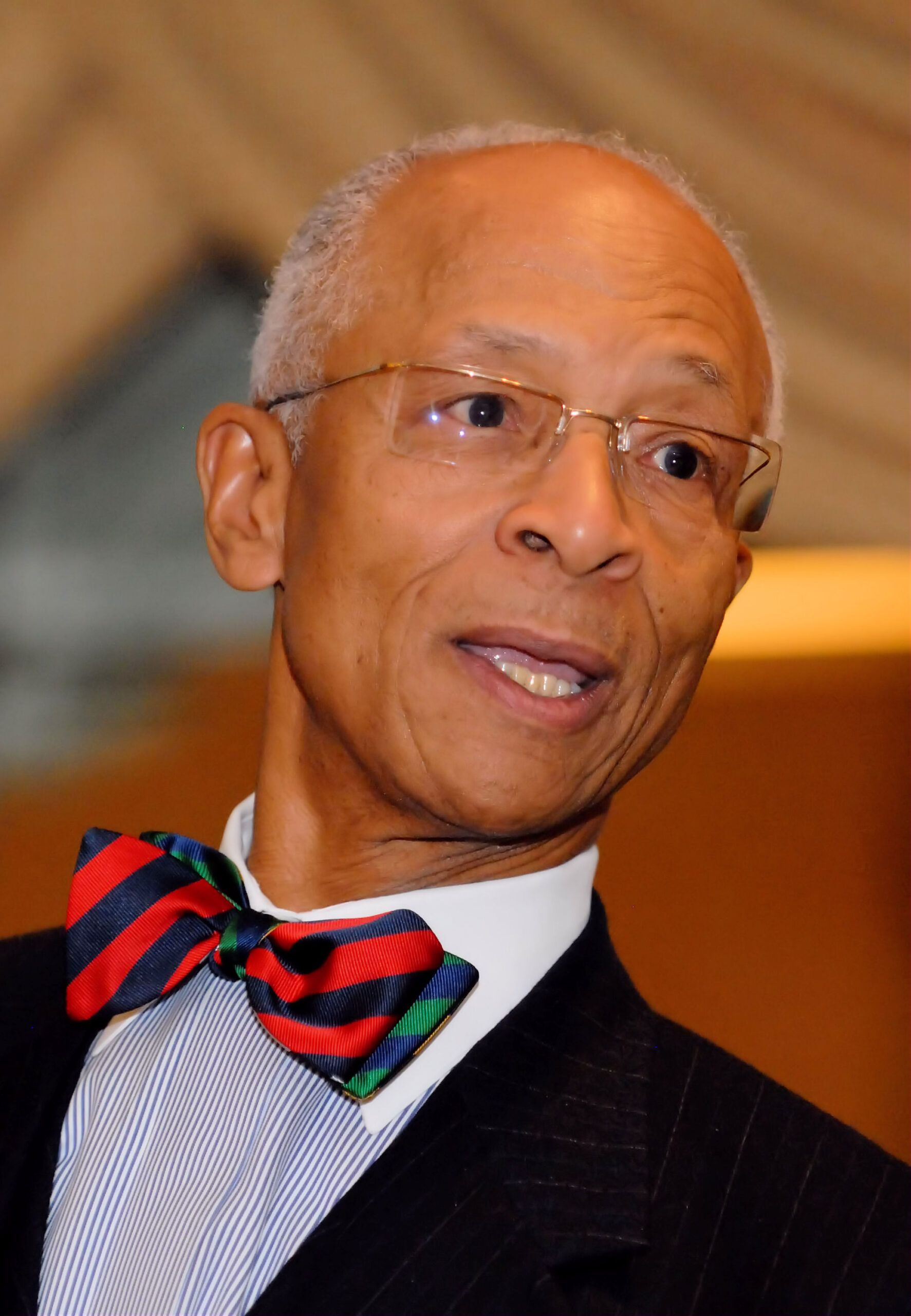
1995
1995
Leadership
Harold Cheatham first African-American Male President

Harold Cheatham served as the 1995-96 ACPA President, the first African-American male to be elected to the role.
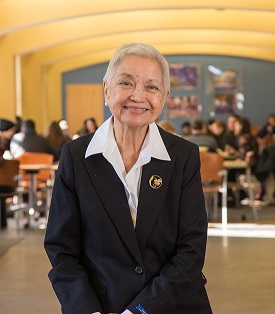
1995
Leadership
Carmen Guevara Neuberger becomes Executive Director

Carmen Guevara Neuberger hired as ACPA’s second Executive Director.
1995
Publications
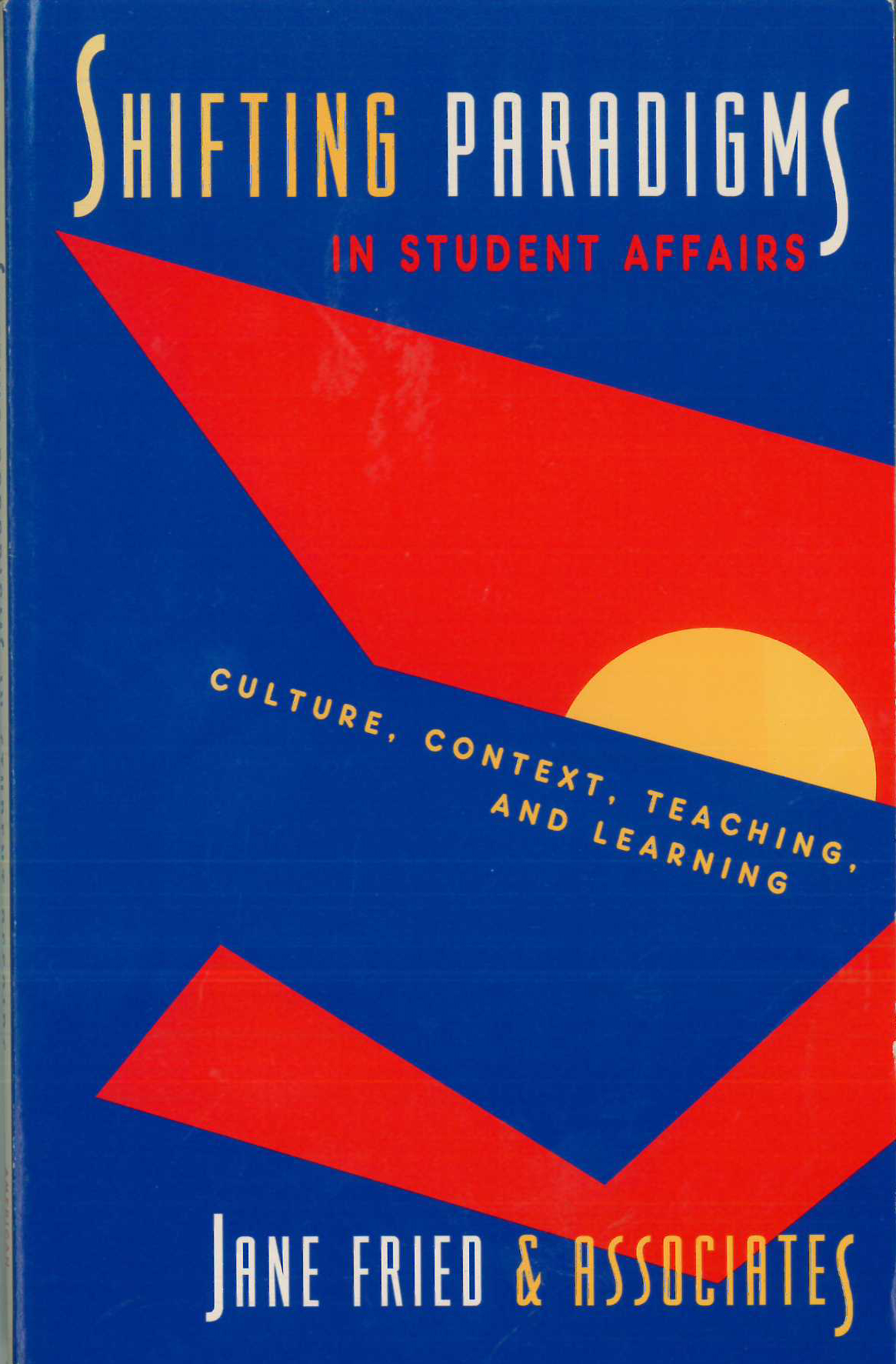
Shifting Paradigms in Student Affairs: Culture, Context, Teaching and Learning
Shifting Paradigms cover

ACPA released “Shifting Paradigms in Student Affairs: Culture, Context, Teaching and Learning,” a book examining diversity and multicultural issues on campus related to race, ethnicity, sexual orientation, gender, and disability status as well as differing perspectives generated by professional roles and philosophy. (By Jane Fried and Associates)
1994
1994
ACPA Foundation
ACPA Foundation forms

ACPA Educational Leadership Foundation (the ACPA Foundation) was formed.
1994
Publications
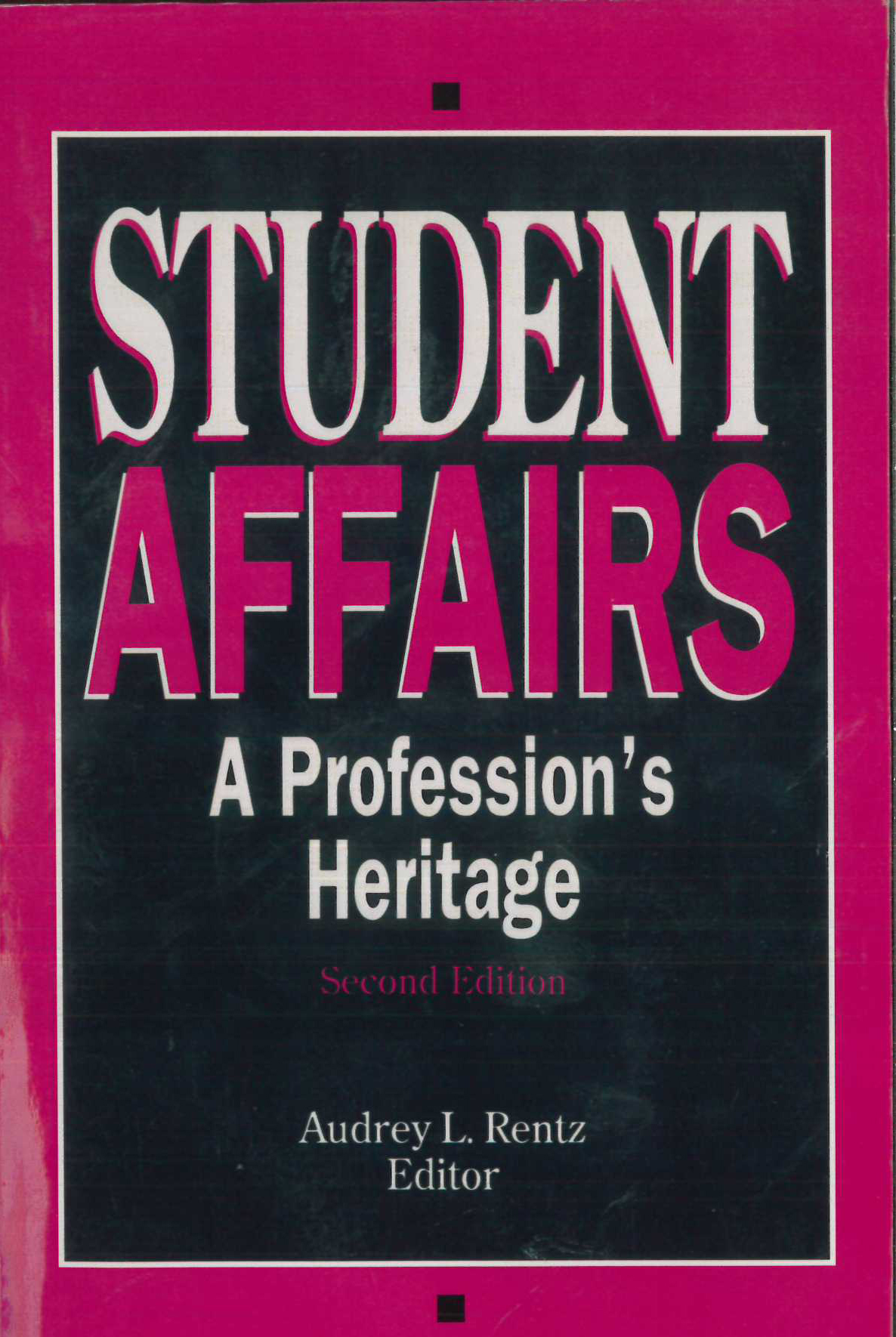
Student Affairs: A Profession's Heritage (2nd ed.),

ACPA published “Student Affairs: A Profession's Heritage (2nd ed.),” the second and expanded edition includes content on identity development and the feminization of the profession. (Edited By Audrey L. Rentz)
1994
Publications
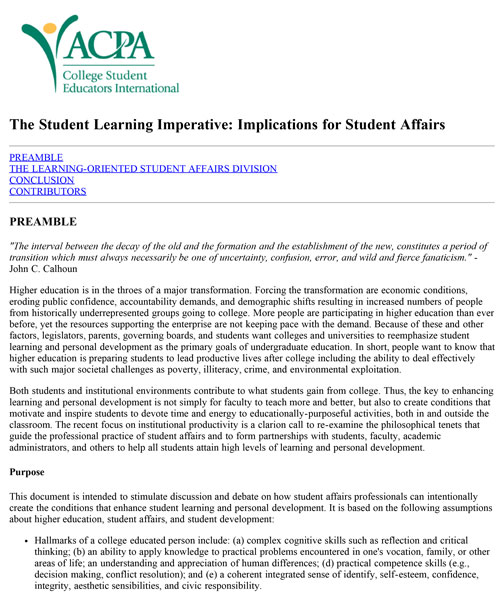
The Student Learning Imperative: Implications for Student Affairs

The Student Learning Imperative: Implications for Student Affairs” was released with the intention to stimulate discussion and debate on how student affairs professionals can intentionally create the conditions that enhance student learning and personal development.

1993
1993
Publications
Cultural Perspectives in Student Affairs Work

ACPA released “Cultural Perspectives in Student Affairs Work,” a book describing and applying cultural concepts and perspectives in student affairs work. The contributors examine institutional culture, student culture, faculty and staff culture, as well as how to assess and shape culture on campus. (Edited by George D. Kuh)
1992
1992
Leadership
Malcolm van Deursen becomes Executive Director.
Vandeuresen headshot

ACPA hired its first staff member, Malcolm van Deursen, as Executive Director.

1992
International Office
ACPA moves into One Dupont Circle

ACPA moved into office space at the National Center for Higher Education at One Dupont Circle, NW in Washington, DC.
1981-1991

1991
1991
Publications
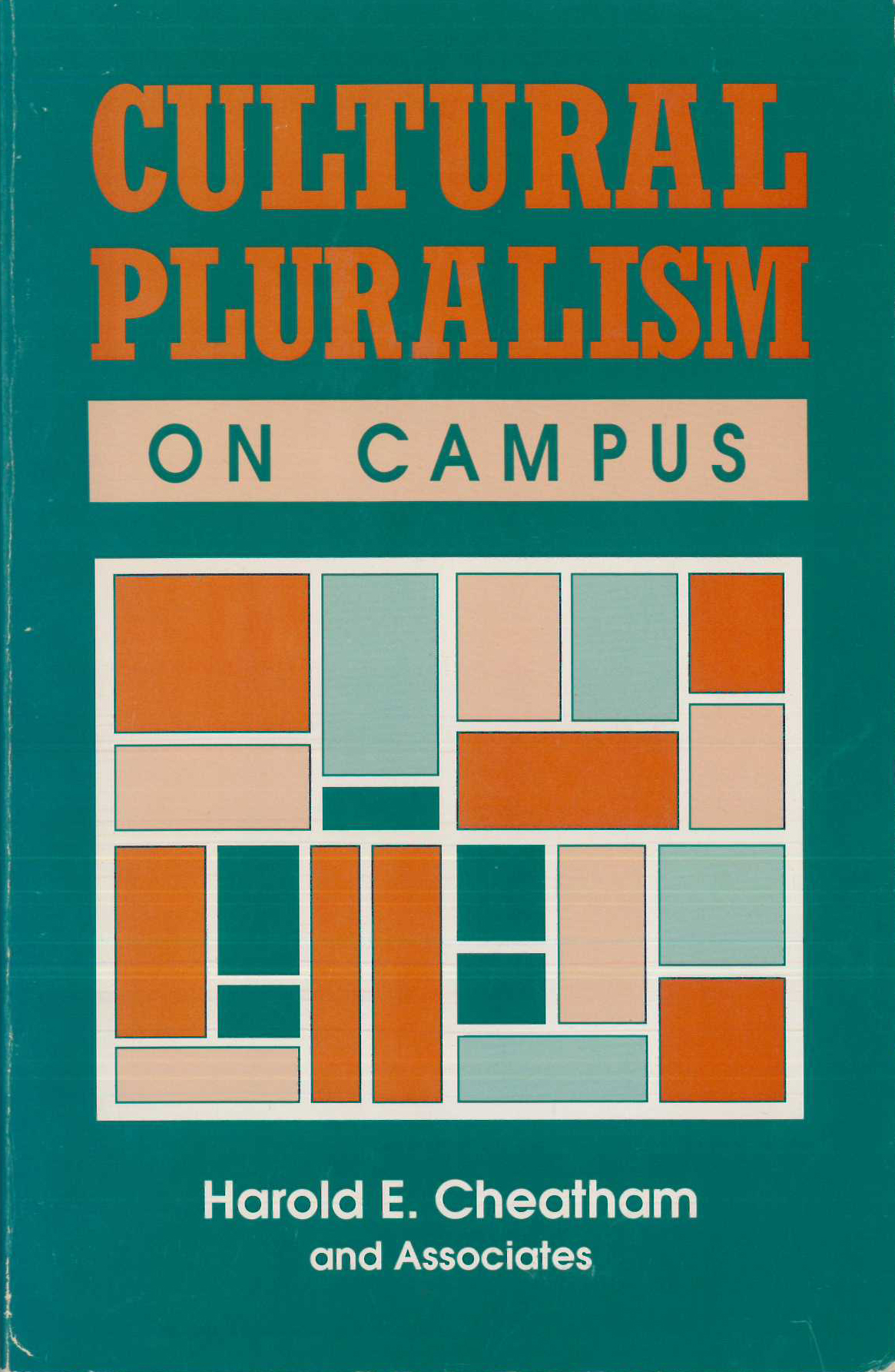
Cultural Pluralism on Campus

ACPA published “Cultural Pluralism on Campus,” a compelling text explains why developing diversity programs is vital to the future of higher education and challenges student affairs professionals to more deliberately implement cultural pluralism on campus. (By Harold E. Cheatham & Associates)
1991
Publications
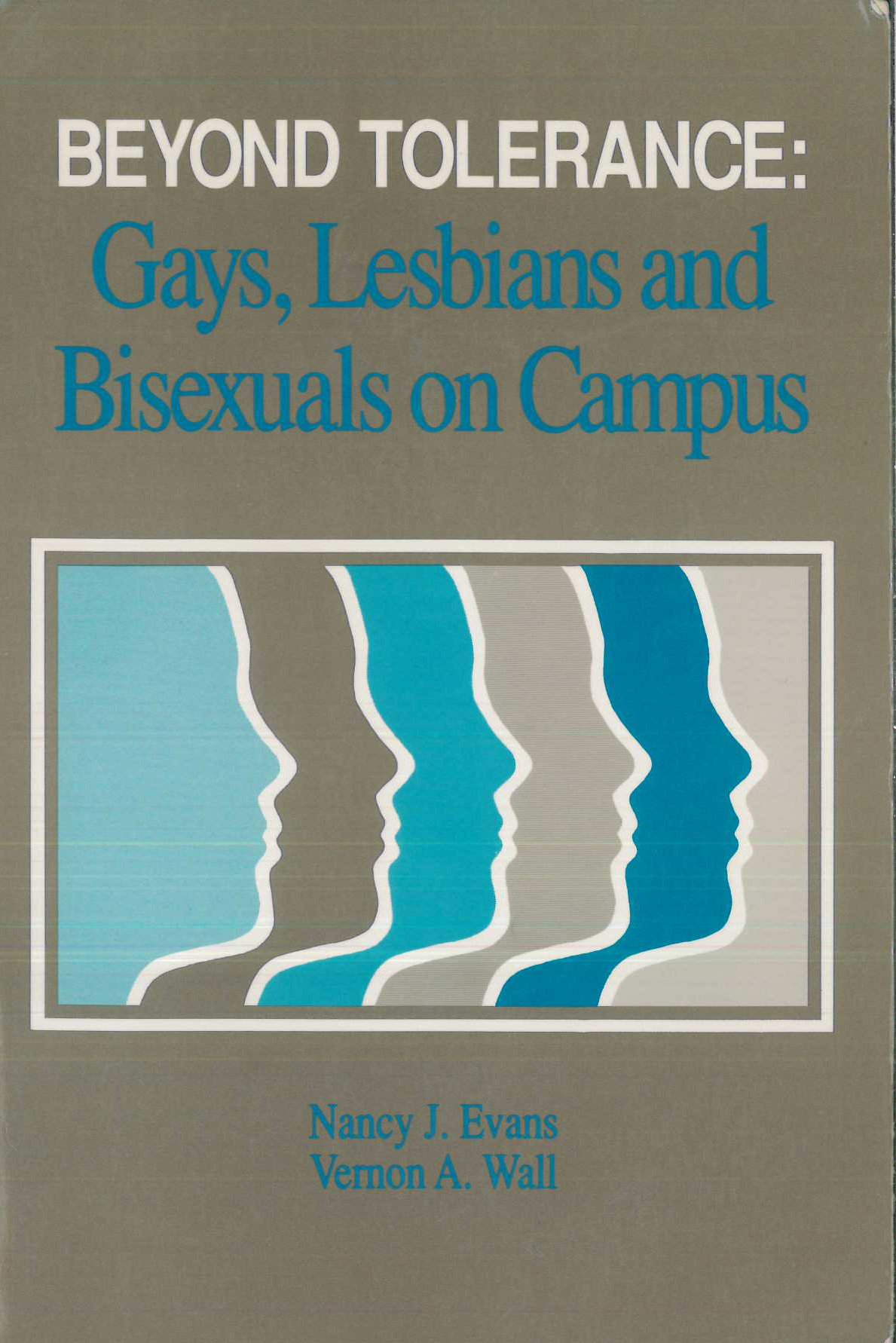
Beyond Tolerance: Gays, Lesbians and Bisexuals on Campus

ACPA released “Beyond Tolerance: Gays, Lesbians and Bisexuals on Campus,” a ground-breaking book and an essential resource for professionals addressing challenging issues that confront gay, lesbian, and bisexual students on campus. Among the topics examined are identity development, homophobia, career planning, and gay and lesbian student organizations. (Edited by Nancy Evans and Vernon Wall)
1991
Publications

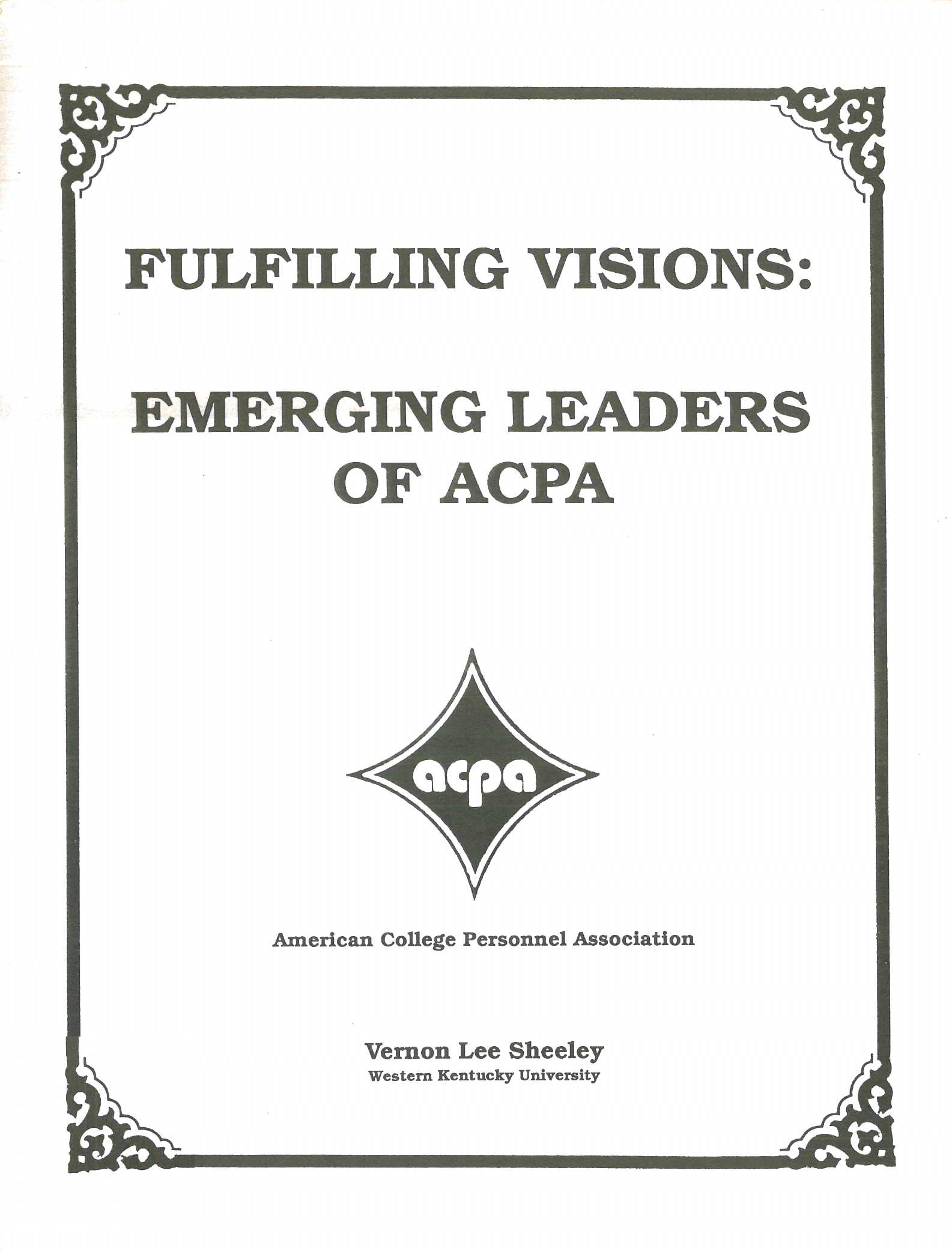
Fulfilling Visions: Emerging Leaders of ACPA,” a comprehensive chronology and profile of the presidents of ACPA from 1924 to 1991 (May L. Cheney to Laurine E. Fitzgerald) was a follow-up to the 1975 book and was initially distributed at 1991 ACPA conference in Atlanta. (By Vernon Lee Sheeley)
1991
International Office
AACD Disaffiliation

ACPA leaders and members voted to disaffiliate from AACD (the American Association for Counseling and Development, previously APGA), later renamed the American Counseling Association (ACA). This separation became effective on September 30, 1992. 

1990
1990
Publications
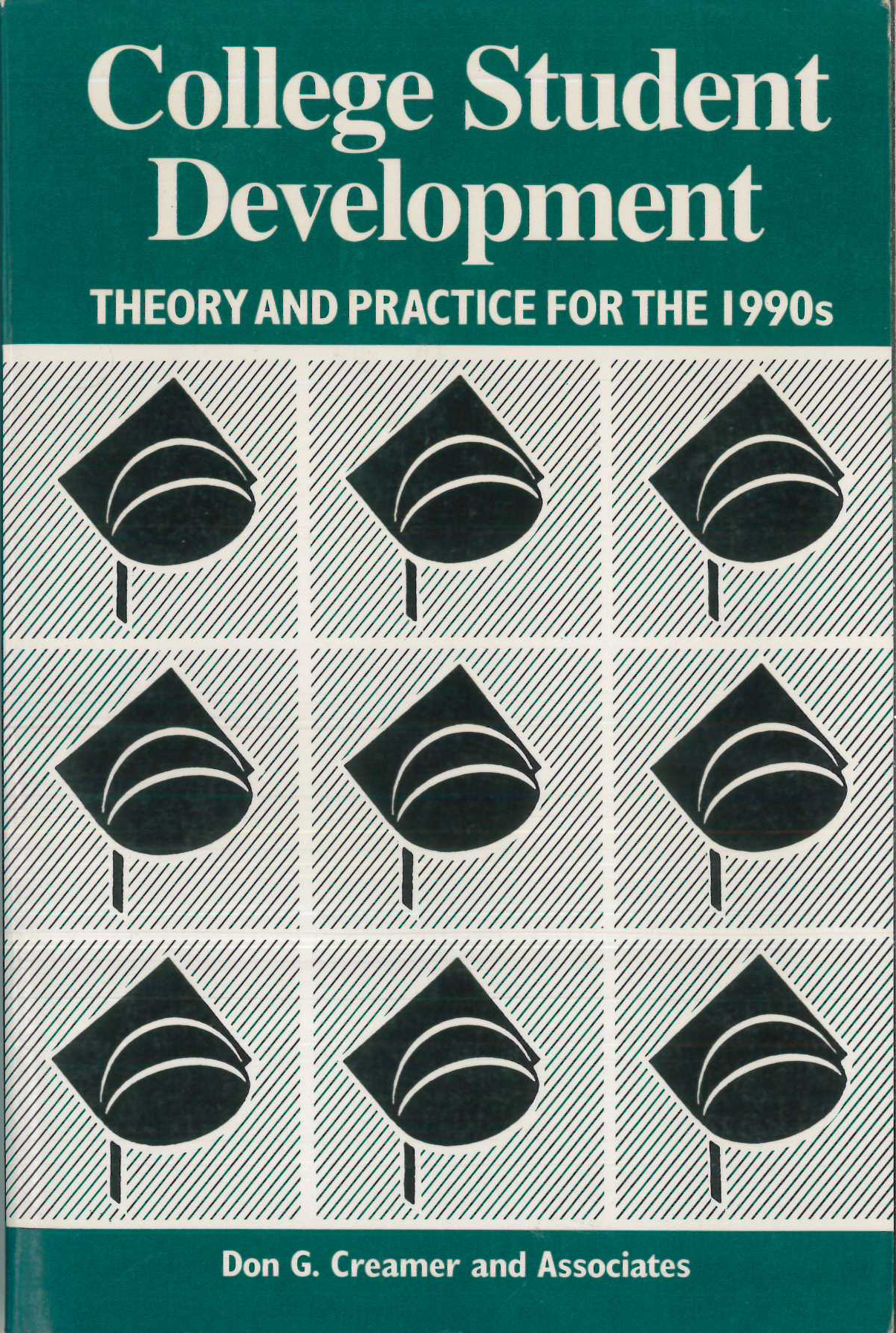
College Student Development: Theory and Practice for the 1990s

ACPA published “College Student Development: Theory and Practice for the 1990s,” a book that embodies the most contemporary thinking about student development and environmental theory, assessment, outcomes, and programming. (By Don Creamer & Associates)
1990
Publications
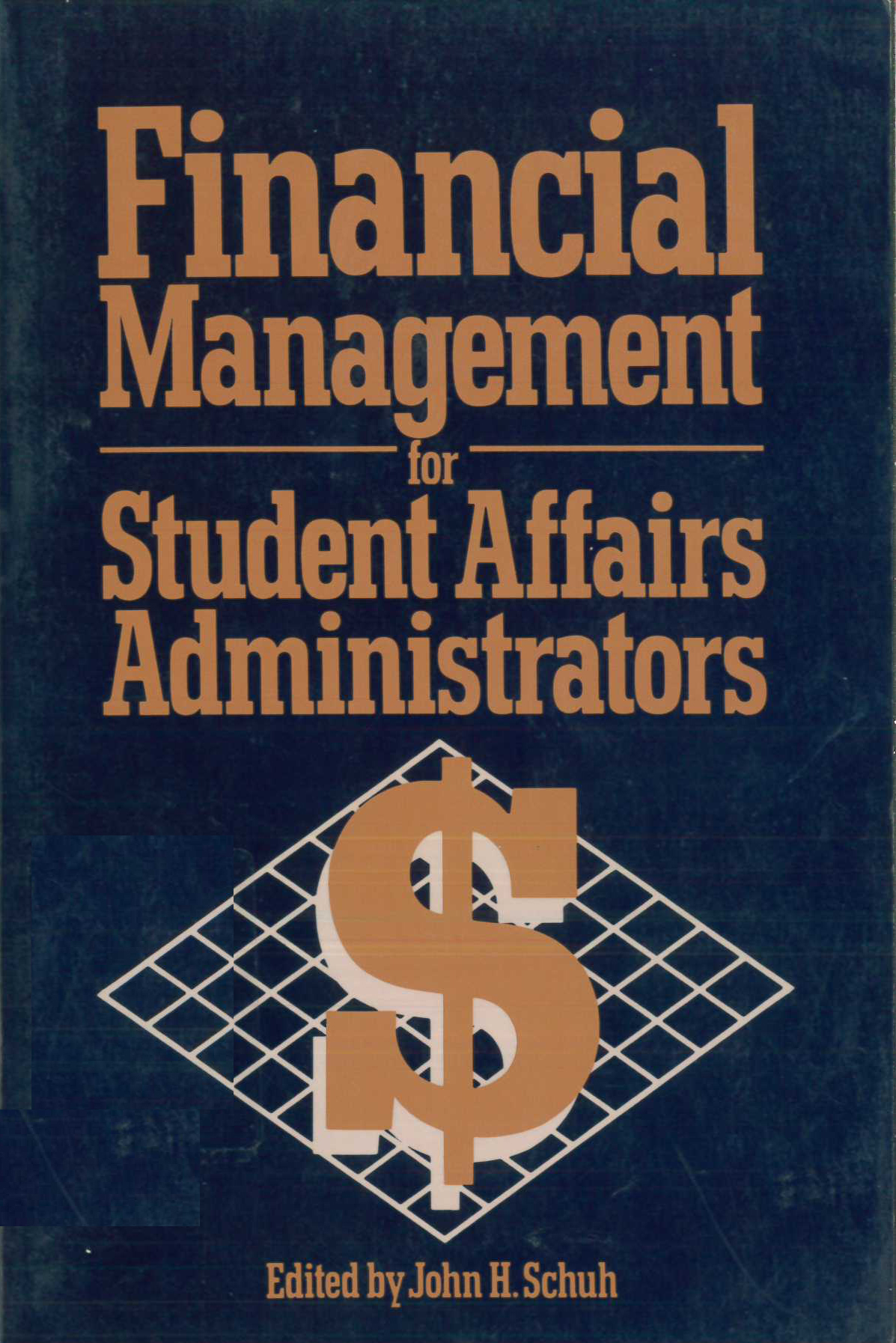
Financial Management for Student Affairs Administrators

ACPA released “Financial Management for Student Affairs Administrators,” this book offers a perspective on the financial environment in higher education and assists student affairs leaders improve their skills in fiscal and budgetary management. (Edited by John H. Schuh)
1989
1989
International Office
Preparation for AACD Disaffiliation

ACPA President Robert Brown appointed a committee to study the financial, legal, and organizational steps necessary for ACPA to disaffiliate from the American Association of Counseling and Development (AACD), paving the path for ACPA’s separation from AACD in 1992.

1989
Entity Groups

Task Force on Disability formed, chaired by Kathy Hollister and was lodged under the aegis of Commission I.

1989
Publications
A Statement of Ethical Principles and Standards of the American College Personnel Associa­tion

ACPA released “A Statement of Ethical Principles and Standards of the American College Personnel Associa­tion” which outlined a set of guidelines for student affairs professionals, emphasizing ethical conduct in their work with students, including principles like professional responsibility, student learning and development, responsibility to the institution, and responsibility to society, all while considering the individual student's needs and the broader campus community.

1988
1988
International Office
Careers in Student Affairs Month is created

ACPA sponsored the first national Careers in Student Affairs Month campaign.

1988
Publications
The Student Affairs Profession: A Selective Bibliography

ACPA published “The Student Affairs Profession: A Selective Bibliography” as a resource guide for graduate students, faculty, practitioners, trainers, and administrators. The goal was to compile and classify written materials on history, philosophy, professional organizations, professional preparation, and functional areas. (By Beverly A. Belson and Louis C. Stamatakos)
1988
Publications
Expanding the Use of Students in Career Services: Current Programs and Resource

ACPA released “Expanding the Use of Students in Career Services: Current Programs and Resources,” a resource manual describing recommended practices (e.g., selection, training, and evaluation) for the utilization of undergraduate paraprofessionals in career services based on data collected from paraprofessional program coordinators. (By Ione McKenzie and Margaret Manoogian-O’Dell)

1988
Entity Groups
Grad Students & New Professionals Standing Committee forms

Grad Students & New Professionals Standing Committee forms through the work of 1987’s Graduate Student Member-at-Large, Anne Eskridge. The purpose of this standing committee was to create a system of support for graduate students and new professionals in ACPA by recognizing the need to have affordable convention registration, housing options, as well as programs and events focused on graduate students.

1988
Convention
Annual Convention Relocation

Annual convention moved from Phoenix to Miami in objection to the practices of the new Arizona Governor and ACPA policies.

1987
Leadership
G. Robert Ross Death

Former 1972-1973 ACPA President G. Robert Ross and two university vice presidents died in a plane crash (November).

1987
Publications
New Publications Released

A Handbook for Student Group Advisors (Rev.Ed.),” a revised edition of the Schuh (1984) handbook publication and remains a resource for any professional (practitioner or faculty) who advises a student group on campus: social, academic, cultural, religious, Greek letter, athletic, etc. (Edited by John H. Schuh)

Giving Advice to Students: A Road Map for College Professionals,” a book written for faculty and student affairs professionals to assist readers in helping students with academic decisions, resource identification, career searches, postgraduate studies, and counseling. (By Howard K. Schein, Ned Scott Laff, and Deborah R. Allen)

Student Affairs Work, 2001: A Paradigm Odyssey,” a monograph describing some of the profound changes underway in the field and focuses on: the delivery of services to students; student development programming; administration, research, evaluation and policy; and preparation of student affairs staff. (By George Kuh, Elizabeth Whitt, and Jill Shedd)

1987
Publications
JCSD is renamed

The Journal of College Student Personnel is renamed to The Journal Of College Student Development (JCSD).

1987
Programs
Road Show on Diversity

ACPA implemented the “Road Show on Diversity” program.

1987
Convention
Joint Meeting with NASPA

ACPA and NASPA held a joint meeting in Chicago to celebrate the 50th Anniversary of The Student Personnel Point of View statement.

1987
Entity Groups
ACPA Networks Form

Networks form within the Standing Committee on Multicultural Affairs (APAN, LN, NAIN, and PAN) which were sub-groups focused on specific cultural and identity groups, providing targeted support and resources.

1986
Publications
Character Development in College Students, Volume Two: The Curriculum and Longitudinal Results

ACPA released “Character Development in College Students, Volume Two: The Curriculum and Longitudinal Results,” in which this second volume builds on the previous volume and examines the curriculum's impact on character development. (By Janet C. Loxley, John M. Whiteley, and Associates)
1986
Publications
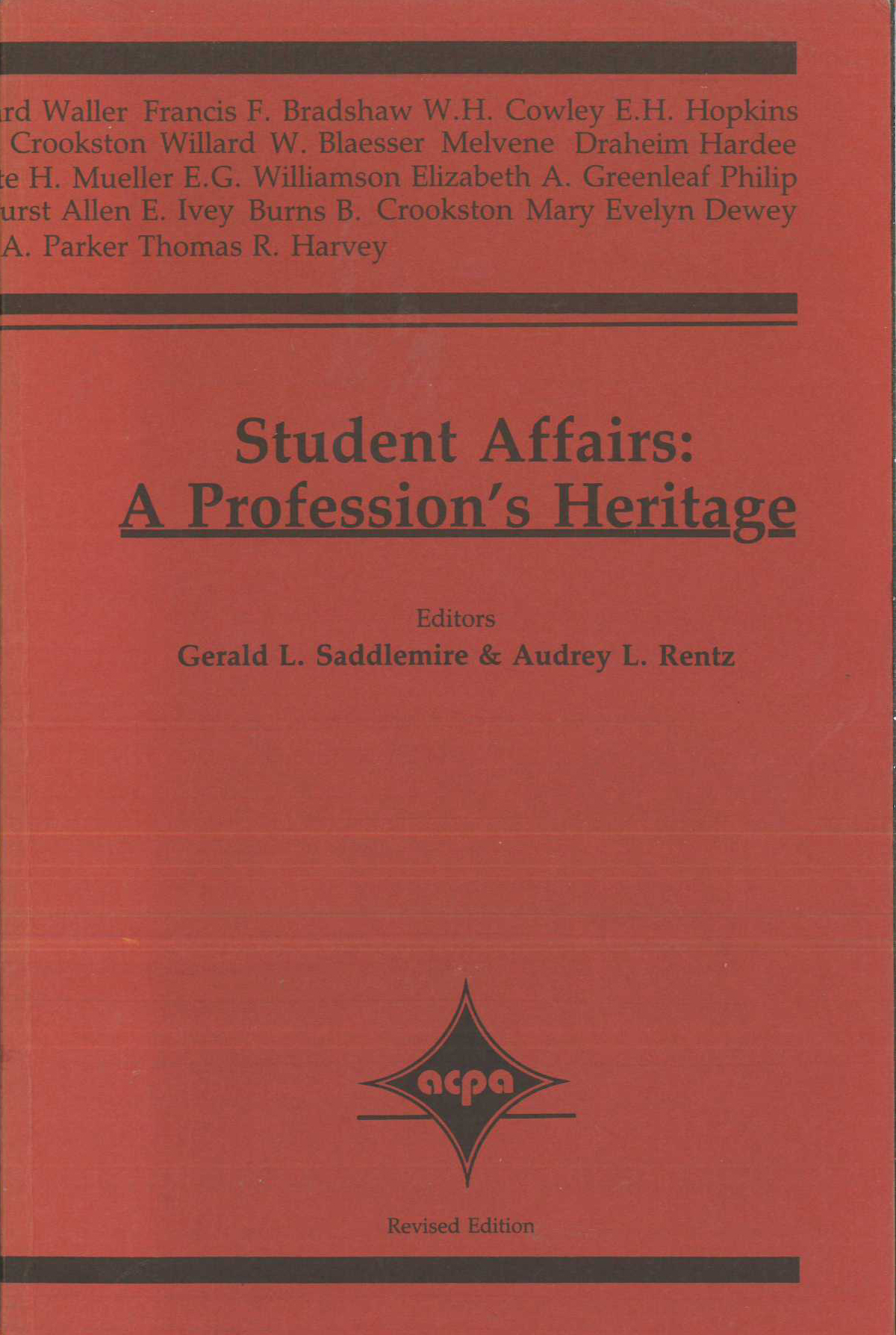
Student Affairs: A Profession’s Heritage (revised edition)

ACPA published “Student Affairs: A Profession’s Heritage (revised edition),” based on feedback from 55 graduate program directors, this edition expands on the 1983 volume. (By Gerald Saddlemire and Audrey Rentz)
1986
Membership
Membership Motion Passes

Motion passed that allowed individuals to become members of ACPA without also becoming a member of AACD.

March 1985
Entity Groups
Arizona CPA forms

Arizona CPA charter announced at opening session of the annual convention in Boston.

1985
Publications
A Leader's Guide to the Successful Job Search in Student Development (2nd Ed.)

ACPA’s Commission VI - Career Planning and Placement released “A Leader's Guide to the Successful Job Search in Student Development (2nd Ed.),” a handbook accompanying the "Guidebook" and is written for leaders, facilitators, and mentors of job hunters. It is written to assist leaders and mentors provide additional assistance to candidates in their search for employment in student affairs. (Adapted from an earlier publication and developed by Wendy Settle and Eric Schlesinger)

1985
Publications
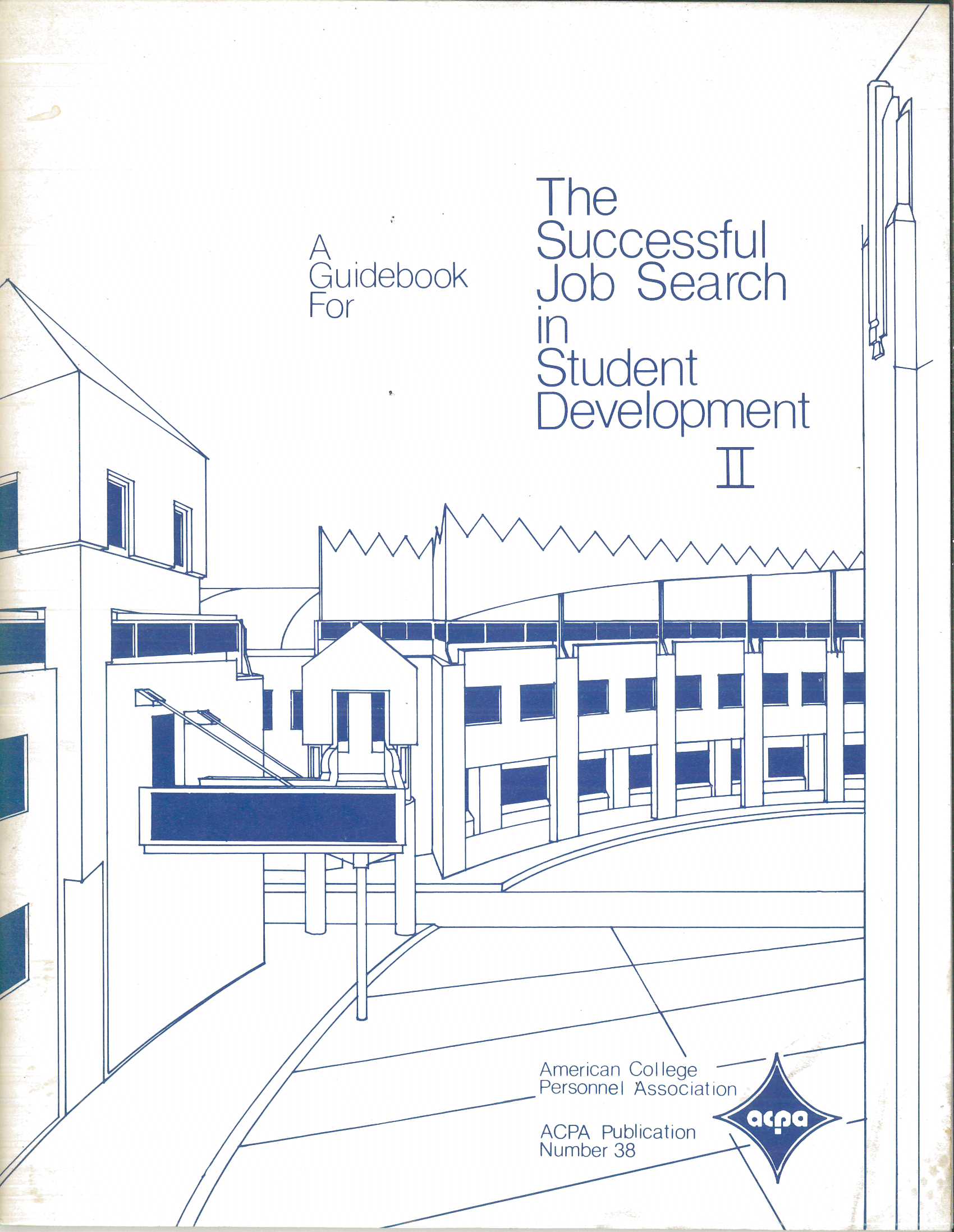
A Guidebook for the Successful Job Search in Student Development II

ACPA published “A Guidebook for the Successful Job Search in Student Development II,” a practical workbook that outlines the key elements of a successful job search in student affairs, moving from broad aspects of the search (e.g., awareness of the profession) to the specifics (e.g., inventorying skills, values, and goals and developing resumes and preparing for interviews). (Developed by Tom Bachbrucher)

1985
Entity Groups
Standing Committee for LBG Awareness

In 1985, Mary McGhee went before the ACPA Executive Council and proposed that the Task Force for LBG Awareness become a Standing Committee (now Coalition).  The proposal was accepted, and the Coalition for Lesbian, Gay and Bisexual Awareness was born.

1984
1984
Membership
Membership totaled 7,290 members
1984
Membership
New Motion Passes–Keynote Speakers

Motion by the Executive Committee affirmed that at least one keynote speaker for each annual conven­tion beginning in 1986 was to be from an ethnic minority group

1984
Publications
A Handbook for Student Group Advisors

CPA released “A Handbook for Student Group Advisors,” a handbook updating the earlier Bloland (1967) monograph and is geared toward any professional (practitioner or faculty) who advises a student group on campus: social, academic, cultural, religious, Greek letter, athletic, etc. (Edited by John H. Schuh)
1984
Involvement

On April 20, 1983, Chairperson of the ACPA Awards and Commendations Committee, Lou Stamatakos, sent a memo, per the approved proposal, to the previous recipients of the Contribution to Knowledge Award to formally announce their appointment to this program and to request their acceptance. This memo went to Gilbert Wrenn, Alexander Astin, Robert D. Brown, Arthur Chickering, Ursula Delworth, James Hurst, and Clyde Parker (the first recipient of the Contribution to Knowledge Award, E. G. Williamson, had passed away in 1979). This invited group comprised the first cohort of the Senior Scholars, with Robert Brown serving as the temporary chair of the group to help get it organized in advance of the 1984 ACPA Convention in Baltimore.

These first Senior Scholars were officially recognized and awarded at the opening session of the Baltimore convention presided over by Peggy Barr

1984
Entity Groups
Task Force for LBG Awareness forms

Task Force for LGB Awareness forms with Kathy Obear and Amy Reynolds leading the way. 

1983
Publications
New Publications Released

Residence Education: A Career Beginning or a Career Path?,” a step-by-step workbook assists readers in assessing their knowledge, beliefs, and skills in the functional area of residence education. Emphasis is placed on the readers' present goals and their future aspirations in the field. (By Edward L. Reynolds, Jr., Susan Bowling Komives, and Phyllis Mable)

The Student Affairs Profession: A Selected Bibliography,”a bibliography is a resource guide for graduate students, faculty, practitioners, trainers, and administrators. The goal of this bibliography was to compile and classify documents on history, philosophy, professional organizations, professional preparation, and functional areas. (By Beverly A. Belson and Louis C. Stamatakos)

“Thus We Spoke: ACPA-NAWDAC, 1958-1975,” presenting a collection of selected articles from journals representing ACPA and the National Association for Women Deans. The broad areas structure the book: the educational community, the professional setting, and professional associations. (Edited by Beverly A. Belson and Laurine Fitzgerald)

The Eighties: Challenges for Fraternities and Sororities,” a book in which chapters discuss student development, chapter management, legal issues, minority students, and the future in response to a lack of scholarship on fraternity and sorority life. (Edited by William A. Bryan and Robert A. Schwartz)

Your Future in College Student Development,” a revision of the 1979 version and continues to provide an overview of student development profession including historical context, roles, preparation, and qualifications. Details are provided on eleven different functional areas. (By Audrey L. Rentz and Gary Knock) - Sponsored by the Commission XII - Professional Education of Student Personnel Workers in Higher Education

1983
Entity Groups
Coalition on Men and Masculinities forms

The Coalition on Men and Masculinities forms to address issues related to men and masculinities in higher education, promoting positive engagement and understanding of gender identity.

1983
International Office
ACPA becomes a non-profit

ACPA was incorporated under the District of Columbia Non-Profit Act, under the leadership of Susan R. Komives, Margaret J. Barr, and William A. Bryan.

1982
Publications
Alcohol Programs for Higher Education

ACPA released “Alcohol Programs for Higher Education.” In this monograph, two important questions are addressed: What can colleges do about drinking? And what should they do about drinking? The authors focus not only on students, but faculty and other employees as well. Similarly, they discuss educational and interpersonal dimensions of the issue as well as legal and disciplinary dimensions. (Edited by James C. Dean and William A. Bryan)
1982
Publications
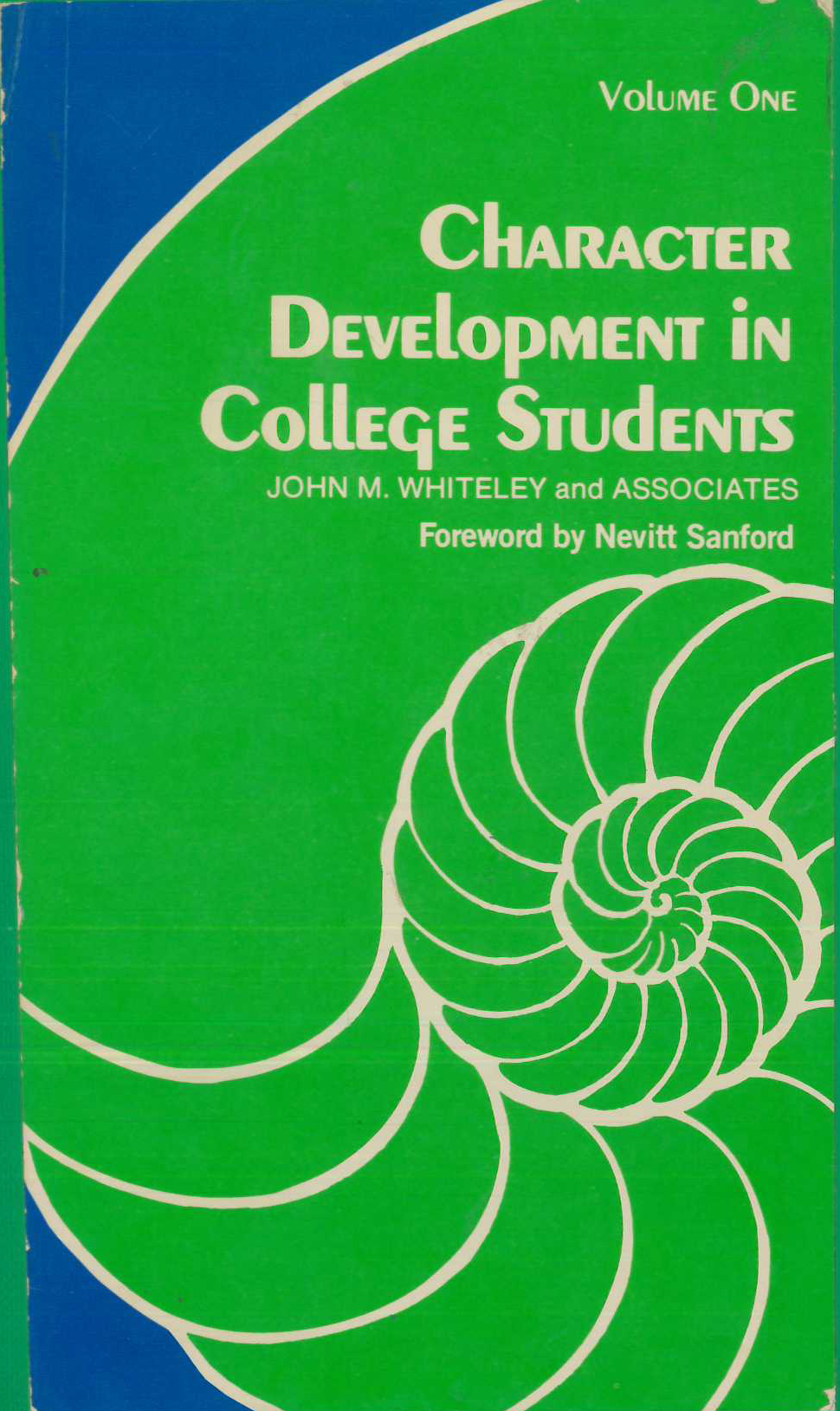
Character Development in College Students, Volume One: The Freshman Year

ACPA published “Character Development in College Students, Volume One: The Freshman Year, “ a book examining research findings on the personal development of college freshman since Sanford's classic research a generation earlier. (By John Whiteley and Associates)
1981
Publications
Statement of Ethical and Professional Standards

ACPA published its first statement of ethical and professional standards (JCSP, 22, 184-89), which provides a framework for ethical practice in student affairs. It emphasizes principles such as:

  1. Integrity: Professionals should act honestly and transparently in their interactions.
  2. Respect: A commitment to valuing diversity and treating all individuals with dignity.
  3. Responsibility: Upholding accountability in decision-making and professional conduct.
  4. Competence: Continuous professional development and adherence to high standards of practice.

This statement serves as a guide for members to navigate ethical dilemmas and promote a culture of integrity in higher education.

1981
Publications
Student Leadership Programs in Higher Education

ACPA released “Student Leadership Programs in Higher Education.” This book, sparked by ACPA Leadership Task Force (1976), brought together some of the best thinkers on the process building a range of leadership programs to address the diverse of needs of college students. (Edited by Dennis C. Roberts)
1970-1980

1980
Publications
Several Publications Released

 “Student Development in Higher Education: Theories, Practices, and Future Directions,” a book which not only highlighted the extant theories and models of student development, but also discusses the challenges of implementing theory, teaching it in preparation programs, and implications and future directions for the profession of student affairs. (Edited by Don G. Creamer)

Resident Assistant Stress Inventory (Assessment Monograph One),” a manual providing the Resident Assistant Stress Inventory (RASI) along with scale scoring and interpretation. In addition, it describes a three year study employing the RASI.

Creating Community in Residence Halls: A Workbook for Definition, Design and Delivery,” a practical workbook is designed to assist residence hall professionals and para-professionals define community development, design programs tailored to their institutions, and to deliver impactful programs in collaborative ways. (By Ken Ender, Nancy Kane, Phyllis Mable, and Meredith Strohm) This publication was sponsored by Commission II - Student Residence Programs

Personal Education and Community Development in College Residence Halls,”  a follow-up to the 1974 publication, this book assimilates new research and creative thought on residence education. (Edited by David A. DeCoster and Phyllis Mable)

1980
Entity Groups
Arkansas approved as state division at the annual convention in Boston
1979
1979
Awards
ACPA Presidential Service Award created
1979
Partnerships

ACPA participated in the establishment of the Council for the Advancement of Standards in Higher Education (CAS). 1975-1976 ACPA President Theodore Miller served as founding president of CAS from 1979-1989.

1979
Publications
Up the Ladder: Women, Professionals, and Clients in College Student Personnel

ACPA released “Up the Ladder: Women, Professionals, and Clients in College Student Personnel,” in response to a need for resources and mentors for women in higher education, the purpose of this text was to assist professionals and clients reach their potential and advance their interests. (By Beverly Prosser Gelwick)
1979
Awards
Annuit Coeptis Senior and Emerging Scholars formed
1978
1978
Entity Groups
First Carnival

First Carnival event held at the annual convention in Detroit sponsored by the Commissions.

1978
Publications
The Legal Foundations of Student Personnel Services in Higher Education

ACPA published “The Legal Foundations of Student Personnel Services in Higher Education,” written for the student personnel professional who is a lay person with respect to the field law, this book introduces and examines the legal aspects of student services. (Edited by Edward H. Hammond & Robert H. Shaffer)
1978
Entity Groups
Commission for Commuter Students and Adult Learners formed

The origins of the Commission for Commuter Students and Adult Learners trace back to the growing interest in commuter students and their special needs that emerged during the early 1970’s. While the University of Maryland at College Park created the first Office of Commuter Affairs and the National Clearinghouse for Commuter Programs in 1972, it was clear to professionals working with commuters that a resource network was also needed. ACPA’s Commission II (Admissions and Orientation) agreed to host the young Commuter Task Force in 1975. The Association officially created Commission XVII (Commuter Programs) at the 1978 Detroit ACPA National Convention. At the 1988 ACPA National Convention in St. Louis, the Commission name was officially changed to Commission XVII (Commuter Students and Adult Learners.) This action clearly indicated that adult learners, a significant constituency within the overall commuter student population, are an integral and vital part of the Commission’s overall advocacy, networking and education efforts. Following the 2002 Convention in Long Beach, ACPA voted to drop the Roman numeral designation for each Commission. During the summer of that same year the current name, Commission for Commuter Students and Adult Learners, was formally adopted.

1977
Publications
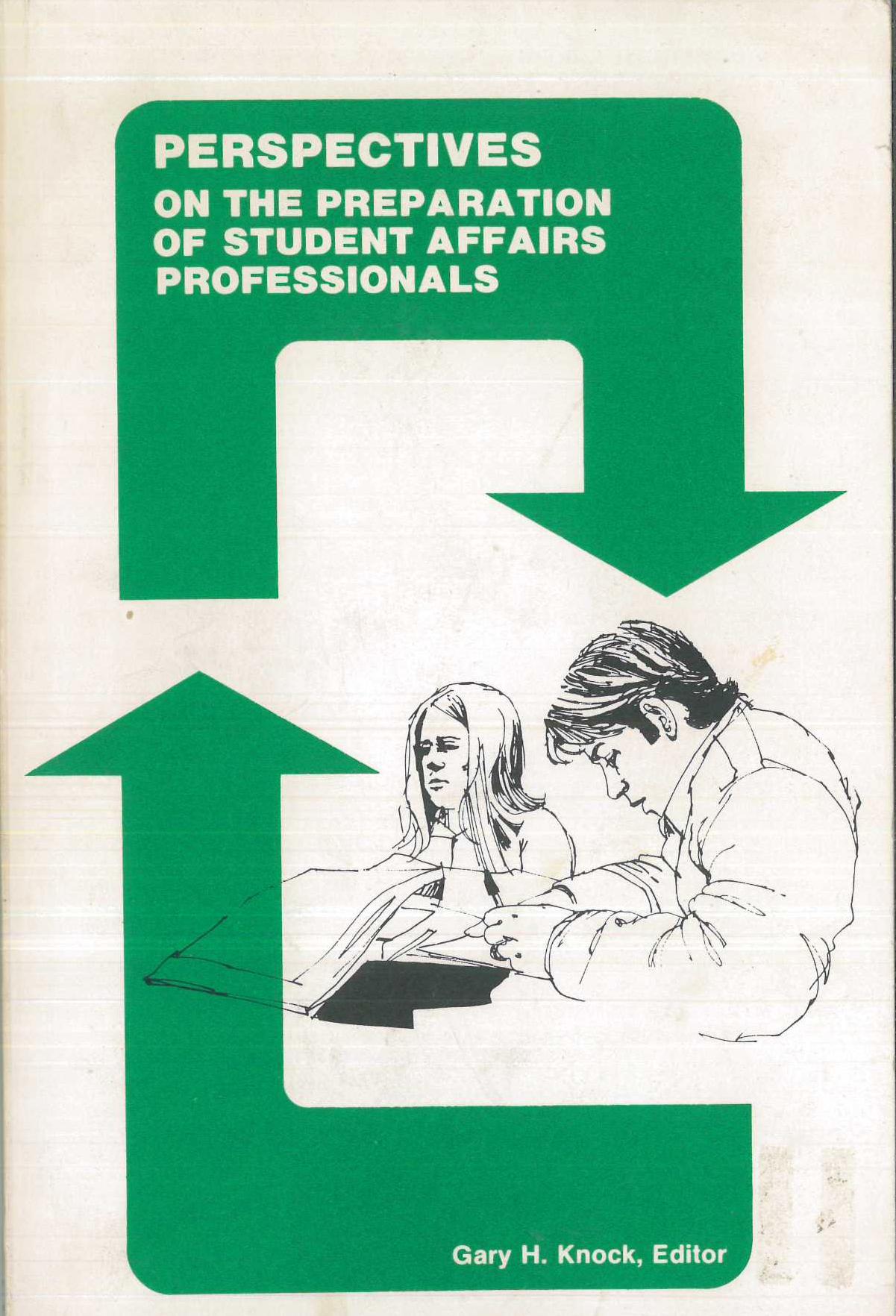
Perspectives on the Preparation of Student Affairs Professionals

ACPA released “Perspectives on the Preparation of Student Affairs Professionals,” a collection of position papers (with corresponding reaction statements) on key issues of professional preparation for student affairs practice including contemporary perspectives on the profession, a philosophy of professional preparation, structure of preparation programs, and flexibility of programs to address changes in the profession. (Edited by Gary H. Knock)
March 1977
Entity Groups
Commission for Academic Support in Higher Education formed

The Commission for Academic Support in Higher Education was founded in March 1977 as the Commission for Learning Centers in Higher Education.  Back when ACPA used the numerical system to note Commission names, we were Commission XVI.  Over the years of our existence, we gradually expanded our focus to include other functional areas that may fall under the heading of Academic Support, including academic advising, developmental education, tutoring programs, first year programs, living-learning communities, learning assistance programs, learning centers, and any others who view learning across academic and student affairs to be their primary functional area.  In July 1995, our name officially changed to “Academic Support in Higher Education.”  During the late 2000’s, the Commission was dormant within ACPA, but since then has been reinvigorated and has invested significant effort into providing ACPA members working in academic support with quality programming and professional development opportunities.  In 2017, the Commission will celebrate its 40th Anniversary at Convention in Columbus, Ohio (USA).  As a Commission, we believe that students and their academic success should receive active and effective support from student development and the academic community.

1976
Leadership Council
Failed Rename Proposal

A proposal to the Executive Council to rename ACPA to the Association for Student Development in Higher Education (ASDHE) failed.

1976
Publications
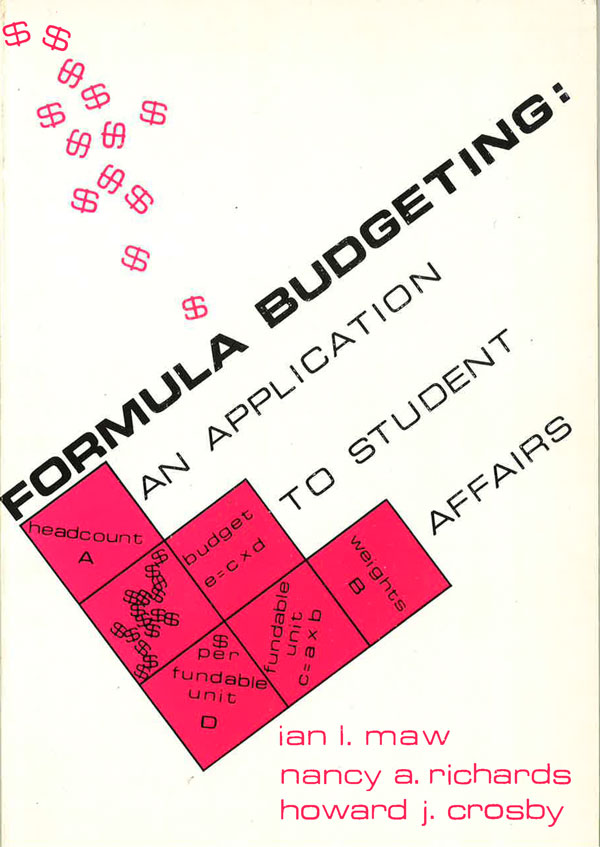
Formula Budgeting: An Application to Student Affairs

ACPA produced “Formula Budgeting: An Application to Student Affairs,” a monograph offering a rationale and models for funding different types of services in student affairs; namely career development, counseling, financial aid, health services, and student development/student life offices. (By Ian L. Maw, Nancy A. Richards, and Howard J. Crosby)
1976
Publications
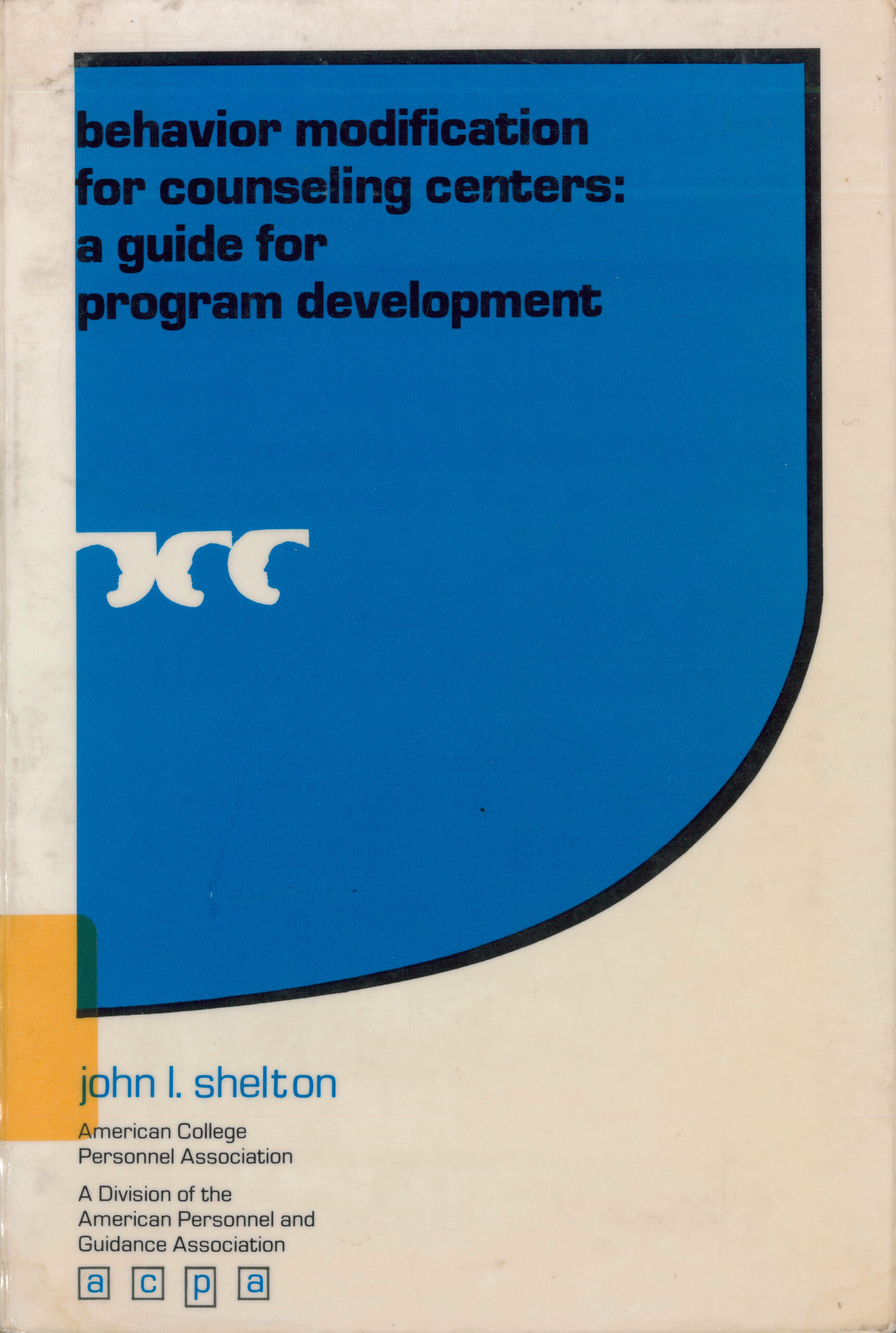
Behavior Modification for Counseling Centers: A Guide for Program Development

ACPA released “Behavior Modification for Counseling Centers: A Guide for Program Development,” a book describing promising behavior modification programs and services that can be adopted quickly and readily by university counseling centers. (By John L. Shelton)
1976
Publications
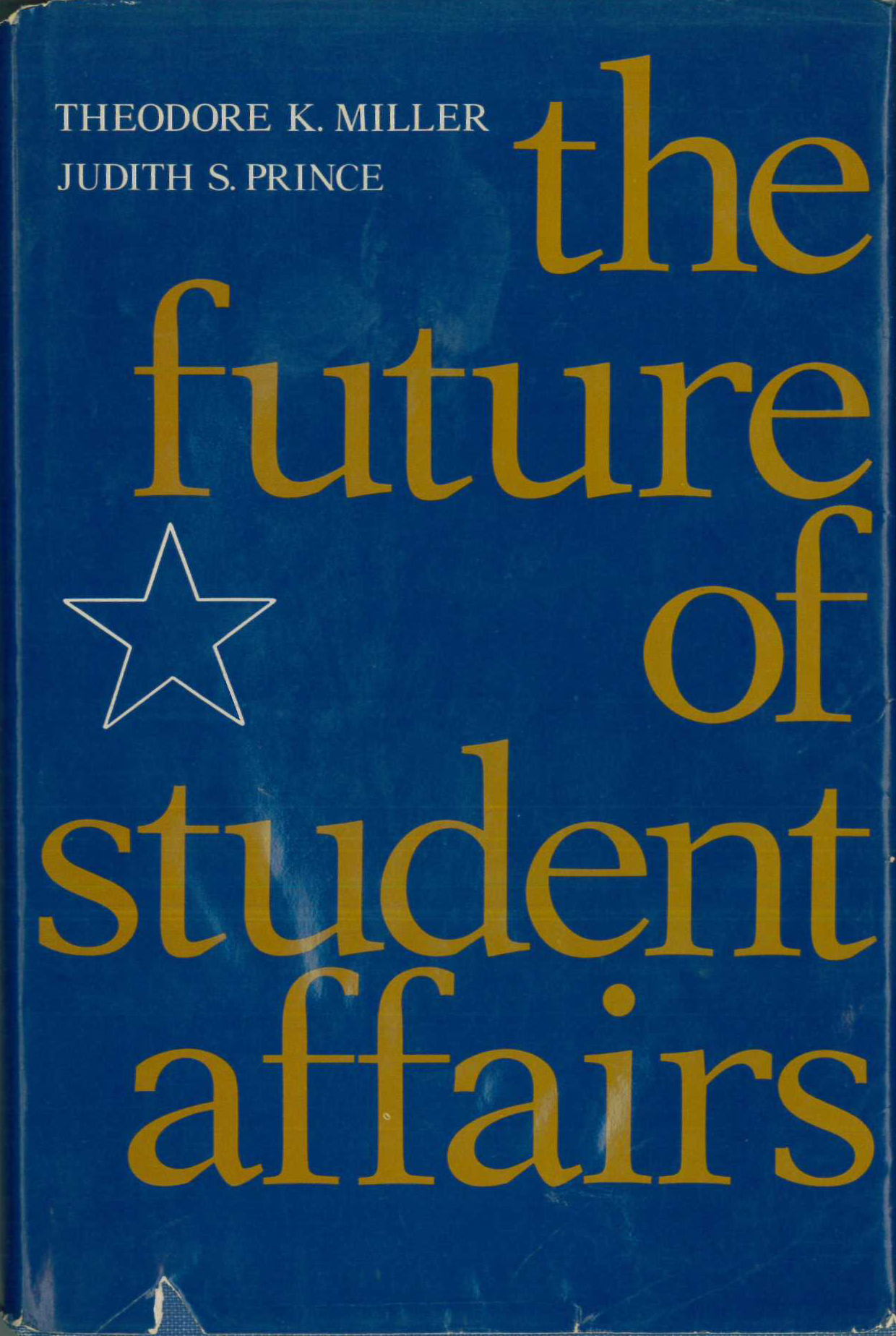
The Future of Student Affairs: A Guide to Student Development for Tomorrow's Higher Education

ACPA published “The Future of Student Affairs: A Guide to Student Development for Tomorrow's Higher Education,” a book representing the second, and more practical, phase of ACPA's "Tomorrow's Higher Education" project by offering a range of examples of student development concepts in student affairs work. (By Theodore K. Miller and Judith S. Prince)
1976
Leadership

Anne S. Pruitt elected ACPA’s 1st African American President (11th Female and 37th President overall).

1975
Awards
New ACPA Awards created

Two annual major ACPA Awards were created, the Professional Service Award (later designated in honor of Esther Lloyd-Jones) and the Contribution to Knowledge Award.

1975
Publications
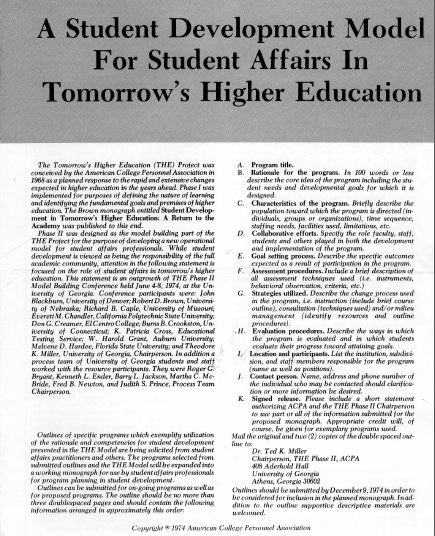
Phase II - A Student Development Model for Student Affairs in Tomorrow's Higher Education

ACPA released “Phase II - A Student Development Model for Student Affairs in Tomorrow's Higher Education,” designed as model building part of T.H.E. Project to develop new operational model for Student Affairs professionals. This is the follow up to Robert D. Brown's 1972 publication.
1975
Publications
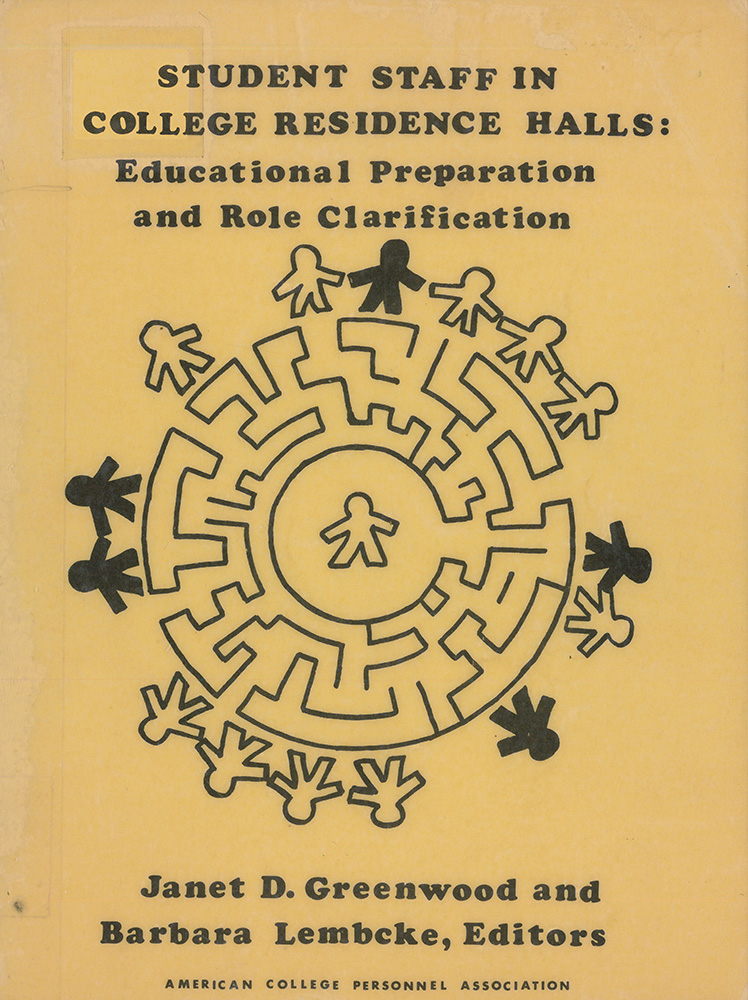
Student Staff in College Residence Halls - Educational Preparation and Role Clarification

ACPA’s Commission III - Student Residence Programs releases “Student Staff in College Residence Halls - Educational Preparation and Role Clarification,” a monograph comprised primarily of survey results on residence hall student staff with respect to their roles and responsibilities and provides examples of student staff training programs across a variety of institutions. (Edited by Janet D. Greenwood and Barbara A. Lembcke).
1975
Publications
ACPA Developments is created

Creation of ACPA Developments; Presidential Communique became the quarterly newsletter, ACPA Developments

1974
Publications
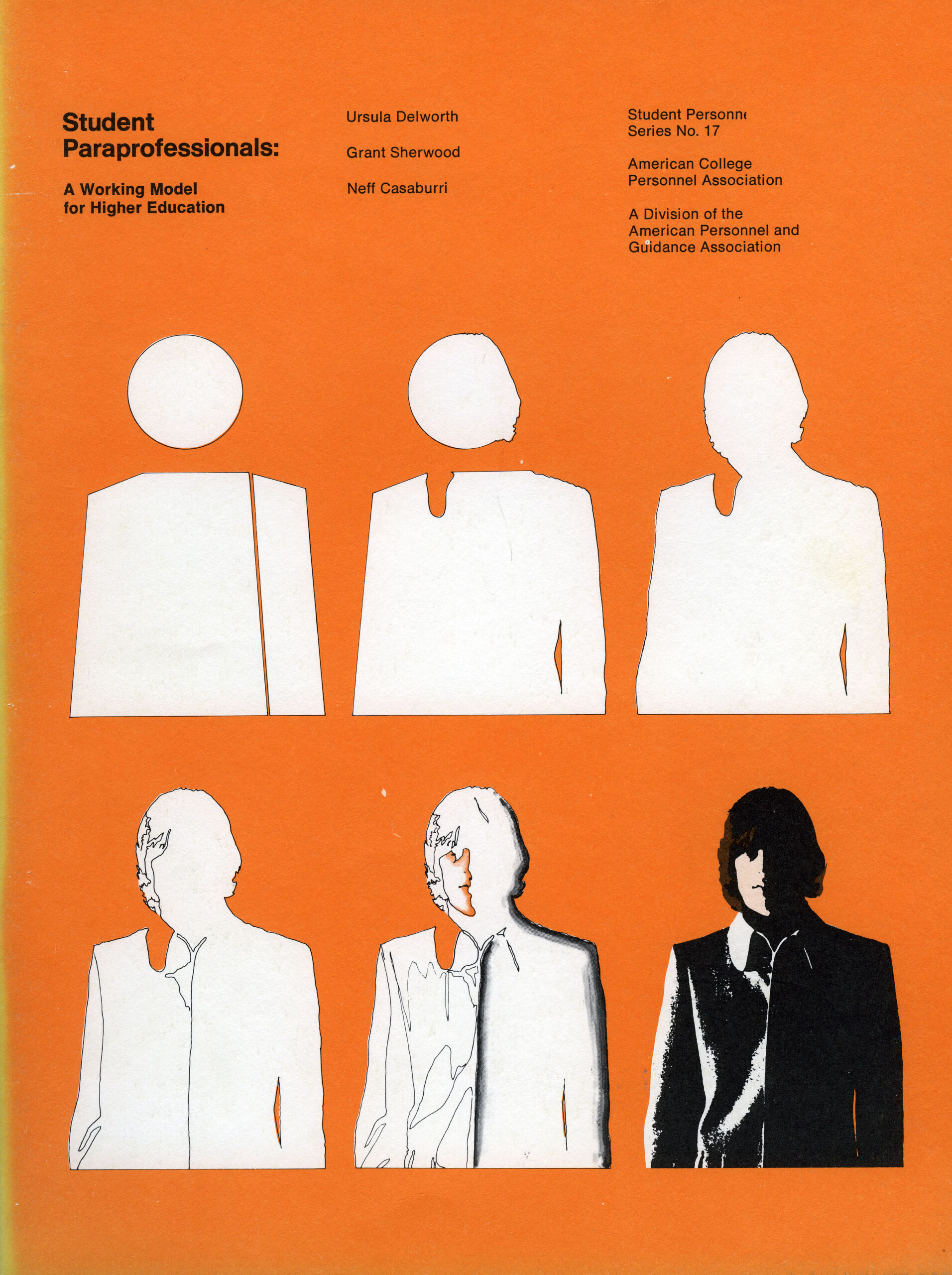
Student Paraprofessionals: A Working Model for Higher Education

ACPA published “Student Paraprofessionals: A Working Model for Higher Education,” the final monograph in the Student Personnel Series, introducing the significant roles students can play in peer assistance in such functional areas as orientation, counseling, residence life, and academic advising. Best practices for funding, selection, training and supervision are presented. (Student Personnel Series #17 by Ursula Delworth, Grant Sherwood, and Neff Casaburri)

1974
Publications
Student Development and Education in College Residence Halls

ACPA released “Student Development and Education in College Residence Halls,” a book for practitioners, administrators, and researches come together in this book to discuss student development philosophy in residence halls, the impact of student development on relationships and environments, the role of residence hall staff, and residence education for the present and the future. (Edited by David A. DeCoster and Phyllis Mable)
1974
Convention
50th Anniversary Convention

NAWDAC (name change for NAWDC), NASPA and ACPA coordinated a joint national convention in Chicago during ACPA’s 50th anniversary year.

1973
Convention
ACPA and NAWDC (formerly NADW) coordinated a joint national convention
1973
Entity Groups
New Entities Form

Coalition for Women's Identities and the Pennsylvania College Personnel Association formed in additiona to the Commission for Student Conduct (now Student Conduct and and Legal Issues). At a convention at the University of Georgia, November 19-21, 1972, a small group of individuals, including Dr. Theodore K. Miller, discussed the need for a national clearinghouse on information concerning campus judiciaries. This interest was communicated to many people in ACPA, and at an all-day meeting on April 3, 1973, the idea for the formation of Commission for Student Conduct and Legal Issues (formerly known as Campus Student Conduct Affairs & Legal Issues) was formalized.  This meeting was chaired by Dr. L. Sandy MacLean.  At the end of this meeting, a statement of purpose was composed and presented to the Executive Committee of ACPA the following day.

1973
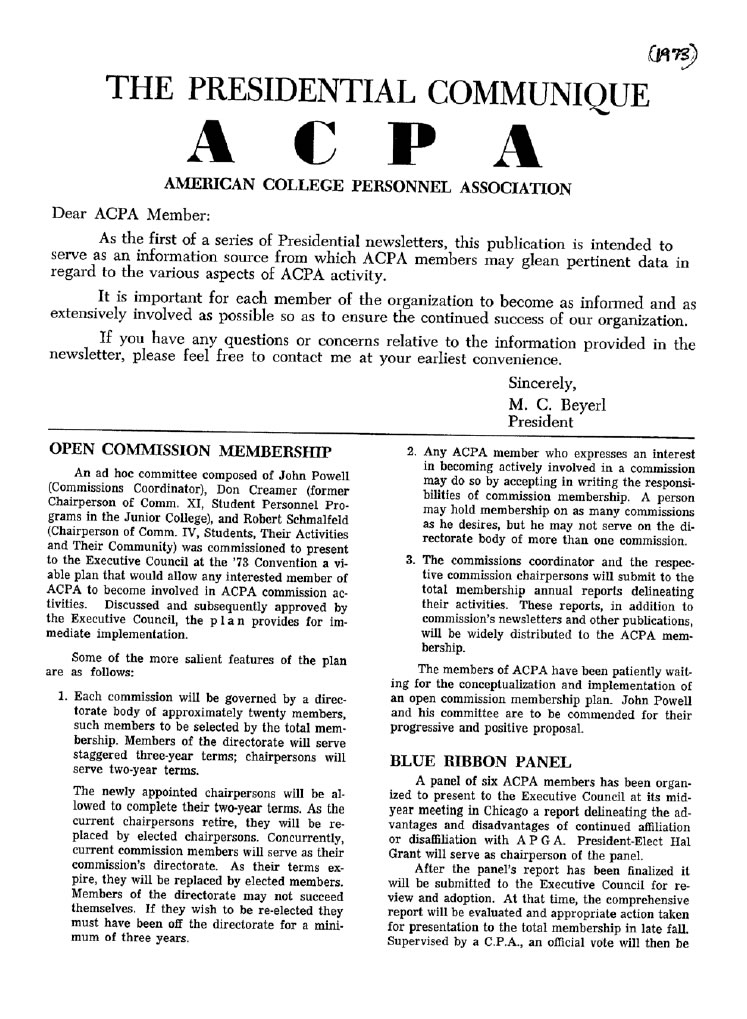
Leadership

ACPA President M.C. Beyerl sent what was meant to be the first "presidential newsletter," The Presidential Communique, to all ACPA members. The newsletter was "… intended to serve as an information source" about "various aspects of ACPA activity." The newsletter included an update about an open membership plan for commissions and announcement of a "blue ribbon panel" to consider ACPA's continued affiliation with APGA (the American Personnel & Guidance Association).

1972
Publications

ACPA releases “Student Development in Tomorrow's Higher Education: A Return to the Academy,” presenting an analysis of the significance of and implications for student development as a primary goal in educational planning. (Student Personnel Series #16 by Robert D. Brown)
1971
Entity Groups
Missouri College Personnel Association forms
1971
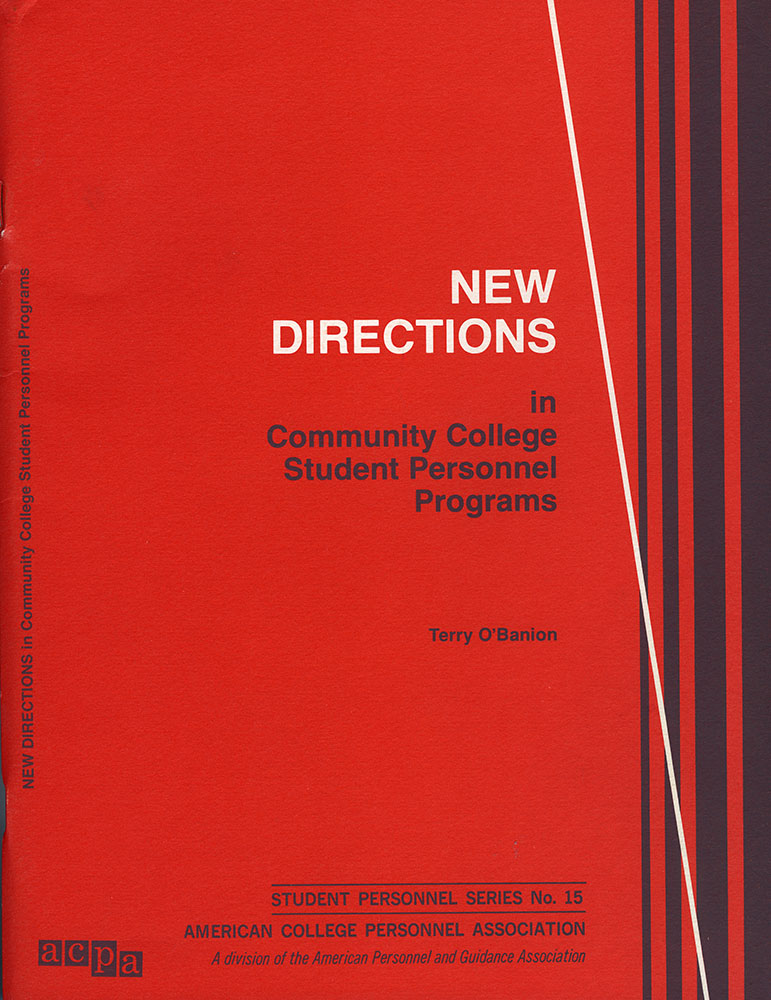
Publications

ACPA releases “New Directions in Community College Student Personnel Programs,” a set of exceptional practices emerging in community college student personnel work. Specific functional areas represented include academic advising, counseling, students activities, and orientation. (Student Personnel Series #15 by Terry O’Banion)
1970
Publications

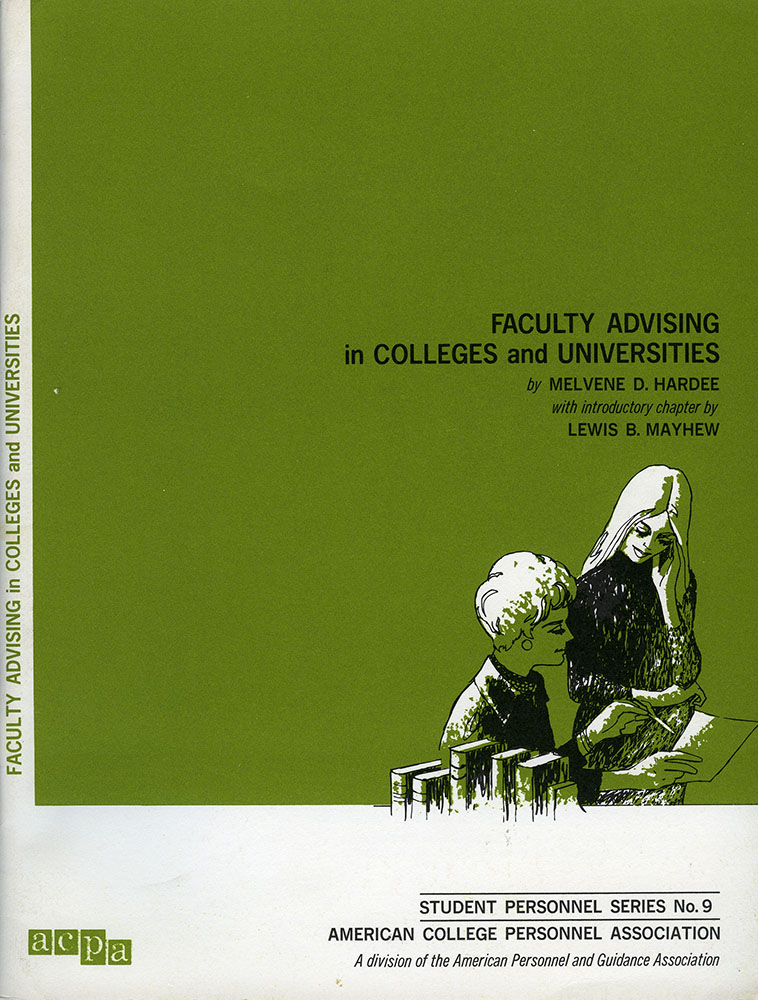
Faculty Advising in Colleges and Universities,” a monograph which offers a philosophical and psychological base for the practice of faculty advising. Throughout it, the author argues for an authentic relationship between the faculty adviser and the student where educational goals, student learning, teaching methods, curriculum, and student and teacher performance are discussed and analyzed. (Student Personnel Series #9 by Melvene D. Hardee)
1970
Publications

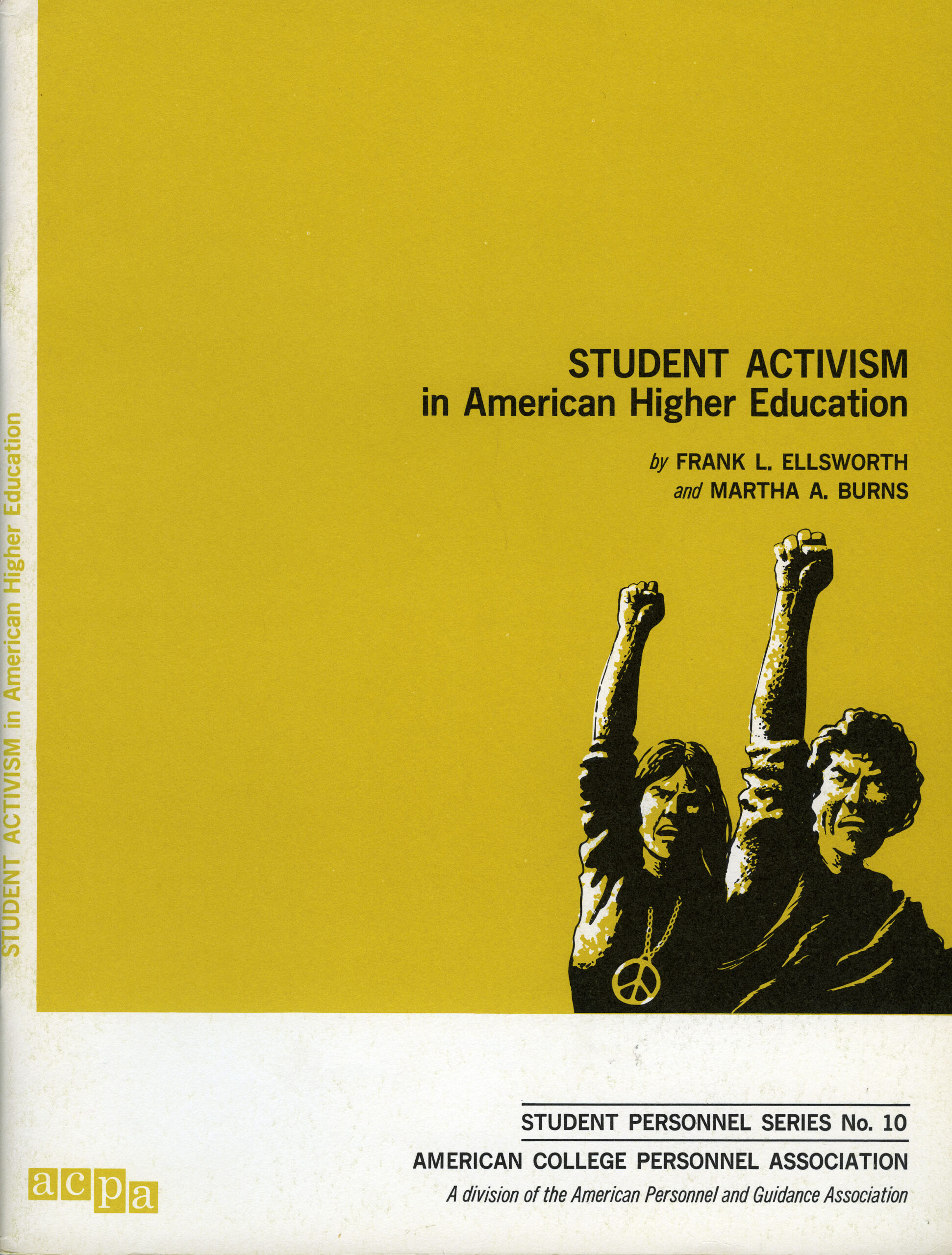
Student Activism in American Higher Education,” a comprehensive look at the history of student activism in the U.S., the causes of student activism, and the philosophical and administrative responses to student activism. (Student Personnel Series #10 by Frank L. Ellsworth and Martha A. Burns)
1970
Publications

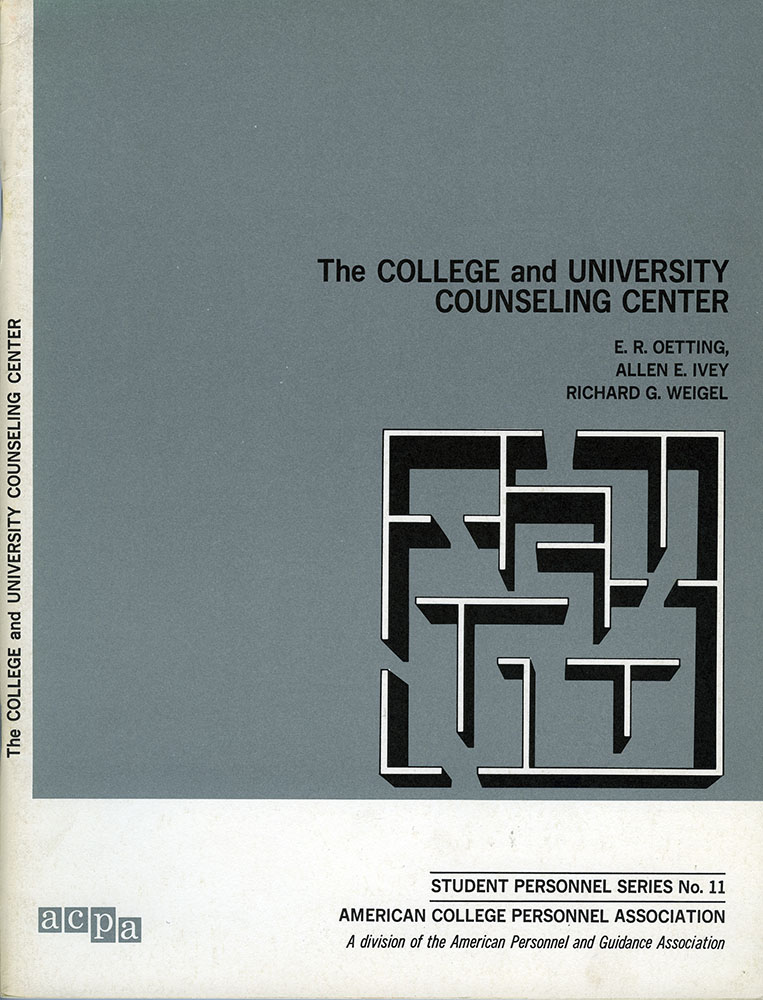
The College and University Counseling Center,” a review of the status of campus counseling centers is covered in this monograph. The authors discuss everything from facilities to salaries and client caseloads to models for delivery. (Student Personnel Series #11 by E. R. Oetting, Allen E. Ivey, and Richard G. Weigel)
1970
Publications

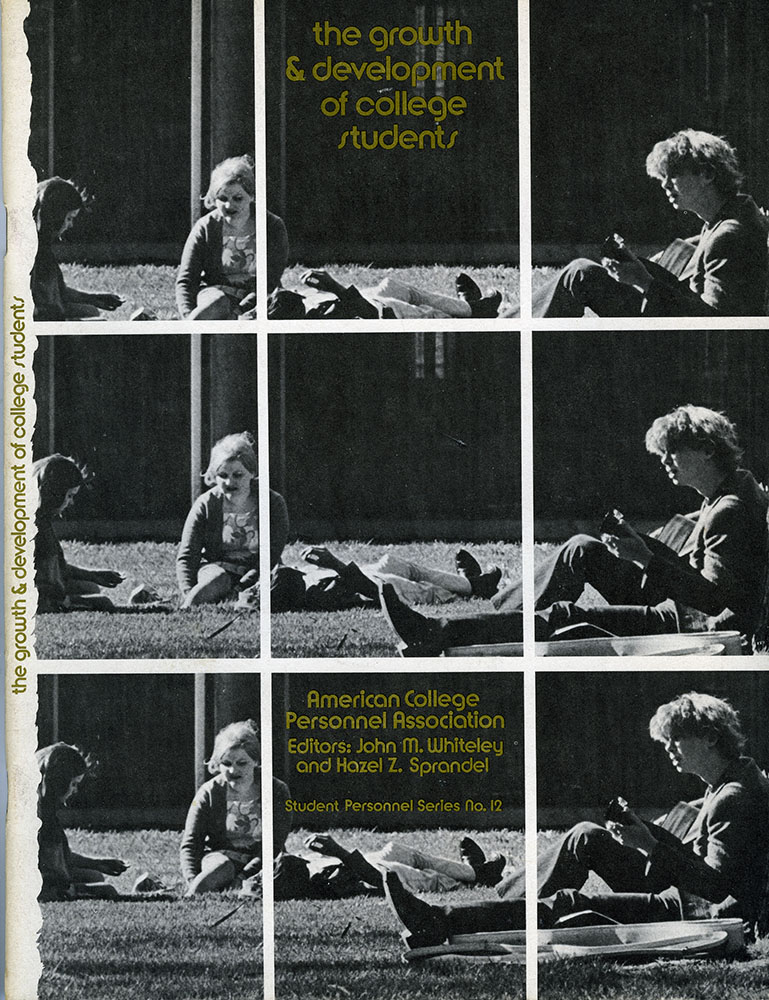
The Growth and Development of College Students,” a presentation of several articles, all related to the Harvard Student Study (1964-1965). The study was designed to examine the development of undergraduate college students at Harvard. The articles contained within focus on housing, psychological assessment of change, and the development of heterosexual relationships in college. (Student Personnel Series #12 edited by John M. Whiteley and Hazel Z. Sprandel)

1970
Publications

Students in the University and Society,” a presentation of diverse viewpoints on college students and how they negotiate their emerging roles in society. Topics covered include student governance, student unrest, and generational clashes. (Student Personnel Series #13 edited by John M. Whiteley)
1970
Publications

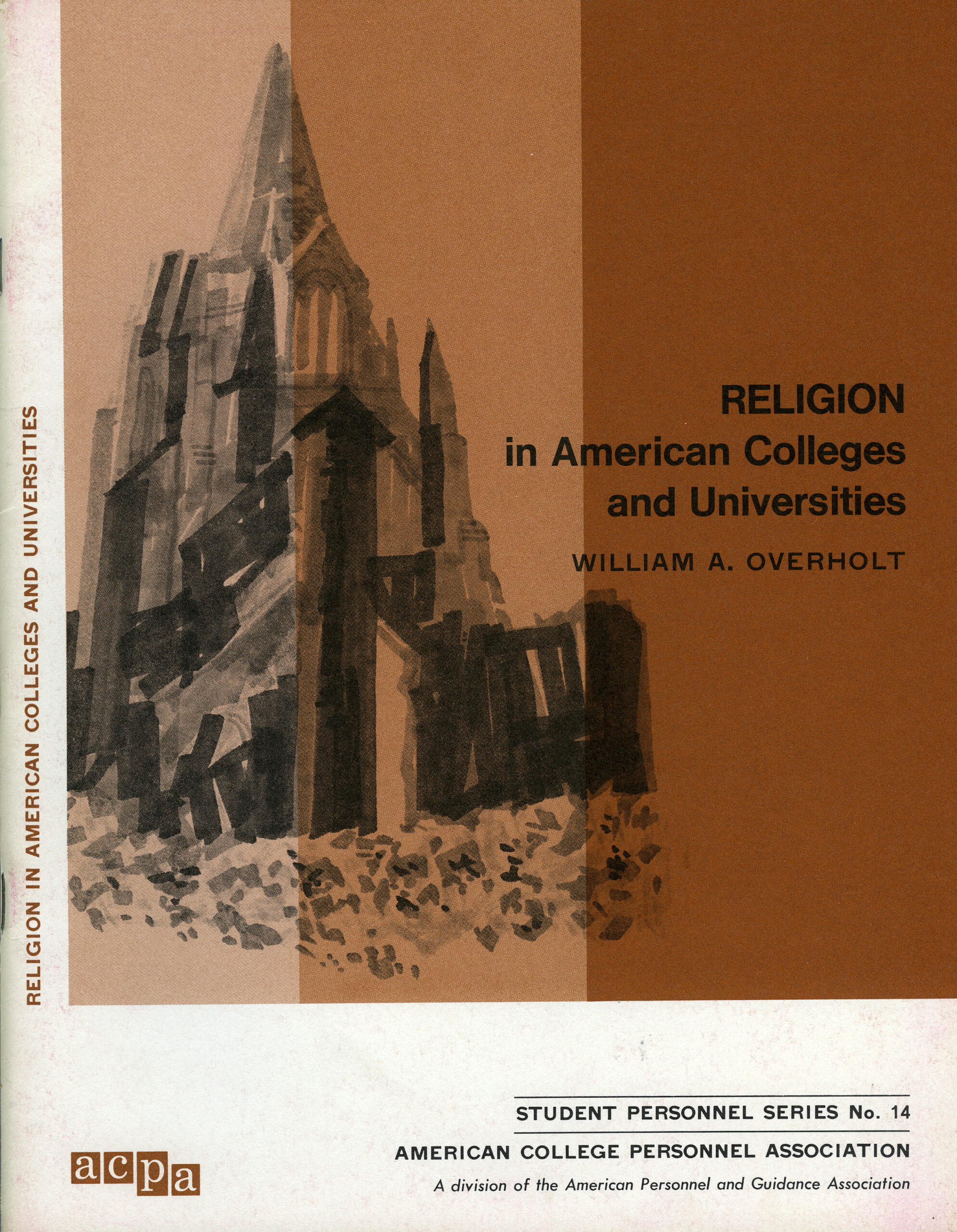
Religion in American College and Universities,” a monograph to describe the evolution of religious expression on campus; to assert religious expression as a feature of university life; and propose ideas for further study and action on the part of student personnel workers. (Student Personnel Series #14 by William A. Overholt)
1970
Entity Groups
California and South Carolina CPAs formed

1959-1969

1969
1969
Entity Groups
Georgia and Maryland College Personnel Associationss formed
1968
Entity Groups
Task Force for Women is established
1968
Entity Groups
Standing Committees form

Standing Committees (now known as the Coalition for Multicultural Affairs) forms along with the Task Force on Race.

1967
1967
Publications
Joint Statement on Rights and Freedoms of Students

In June 1967, a committee composed of representatives from the American Association of University Professors, the United States National Student Association (now the United States Student Association), the Association of American Colleges (now the American Association of Colleges and Universities), the National Association of Student Personnel Administrators, and the National Association of Women Deans and Counselors formulated the joint statement. The document was endorsed by each of its five national sponsors, as well as by a number of other professional bodies.

1967
Publications

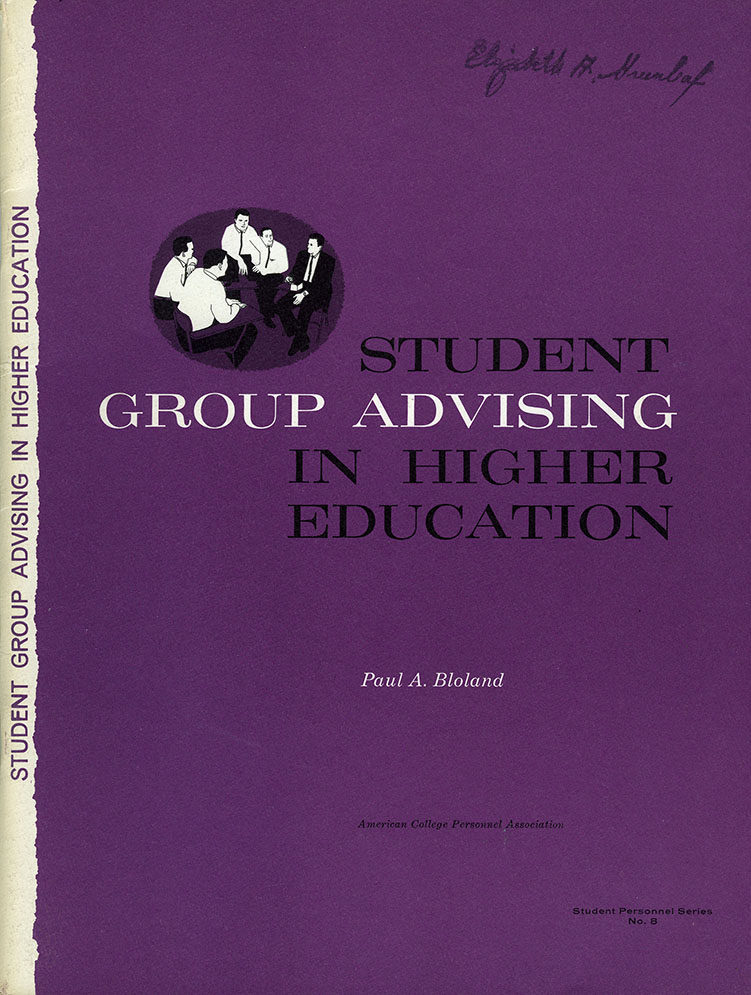
ACPA released “Student Group Advising in Higher Education.” Written in a time of student demand for personal freedoms, this monograph serves as a handbook for the professional who is new to the role of student group advising. The authors discuss the significance of the co-curriculum, advisor roles and responsibilities, and problems, solutions, and techniques. (Student Personnel Series #8 by Paul A. Bloland)
1966
Publications

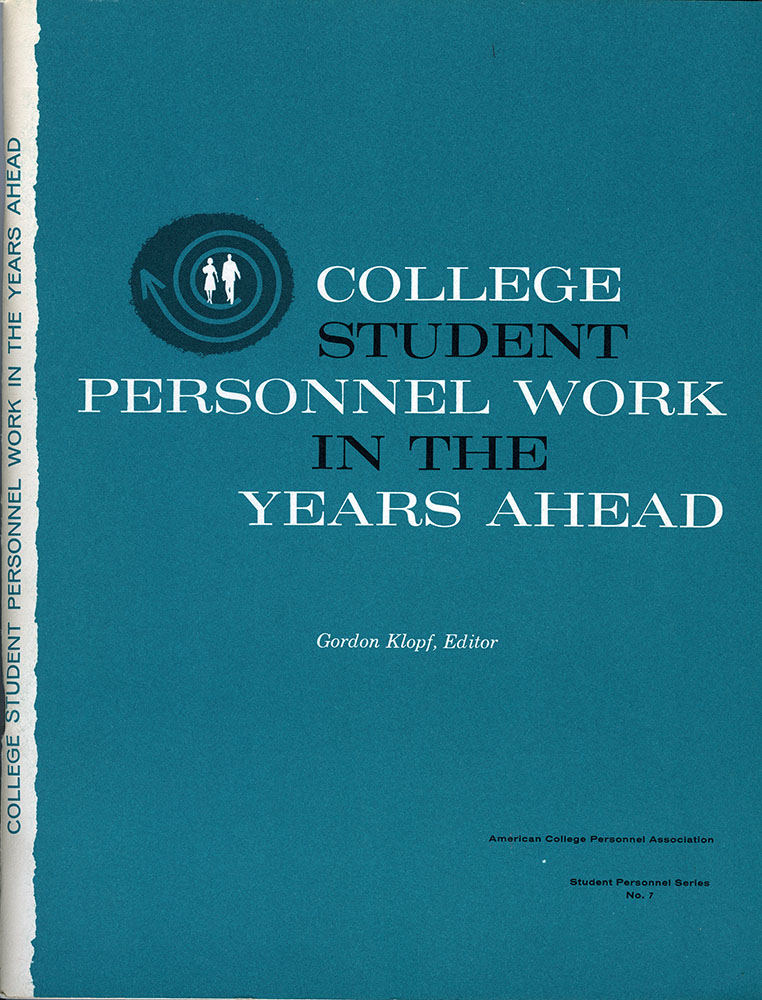
ACPA published “College Student Personnel Work in the Years Ahead,” a monograph comprised of a set of essays designed to answer essential questions about student personnel work: What is it? What are the trends? What are the new directions? In greater details, various functional areas are examined in each chapter including college activities, counseling, placement, health services, financial aid, international services, and housing. Also discussed are junior colleges and student personnel preparation. (Student Personnel Series #7 edited by Gordon Klopf)
1966
Entity Groups
North Carolina College Personnel Association forms

Standing Committees (now known as the Coalition for Multicultural Affairs) forms along with the Task Force on Race.

1965
1965
Partnerships
ACPA becomes founding member of the National Council on School-College Relations (NCSCR)
1965
Publications

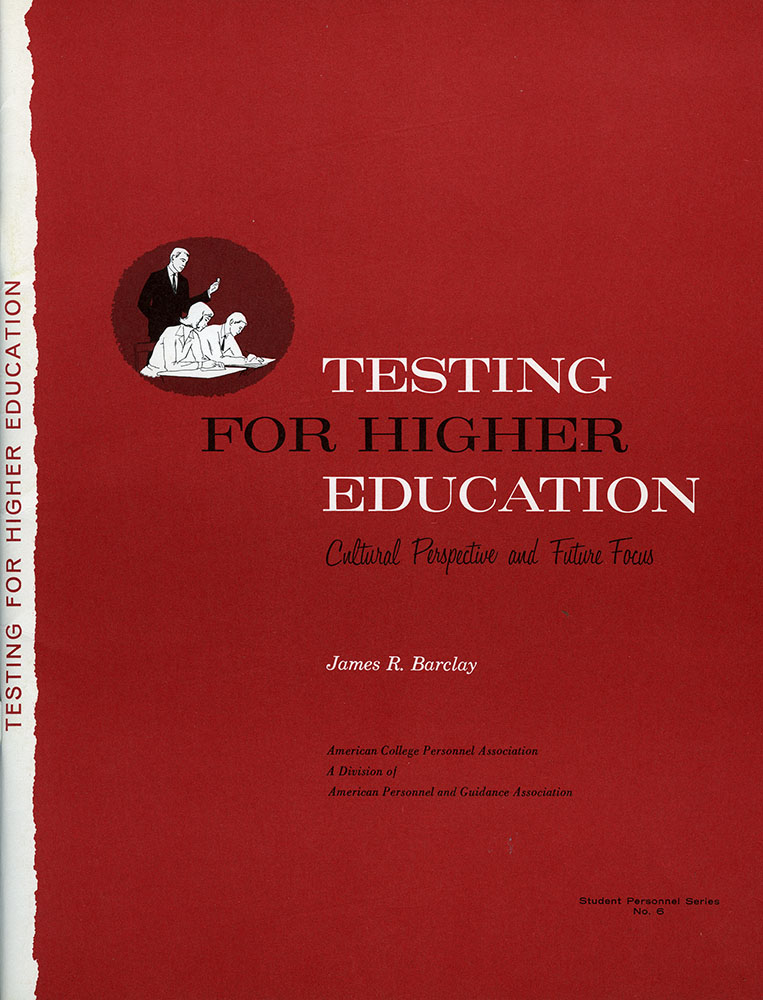
ACPA released “Testing For Higher Education: Cultural Perspective and Future Focus,” a monograph examining the role of testing as an assessment technique in college admissions. Covered in greater detail are the use of tests as predictors of college success and the broader cultural and philosophical implications of test usage. (Student Personnel Series #6 by James. R. Barclay)

1965
Publications

ACPA published “Student Discipline in Higher Education,” a publication examining student discipline as an important aspect of the educational process and student success. Topics covered include faculty, law enforcement, and the courts. (Student Personnel Series #5 by Thomas A. Brady and Leverne F. Snoxell)
1965
Publications

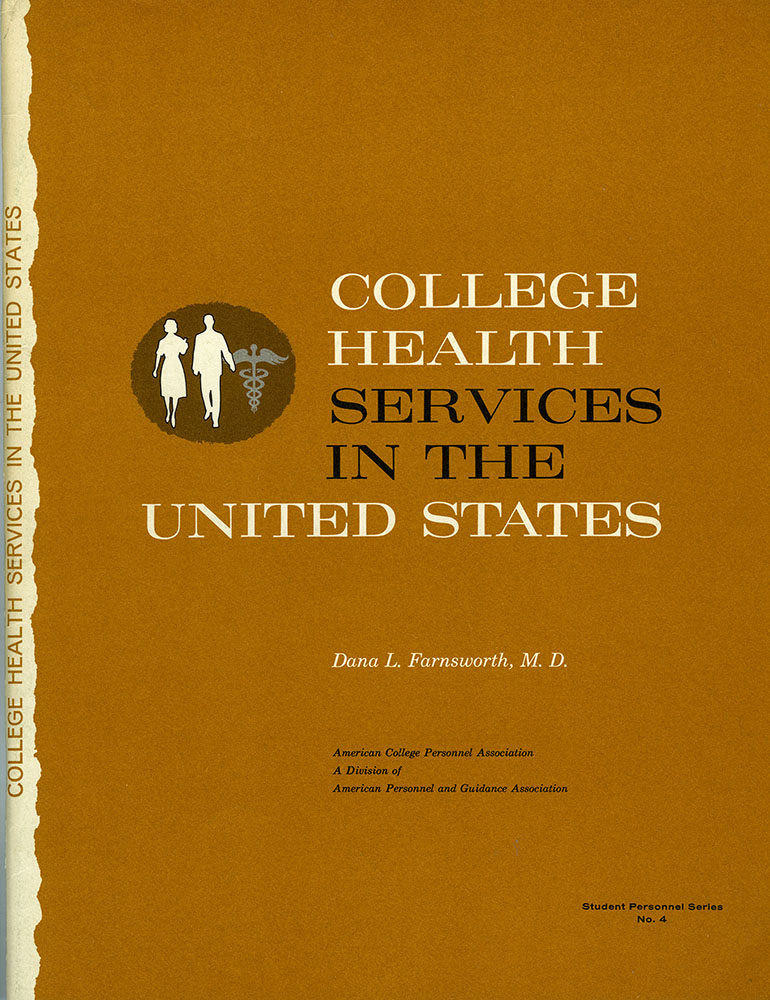
ACPA produced “College Health Services in the United States,” a monograph providing student personnel workers with information about the scope and principles of health services in pursuit of establishing cooperative working relationships that restore and protect student health. Individual chapters address historical perspectives, administration, medical, dental, and psychiatric services as well as athletics and the small college. (Student Personnel Series #4 by Dana L. Farnsworth)
1965
Publications

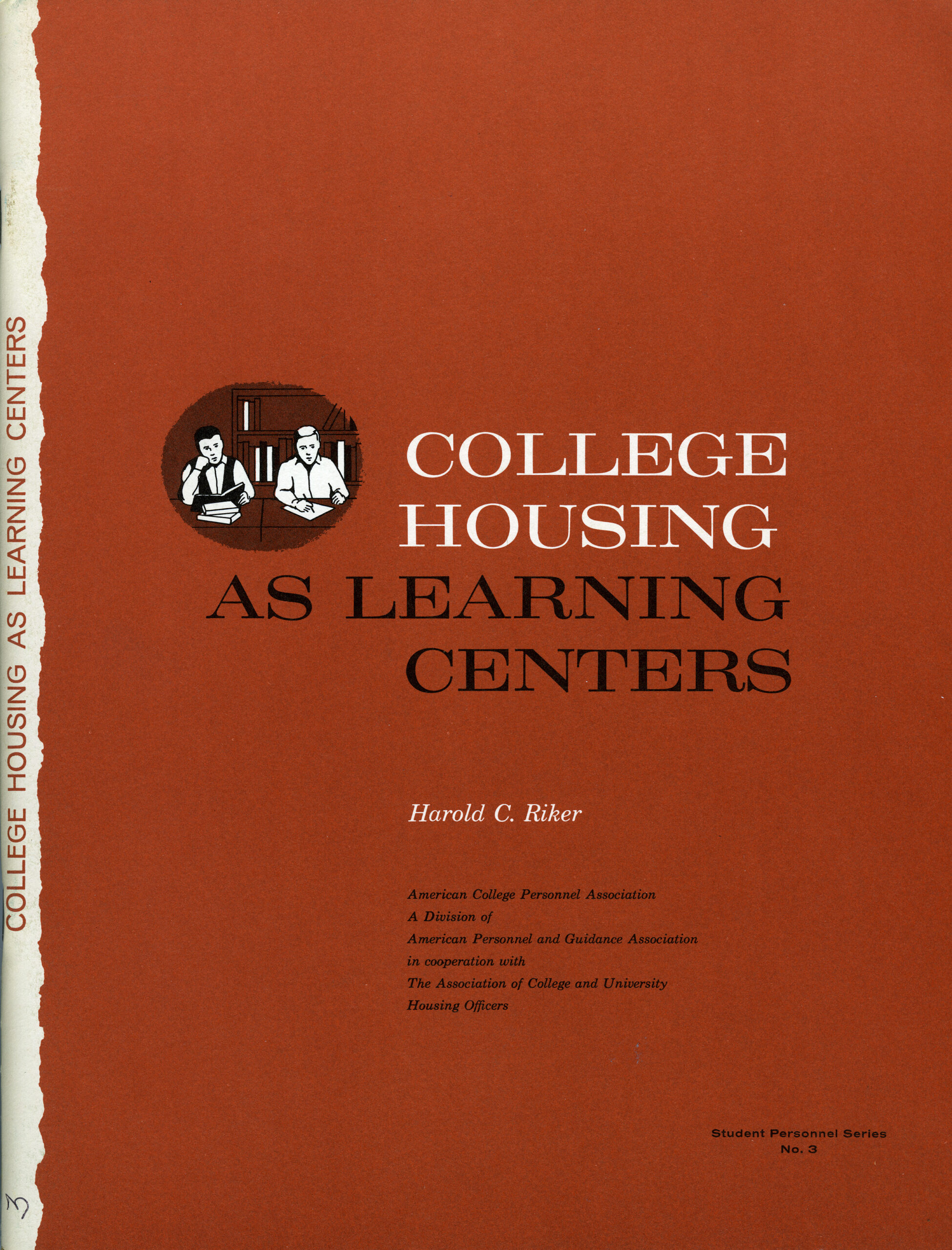
ACPA released “College Housing As Learning Centers,” a monograph arguing that housing serves two functions: to provide students a satisfactory place to live and to help them grow. These functions are explored in greater depth in chapters that cover history, programs, staffing, facilities, and financing. Published in cooperation with the Association of College and University Housing Officers. (Student Personnel Series #3 by Harold C. Riker)
1965
Entity Groups
Commission for Academic Affairs forms
1963
1963
Leadership

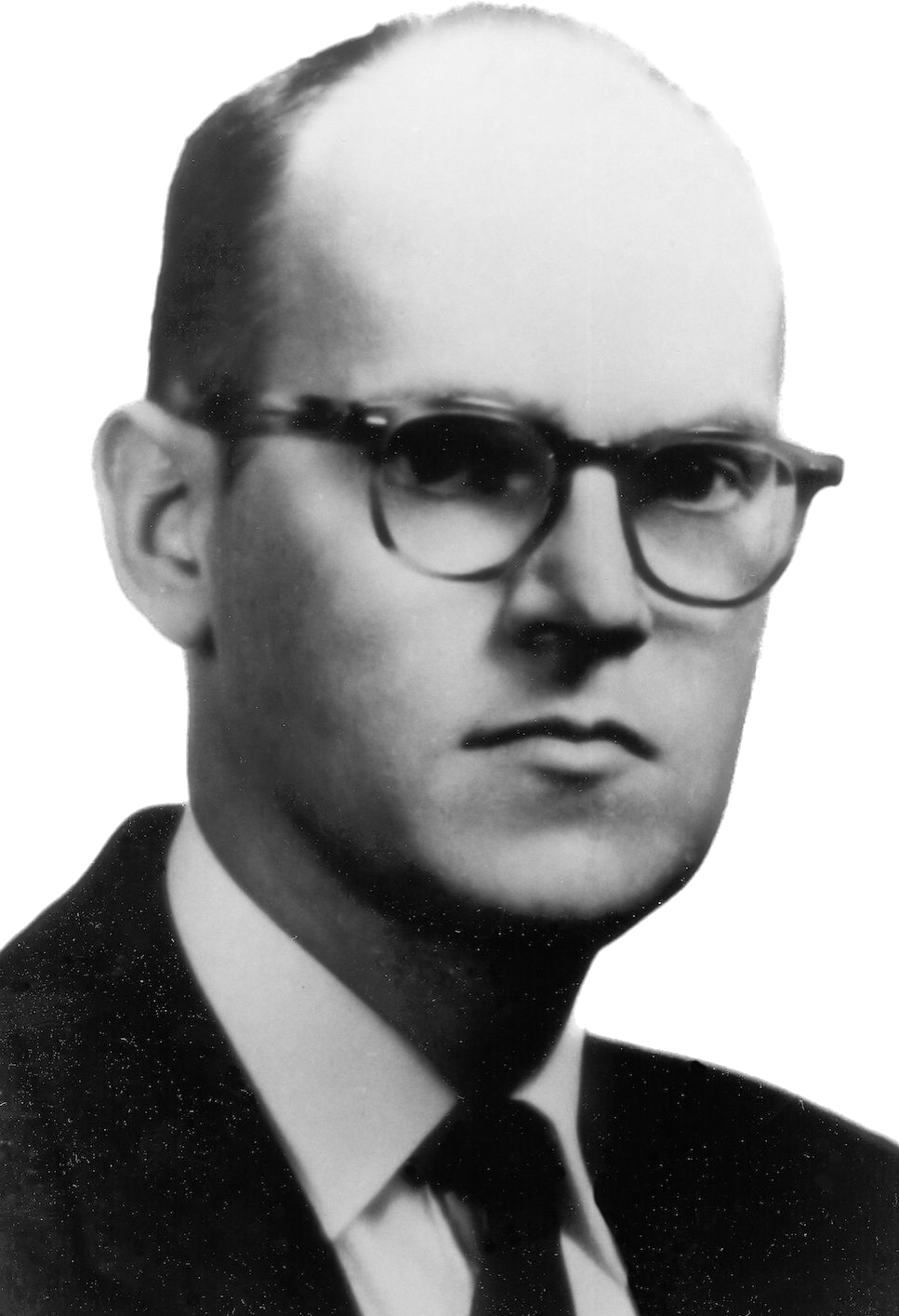
After becoming the 24th ACPA President on May 1, 1963, Dennis Trueblood resigned from the role on Janu­ary 1, 1964, and then died undergoing open heart surgery in a Chicago hospital five weeks later when he was 38 years old. The 1964 Annual Convention in San Francisco was dedicated in his honor.
1962
1962
Publications
Top Drawer Talk mailed to members

ACPA President Melvene Hardee mailed a number of issues of Top Drawer Talk, a presidential memo, to approximately 150 ACPA officers, committee members, and others between May 1962 and the publication of a first edition of another new ACPA newsletter (ACPA Today) in March 1963 which included the results of the membership survey con­ducted the previous year.

1961
1961
Publications

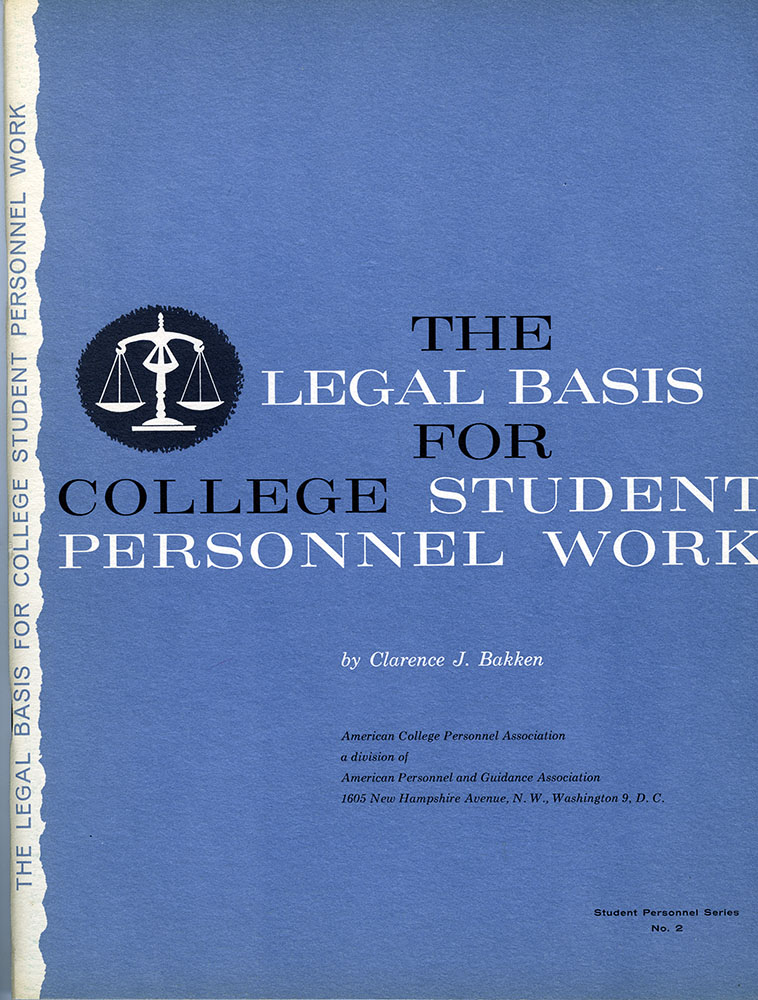
ACPA released “The Legal Basis for College Student Personnel Work,” a monograph providing general legal information for student personnel workers, primarily those in public institutions. Topics covered within include legal terms and principles as well as the application of these in functional areas such as housing, financial aid, health and counseling services, student discipline, and student activities. (Student Personnel Series #2 by Clarence J. Bakken)
1961
Entity Groups
Commissions form

Commissions formed starting with (current entity names) the Commissions for Assessment and Evaluation, Counseling and Psychological Services, Global Dimensions of Student Development, Two Year Colleges, Administrative Leadership, Admissions, Orientation, and the First Year Experience, Career Services, Housing & Residential Life, Faculty and Graduate Programs, Student Involvement, and Wellness, initiated by President-elect Melvene D. Hardee with Gordon Klopf. There were initially 250 members of Commissions between 1961-1963.

1960
1960
Publications

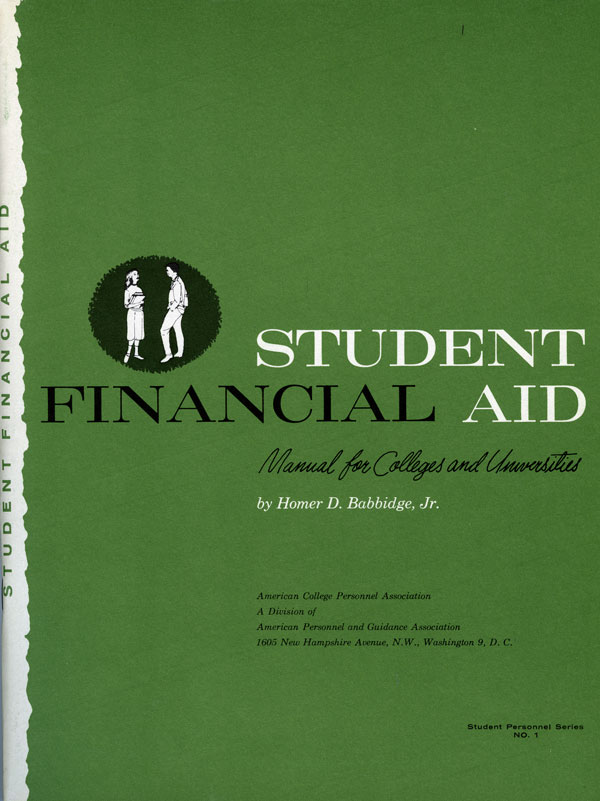
ACPA produces “Student Financial Aid: Manual for Colleges and Universities” as a resource to cover a range of issues in student personnel work. The first “brochure” was in response to the advent of the student loan program and covered topics such as scholarships, loan assistance, student employment, and administration of government and institutional forms of aid. (Student Personnel Series #1 by Homer D. Babbidge, Jr.)
1959
1959
Publications
Personnel-O-Gram is renamed

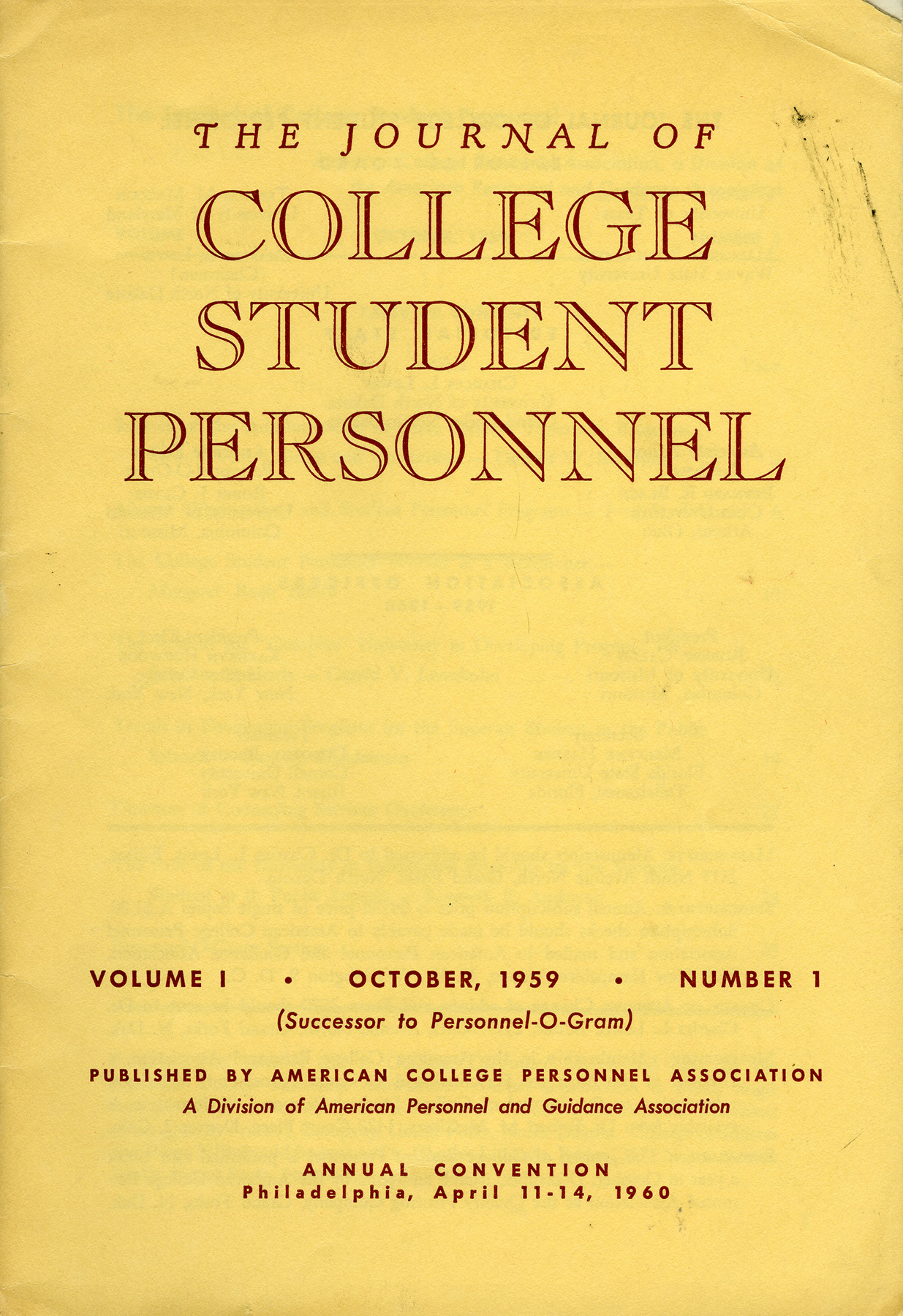
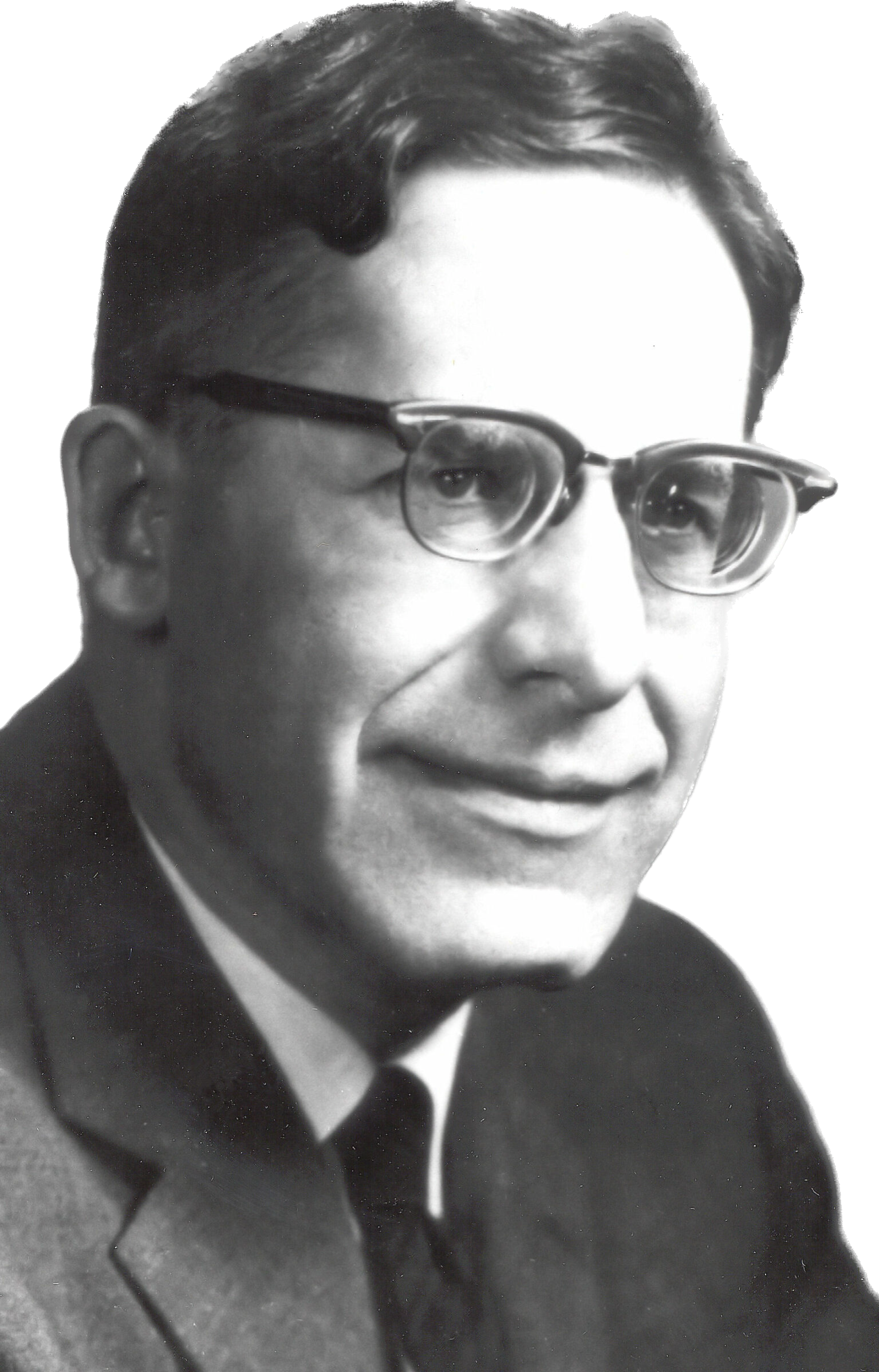
ACPA renames the P-O-G and publishes the first comprehensive scholarship journal for the student affairs field, now known as the Journal of College Student Development. Charles Lewis, the P-O-G associate editor was named the first editor of the Journal of College Student Personnel.
1948-1958

1958
1958
Leadership Council
ACPA Constitution and Bylaws revised

A significant revision to the ACPA Constitution and Bylaws was done and approved by members, which included the expansion of membership qualifications to include all college personnel workers regardless of titles. The revision was done during Catherine M. Northrup’s year as ACPA President.

1957
1957
Leadership Council
Governance Change

A change was made so that new governance officers would transition into their new roles at the end of the last business meeting during the annual convention.

1956
1956
Convention
1956 Annual Convention

There were 590 ACPA members registered for the 1956 annual convention in Washington, DC.

1955
1955
International Office
Personnel-O-Gram Budget established

Annual operating budget for ACPA was $1,925, $1,300 of which was allocated for printing the P-O-G.

1954
1954
Leadership

Harold B. Pepinky from The Ohio State University was the first ACPA President to serve the prior year in the role of President-Elect.
1953
1953
Publications
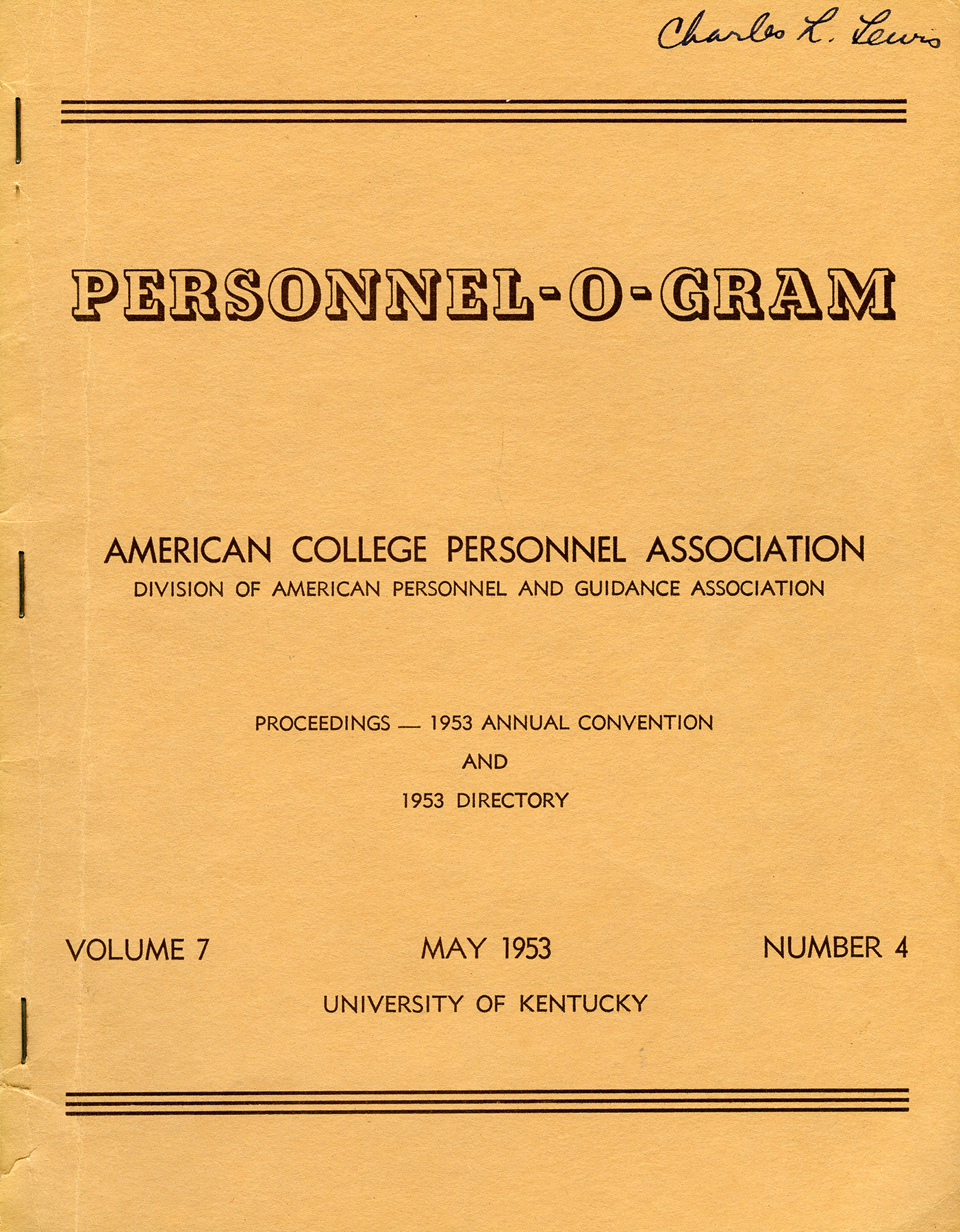
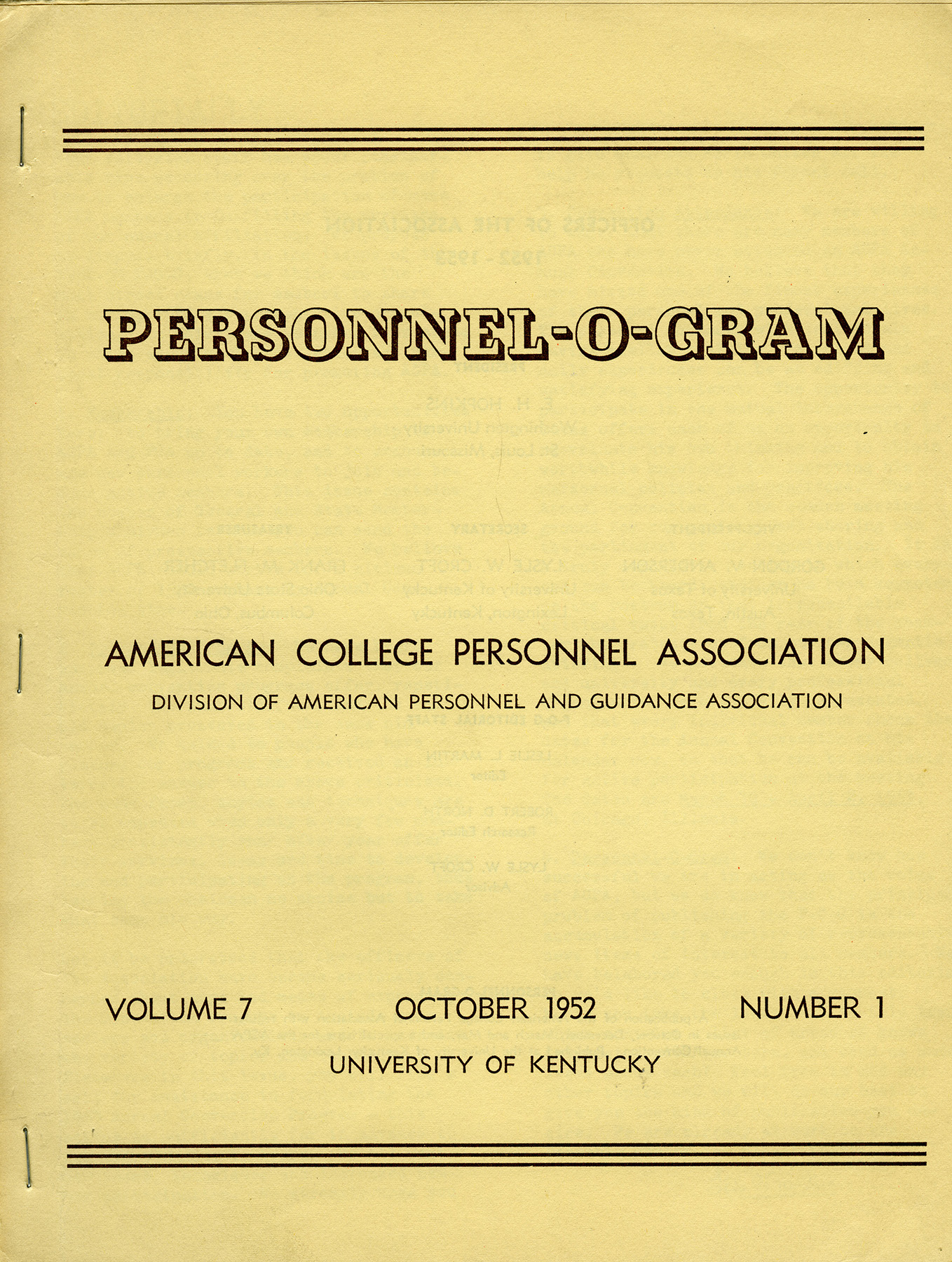
Personnel-O-Gram includes Conference Proceedings and ACPA Directory

The Newsletter/Journal begins to includes ACPA annual conference proceedings and the directory of members.
1952
1952
Publications
The Personnel and Guidance Journal replaced EPM as ACPA’s official journal
1952
Publications
The Personnel-O-Gram begins to evolve from a newsletter to a more formal publication.
1952
Entity Groups
U.S. States organized (Michigan)
1 July 1952
Partnerships
ACPA became Division #1 of APGA
1952
Membership
ACPA membership reached 1,000 members
1951
1951
Leadership Council
Members vote to form APGA

From ACPA’s President Daniel D. Feder’s 1947 recommendation for more formal unification efforts, the American Personnel and Guidance Association, was formed. ACPA members voted and approved the plan to form APGA. NADW voted to remain autonomous, but ACPA members approved the plan to form APGA.

1951
Publications
ACPA Debates the Cost of Producing an Organization Publication

ACPA debated the cost of $50 an issue (for a total of $400 for the 8 issues anticipated for 1952).

1950
1950
Leadership
First VP to become President mid-term

Everett H. Hopkins of Washington State College became the first ACPA Vice President to become President based on the mid-term resignation of the prior leader, Thelma Mills, due to her career transition.

1949
1949
Publications
Assessment of the Membership of ACPA

In 1949, ACPA President C. Gilbert Wren reported in the Personnel-O-Gram the composition of ACPA members.

1937-1947

1947
1947
International Office
Formation of the American Personnel and Guidance Association (APGA)

After World War II, conventions reconvened and ACPA and NADW were two of five or six major guidance organizations no longer connected with NEA. Then ACPA President, Daniel D. Feder’s recommendations for more formal unification efforts led to the formation of the American Personnel and Guidance Association (APGA).

1947
Convention
Convention Moves from IL to OH

The annual convention was originally scheduled to occur in Chicago, IL was moved to Columbus, OH when Chicago hotels would not assure accommoda­tion of all ACPA members without discrimination. 1945-1947 ACPA President Feder was a key leader in moving the meetings to Columbus. By his insistence, ACPA and CGPA became among the first national organizations to adopt open resolutions against meeting in any city where dis­crimination was practiced.

1946
1946
Publications
The Personnel-O-Gram (P-O-F) was created as a medium of communication with members

The Personnel-O-Gram provided items of general interest, announced special services and publications available, and served as a clearinghouse for problems facing the field.

1945
Leadership
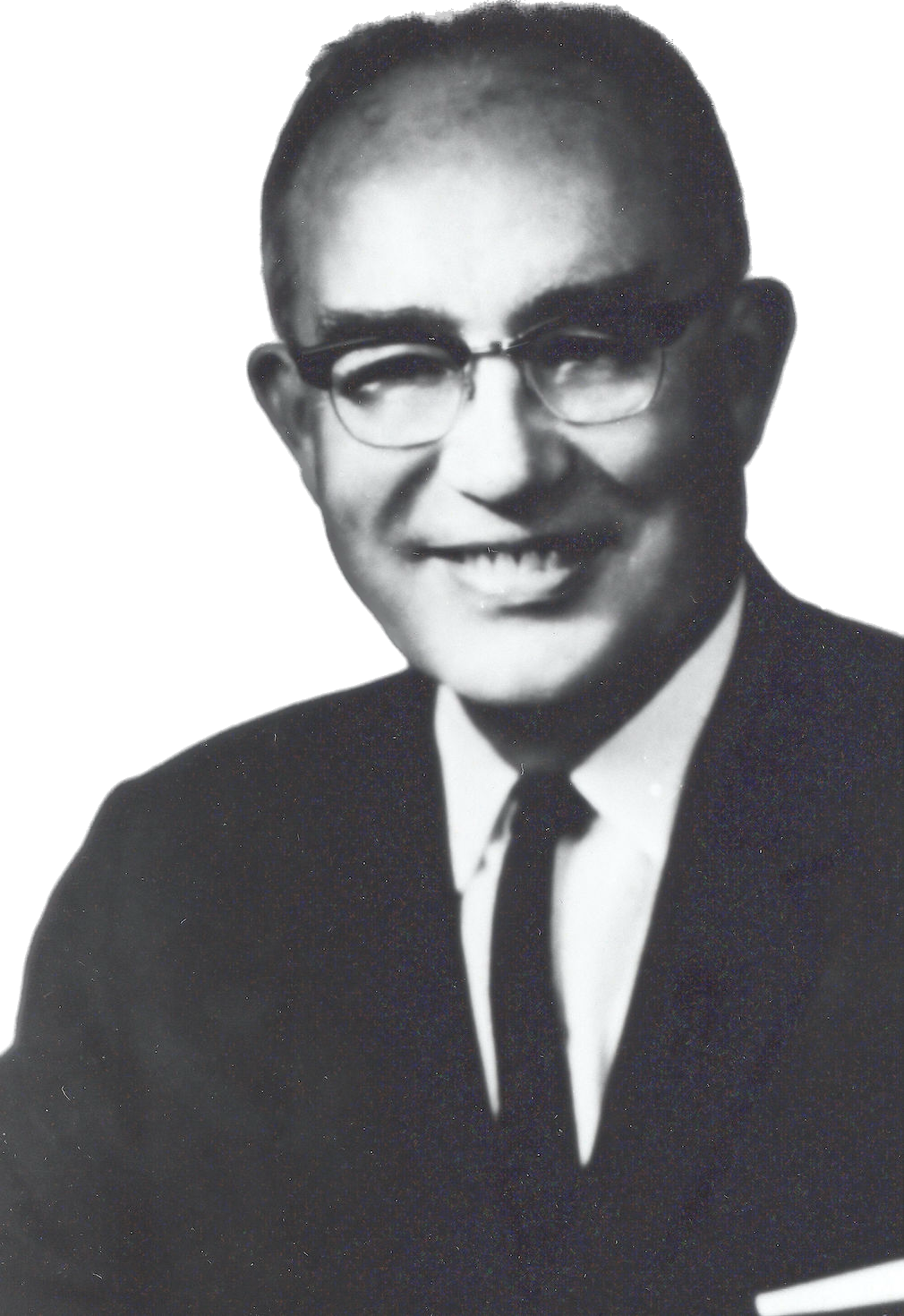
Daniel D. Feder elected ACPA president while on military leave from service with the U.S. Navy near the end of World War II.
1945
1945
Leadership
1943
1943
Publications
Journal for Educational and Psychological Measurement

The Journal for Educational and Psychological Measurement (EPM) became the next form of the association’s newsletter communication.
1942
1942
Convention
1943 Convention Foregoed

ACPA leaders decided to forego the annual convention in 1943 due to World War II. The next annual convention was not held until 1947 in Columbus, OH

1942
Convention
179 individuals registered for the annual conference in San Francisco, despite the onset of World War II
1940
1940
Convention
178 members registered to attend the annual conference in St. Louis, MO

At the annual business meeting, members approved an increase in annual dues from $3.00 to $4.00.

1940
Milestone
The American Council of Guidance and Personnel Associations (ACPGA) changed its name to the Council of Guidance and Personnel Associations (CPGA)
1939
1939
Leadership
Helen M Vorhees headshot

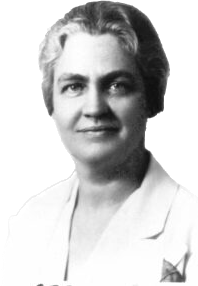
Helen M. Voorhees from Mount Holyoke College was the first ACPA president elected after the timing of the selection process to allow for consultation with members in advance of the vote by nominees.

1939
Convention
144 members registered to attend the annual conference in Cleveland, OH

At the annual business meeting, members approved an increase in annual dues from $3.00 to $4.00.

1938
1938
Convention
130 members registered to attend the annual conference in Atlantic City, NJ

80 of these attendees were ACPA members and the other 50 were non-members. Two annual business meetings were held at this conference for the first time.

1937
1937
Publications
The Student Point of View Statement

The Student Point of View statement was developed by leaders of the American Council on Education (ACE) and ACPA. Aaron John Brumbaugh was ACPA’s representative on that committee.

1937
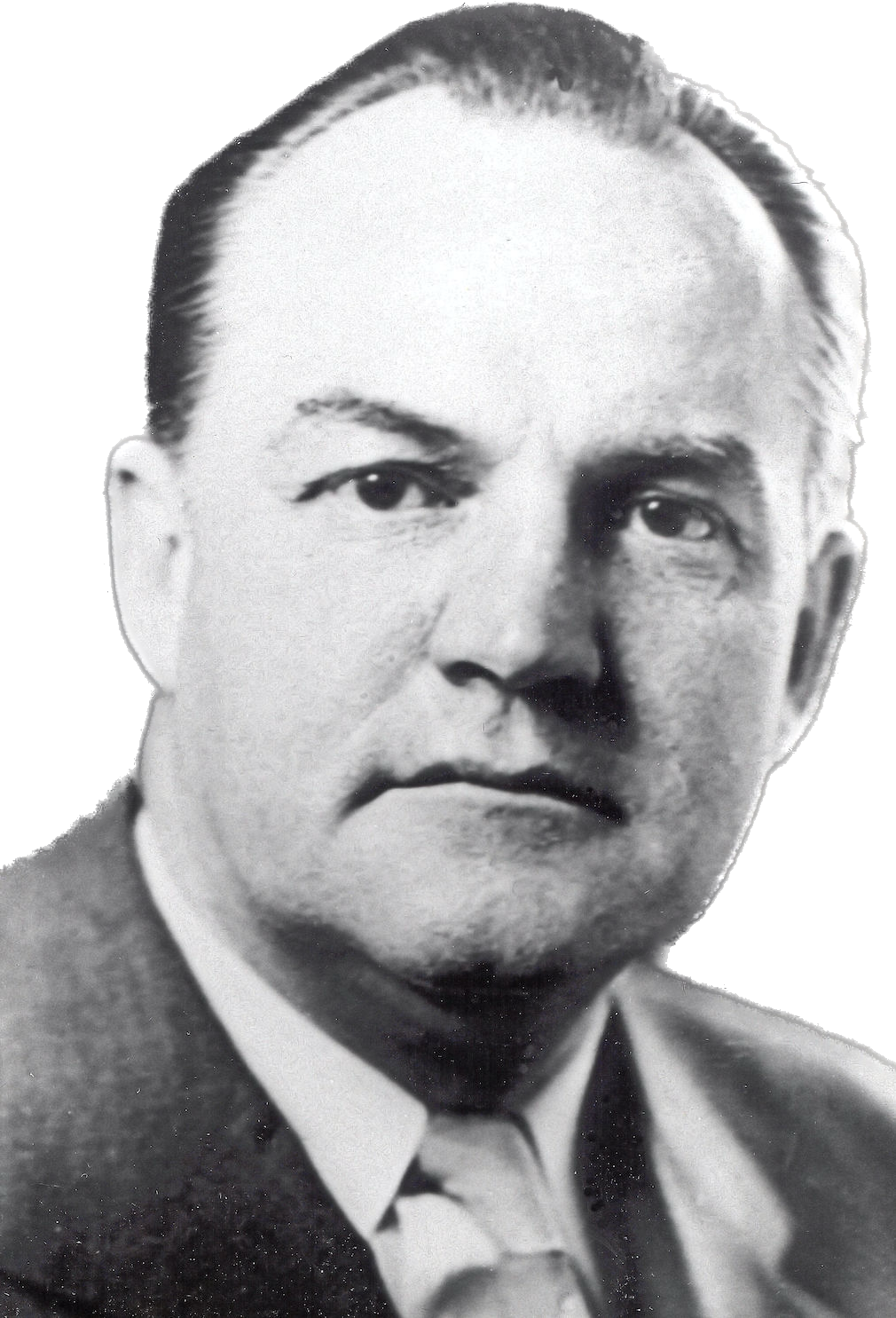
Leadership

Aaron John Brumbaugh from the University of Chicago became the first ACPA president elected by written ballot rather than voice nominations and elections at the annual business meeting.
1937
Convention
1937 Convention

The ACPA annual conference was held in New Orleans and was attended by 62 people, each paying $1 to register. A new constitution was passed at the annual business meeting, changing the fiscal year to run from October 1 through September 30.

1924-1936

1936
1936
Convention
Registration fee for the 1936 ACPA conference in St. Louis was $8
1935
1935
Convention
62 people registered to attend the ACGPA meeting in Atlantic City, paying a registration fee of only $1 per person
1934
1934
Milestone
ACPGA Creation

Representatives from nine organizations, including ACPA, met in New York City to work out final details for creating the American Council of Guidance and Personnel Associations (ACPGA) with the intention to jointly convene a conference in 1935 in Atlantic City, NJ.

1933
1933
Convention
ACPA annual conference held in Minneapolis, MO with a registration fee of $40
1931
1931
Publications
Association Communication established

Association communication consisted of one mailed newsletter, the Personnel-O-Gram (P-O-G) co-edited by Thelma Mills and Fred McKinney.

1931
Milestone
The name American College Personnel Association (ACPA) was adopted at the annual conference in Detroit, MI
Add Description Here
1930
1930
Milestone
Expanding Organizational Functions

The NAPPO Executive Committee appointed five vice president positions to lead expanded functions including: 1) Records and Research, 2) Educational Counseling and Administration, 3) Teacher Placement, 4) Student Placement, and 5) Personal Counseling.

1930
Membership
NAPPO membership totaled 105 individuals and 53 colleges

The NAPPO Executive Committee appointed five vice president positions to lead expanded functions including: 1) Records and Research, 2) Educational Counseling and Administration, 3) Teacher Placement, 4) Student Placement, and 5) Personal Counseling.

1930
Milestone
New Constitution Adopted

At the NAPPO annual business meeting in Atlantic City, NJ, a new constitution was approved with an expanded purpose of including people whose work responsibilities in educational institutions at the college level con­sisted of any form of personnel work.

1929
1929
Membership
NAPPO membership totaled 96 individuals and 57 colleges

The NAPPO Executive Committee appointed five vice president positions to lead expanded functions including: 1) Records and Research, 2) Educational Counseling and Administration, 3) Teacher Placement, 4) Student Placement, and 5) Personal Counseling.

1929
Milestone
NAAS becomes the National Association of Personnel and Placement Officers (NAPPO)

NAAS became the National Association of Personnel and Placement Officers (NAPPO) , substituting in the word “personnel” because it was more comprehensive. Forty-six NAAS members registered for the Sixth Annual Convention.

1928
1928
Membership
NAAS membership totaled 86 individual and 45 colleges

The NAPPO Executive Committee appointed five vice president positions to lead expanded functions including: 1) Records and Research, 2) Educational Counseling and Administration, 3) Teacher Placement, 4) Student Placement, and 5) Personal Counseling.

1927
1927
Leadership

NAAS elects Robert K. Speer, born in Canada and employed as the Assistant Director of the Bureau of Educational Service at Teacher’s College, Columbia as the first man to be NAAS President. During his year as NAAS president, Speer formed a Committee on Expansion believing NAAS should consider forming an organiza­tion that would include all those people from a number of functions which involve college personnel work, rather than the appointment officers only, laying the groundwork for a name change for NAAS in 1929.
1926
1926
Membership
NAAS individual memberships increased from 79 to 107

The NAPPO Executive Committee appointed five vice president positions to lead expanded functions including: 1) Records and Research, 2) Educational Counseling and Administration, 3) Teacher Placement, 4) Student Placement, and 5) Personal Counseling.

1926
Membership
NAAS membership types expanded to include an institutional membership of $5.00 per college

The NAPPO Executive Committee appointed five vice president positions to lead expanded functions including: 1) Records and Research, 2) Educational Counseling and Administration, 3) Teacher Placement, 4) Student Placement, and 5) Personal Counseling.

1926
Convention
Forty-two members from 36 institutions attended the third annual NAAS conference

The conference was held in Washington, DC at the Willard Hotel, and attendance nearly doubled the number of conference attendees from the prior year.

1925
1925
Leadership

Margaret Cameron from the University of Michigan was elected as the first NAAS President to serve a two-year term, after having served as the first NAAS Vice President.
February 1925
Convention
First NAAS Annual Conference

First NAAS annual conference held in Cincinnati and was attended by 22 members representing 19 different institutions. Robert Josselyn Le­onard, Director, School of Education at Teacher’s College, Columbia, was the first keynote speaker at a NAAS annual conference, which he titled “Appointment Service for Teachers—Progress and Problems.”

1924
1924
Leadership
NAAS dues reach $2.00

The nine founding members of NAAS each paid annual membership dues of $2.00. By February 1925, membership in NAAS had grown to 79 members. 

1924
Milestone
NAAS identities its purpose

NAAS identified its purpose to “​​promote and develop the work of the appointment offices throughout the United States, emphasizing coopera­tion, research and service.” To achieve these purposes, two committees were formed: Research and Publicity, chaired by R.G. Reynolds, Director, Bureau of Education Service at Teachers’ College, Columbia (TC); and By-Laws and Affiliation, chaired by Elizabeth B. Snell, Appointment Secretary at Stanford University.

1924
Leadership
headshot of May L Cheney

May Lucretia Shephard Cheney, who organized a teacher placement office at the University of California, Berkeley, became the first president of NAAS.

1924
Milestone
NAAS meets for the first time

ACPA’s founding organization, the National Association of Appointment Secretaries (NAAS), met for the first time under the direction of Helen Wright, Director of the Smith College Appointment Bureau, as guests of the National Association of Deans of Women (NADW) to a convention in Chicago sponsored by the Department Superintendence of the National Education Association (NEA). Twelve appointment officers (eleven women and one man) met during the annual NEA convention to discuss mutual concerns, determine the nature of the new organization (NAAS), draft a constitution, and elect officers.

Special thanks are extended to the editors and contributors of the ACPA History of Scholarship project established in 2014 for ACPA’s 90th Anniversary.

Editors: Heidi Levine, John Wesley Lowery, & John A. Mueller
Contributors: Will Barratt, Kathleen M. Boyle, & Kathy L. Guthrie, Ann Bowers and the National Student Affairs Archive at Bowling Green State University